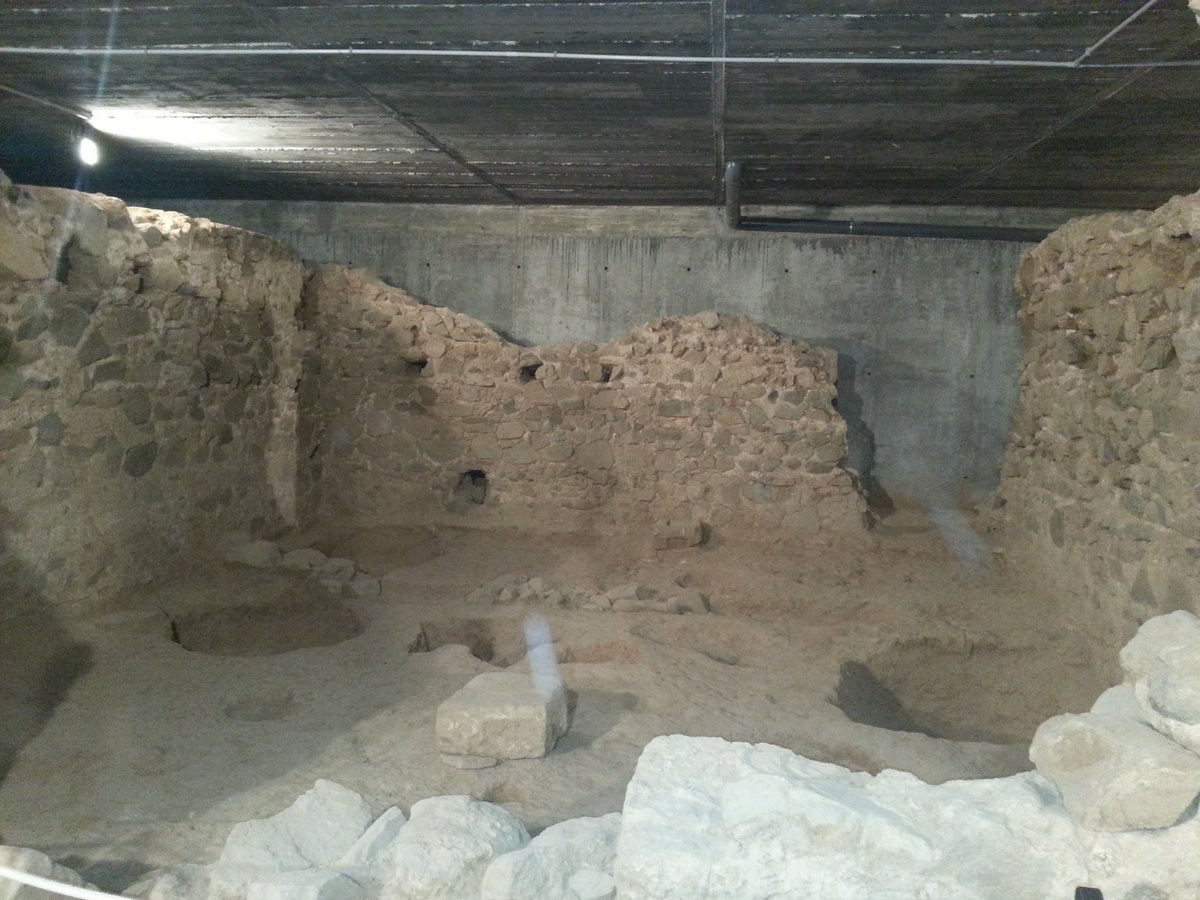

In the 5th century AD, a wealthy Roman erected an octagonal pavilion designed for celebrating banquets and enjoying the bath. This octagonal building remains a striking architectural focal point. While it began as a sanctuary of luxury, the structure eventually transitioned into a space for heavy labor.
Time brought a significant shift in the building's function as it became a hub for pressing wine and working iron. Around the 7th century AD, the site was abandoned, though exhumed skeletons indicate that it was still used as a necropolis before that time. Excavations conducted in 2000 revealed about fifteen tombs within this space.
Nature eventually concealed the ruins under layers of sand from nearby roads and streams. It took until 2000 to uncover the octagonal hall and bring it back to our view. Today, the site serves as a protected national heritage site under the care of the Municipal Museum of Premià de Mar.
Visitors can explore about 550 square meters of the site through a dedicated entrance on Carrer d'Enric Granados. To ensure a focused experience, the museum organizes group visits of about 50 people by appointment.
Sources: Wikipedia, OpenStreetMap, Wikidata, Wikimedia Commons
Written by Nik Frost
Discuss this with the author and others
No comments yet. Be the first to start the conversation.