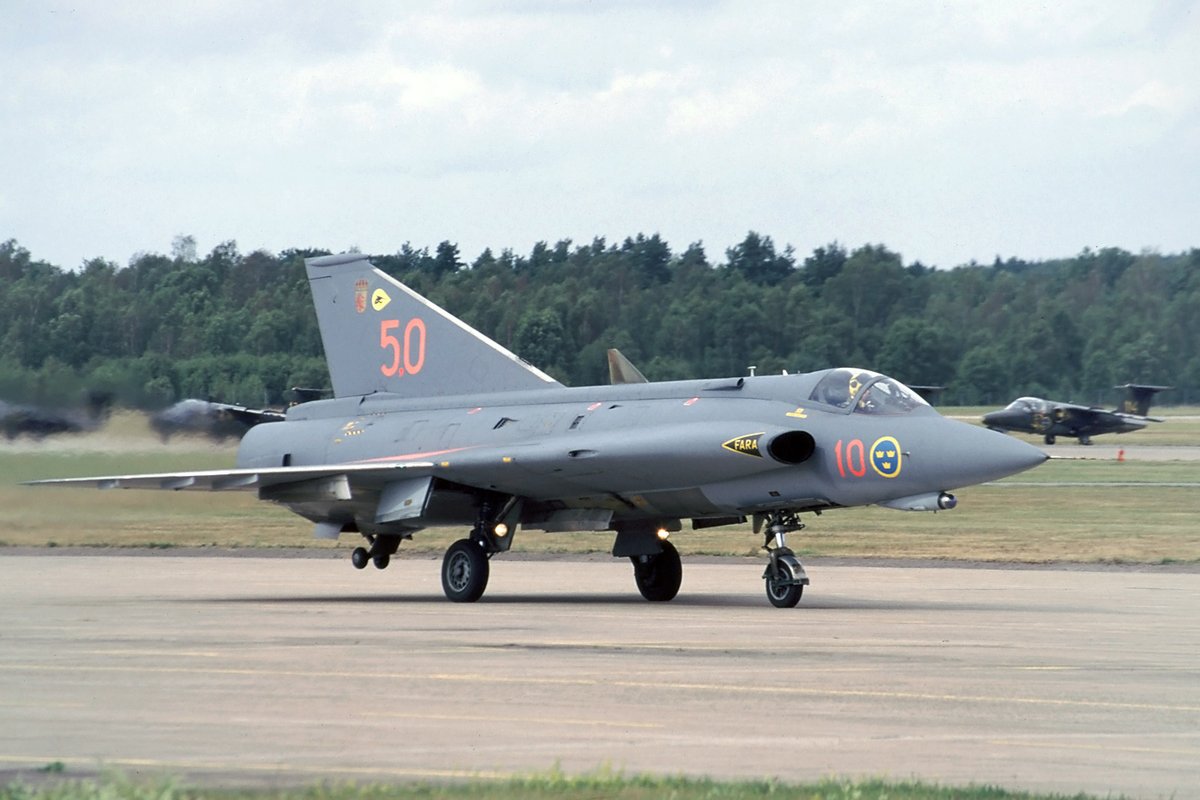

The nickname Draken stems directly from the aircraft's silhouette. From a top-down view, the double delta wing creates a shape like a paper kite. At the time of its inception, this specific aerodynamic profile was a territory that had not yet been explored by engineers.
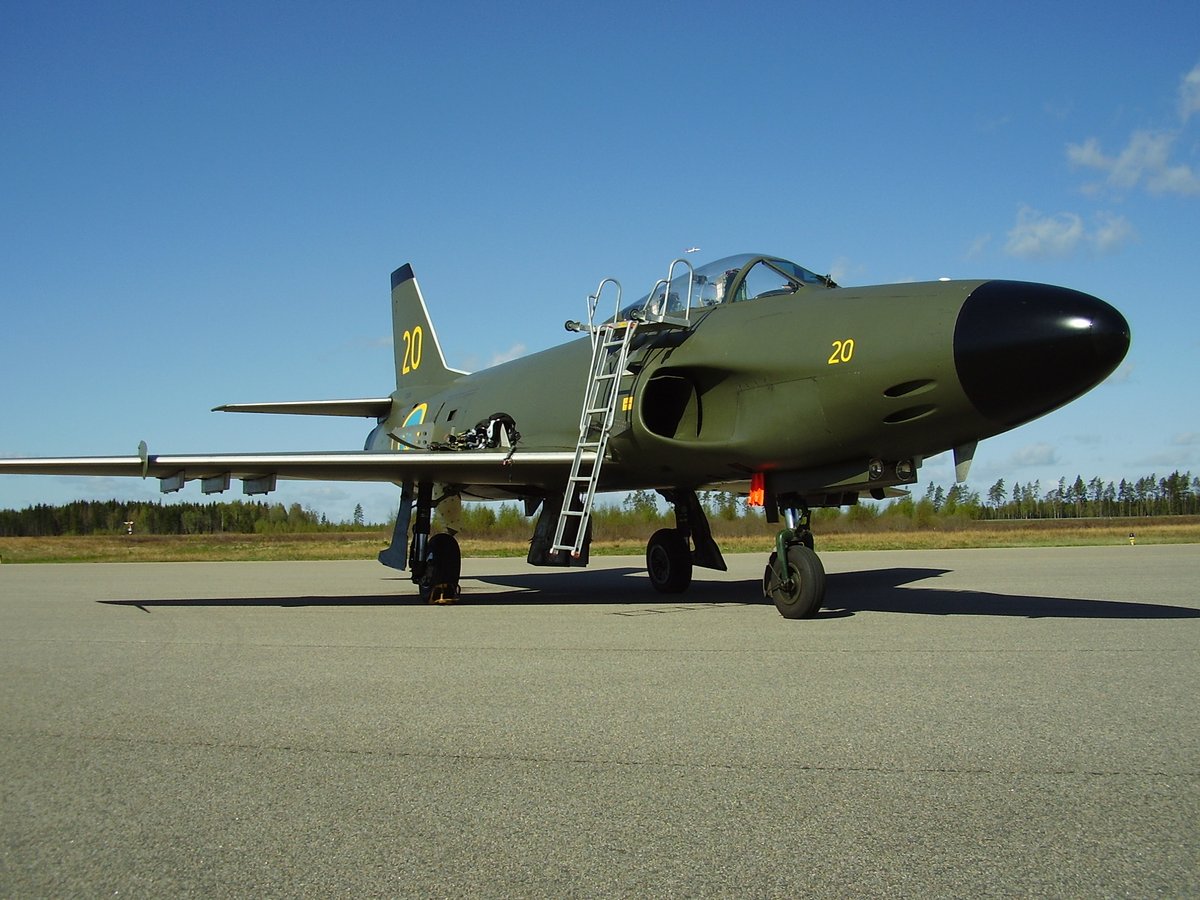
During the late 1940s, the Swedish Air Force initiated a project to develop a supersonic fighter. The objective was to create a machine capable of Mach 2.0 speeds and all-weather operation. Furthermore, the jet had to be refueled and rearmed by conscripts in less than ten minutes. To meet these demands, SAAB engineers chose a risky double delta wing. They first commissioned the Saab 210 as a sub-scale test aircraft to determine if the design would remain stable in the air.
Once the test flights confirmed the design's viability, production moved forward. The Draken officially entered service on 8 March 1960. A core part of Swedish defense strategy was the requirement that these planes could operate from reinforced public roads if airbases were struck. The engineering was so cohesive that the boundary between the fuselage and the wing was often indistinguishable.
While the jet served as a primary interceptor throughout the Cold War, it also proved to be a formidable dogfighter. It remained active until 1999 when high maintenance costs led to its retirement. Today, the legacy of this engineering gamble lives on through the blended wing-body lines that continue to influence aviation design.
Sources: Wikipedia, OpenStreetMap, Wikidata, Wikimedia Commons

Written by Nik Frost
Discuss this with the author and others
No comments yet. Be the first to start the conversation.