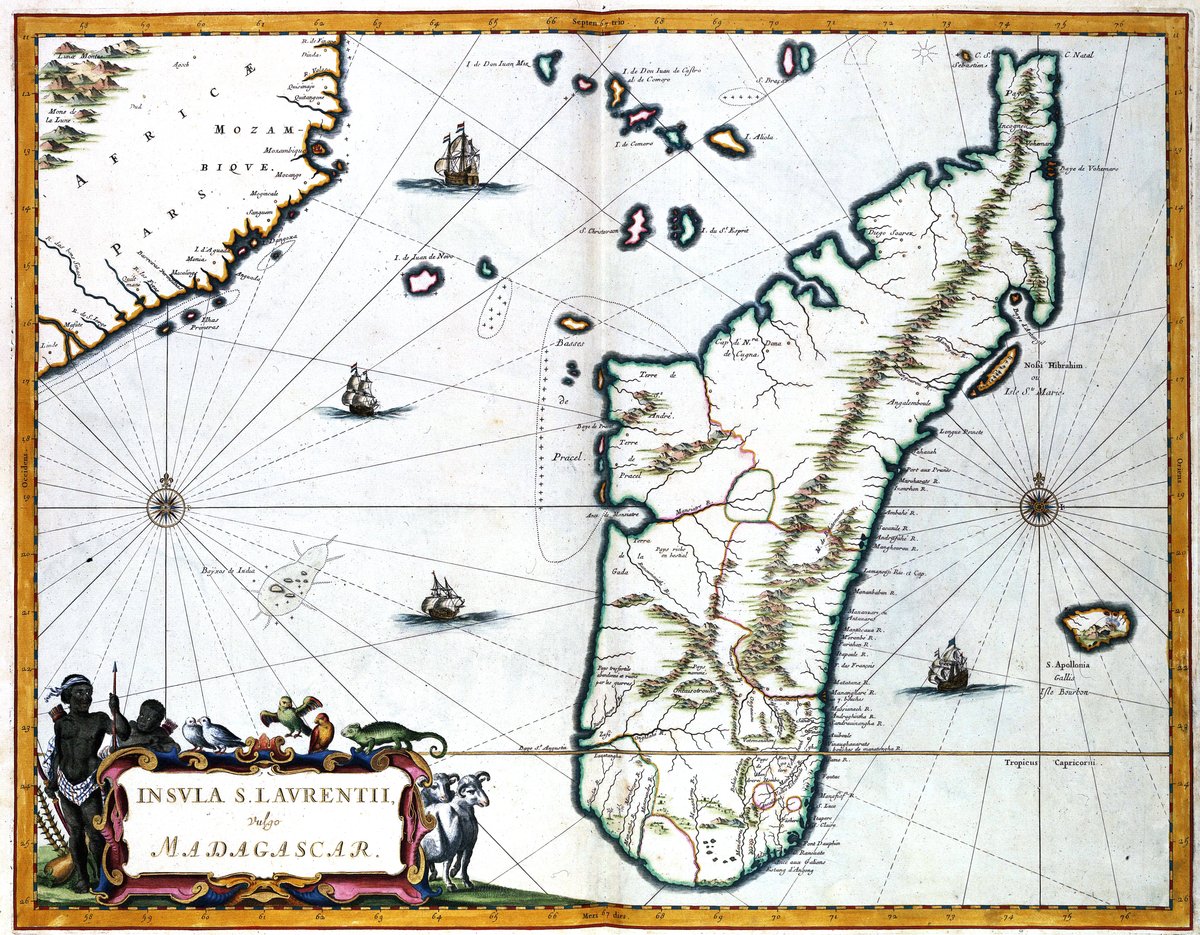

Research in archaeology, genetics, and linguistics suggests that the Malagasy people were originally Austronesian peoples native to the Sunda Islands. These pioneers likely arrived on the west coast of Madagascar with outrigger canoes (waka) at the beginning of our era, or perhaps as early as 500 BCE. Evidence suggests they may have traveled directly across the Indian Ocean from Java, possibly passing through the Maldives.
The Borobudur Ship Expedition of 2003–2004 confirmed that ships from ancient Indonesia may have reached Madagascar and the West African coast for trade as early as the 8th century. The Malagasy language originated from the Southeast Barito language and is closely related to the Ma'anyan language. It is an Austronesian language with significant Bantu, French, and Arabic influences, and contains numerous Malay and Javanese loanwords.
In Malagasy oral tradition, these early settlers are known as the Ntaolo, from a word meaning 'first men'. Those who settled in the forests of the central highlands are known as the Vazimba. Upon arrival, these settlers practiced tavy, a slash-and-burn agriculture method, to clear coastal rainforests and plant crops like taro and rice while encountering Madagascar's extinct megafauna.
Sources: Wikipedia, OpenStreetMap, Wikidata, Wikimedia Commons
Written by Mutabor
Discuss this with the author and others
No comments yet. Be the first to start the conversation.