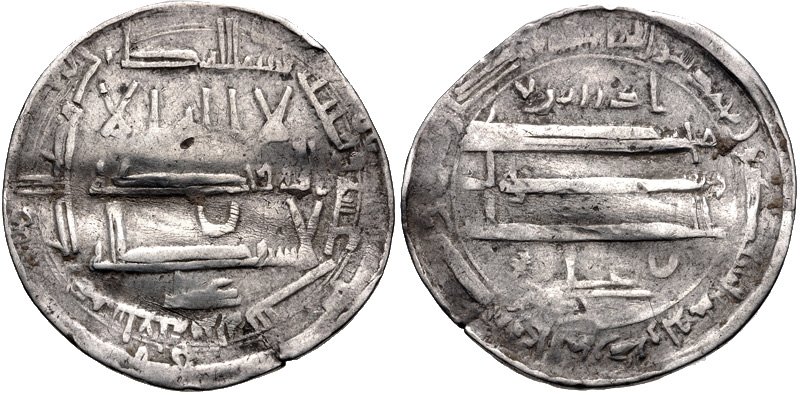

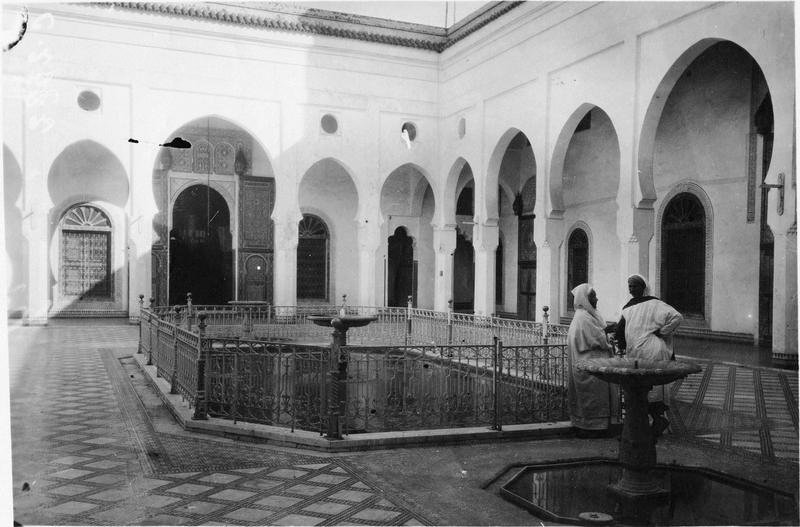
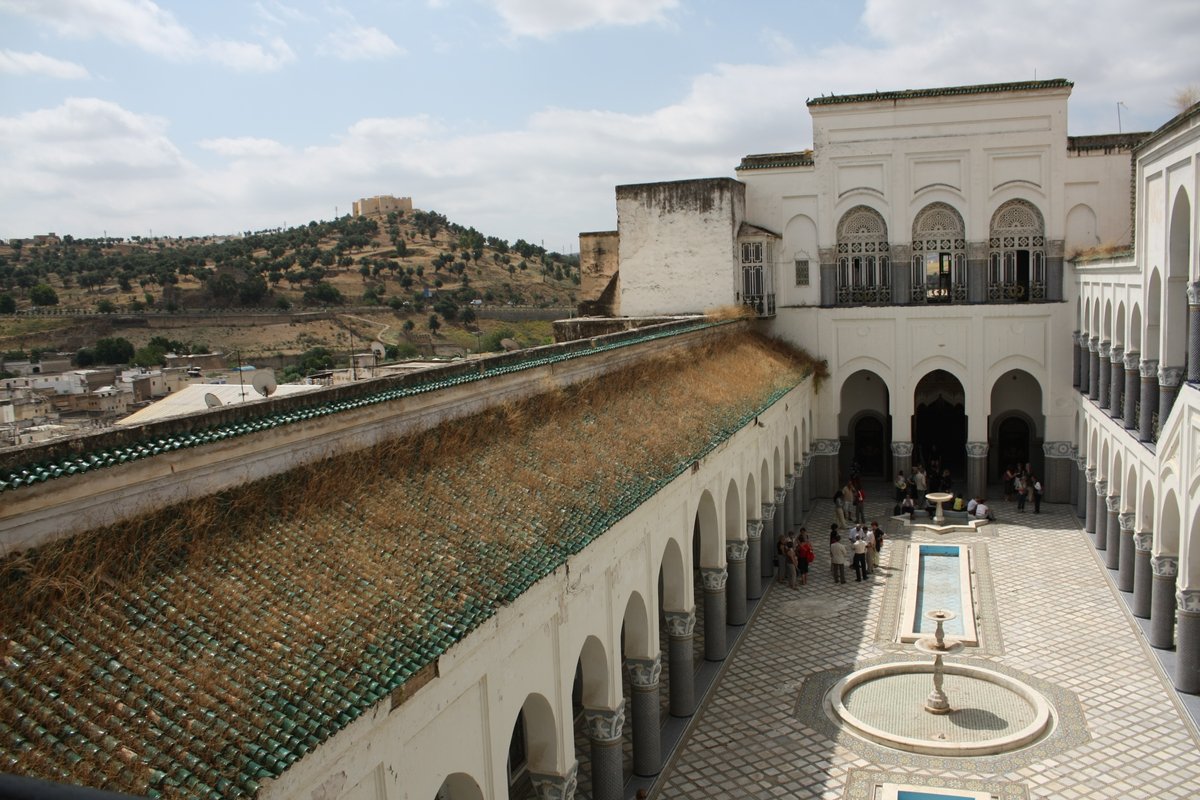
Beneath the shadow of the Zawiyya Moulay Idris lies the grave of Idris II. He was the son of Idris I, the founder of the Idrisid dynasty, and was raised among the Berber Awraba tribe of Walili. One of the best educated of the Idrisid sultans, Idris II succeeded his father in 803.
His rule was a time of changing winds. He oversaw the arrival of two waves of Arab refugees from al-Andalus in 818 and Ifriqiya in 824 - 826, who settled mainly in the capital of Fez. Consequently, the Arabization of Morocco began throughout his reign, during which Fez became predominantly Arabic-speaking. He was guarded by an Arab bodyguard and had an Arab minister named Umair bin Mus'ab, stretching his dominion to the Sous in southern Morocco.
When he died in Fez in 828, the Idrisid emirate was divided into nine principalities ruled by his sons, with the eldest, Muhammad ibn Idris, ruling as the Emir from Fez. His grave was rediscovered under the Marinid Sultan Abd al-Haqq II in 1437 and became an important place of pilgrimage in the 15th century.
Now, the site endures as the holiest place of Fez. The Zawiyya stands as a sanctuary where pilgrims still come to visit the tomb of the man who ruled the realm between the Shalif river and the Sous.
Sources: Wikipedia, OpenStreetMap, Wikidata, Wikimedia Commons
Written by Mutabor
Discuss this with the author and others
No comments yet. Be the first to start the conversation.