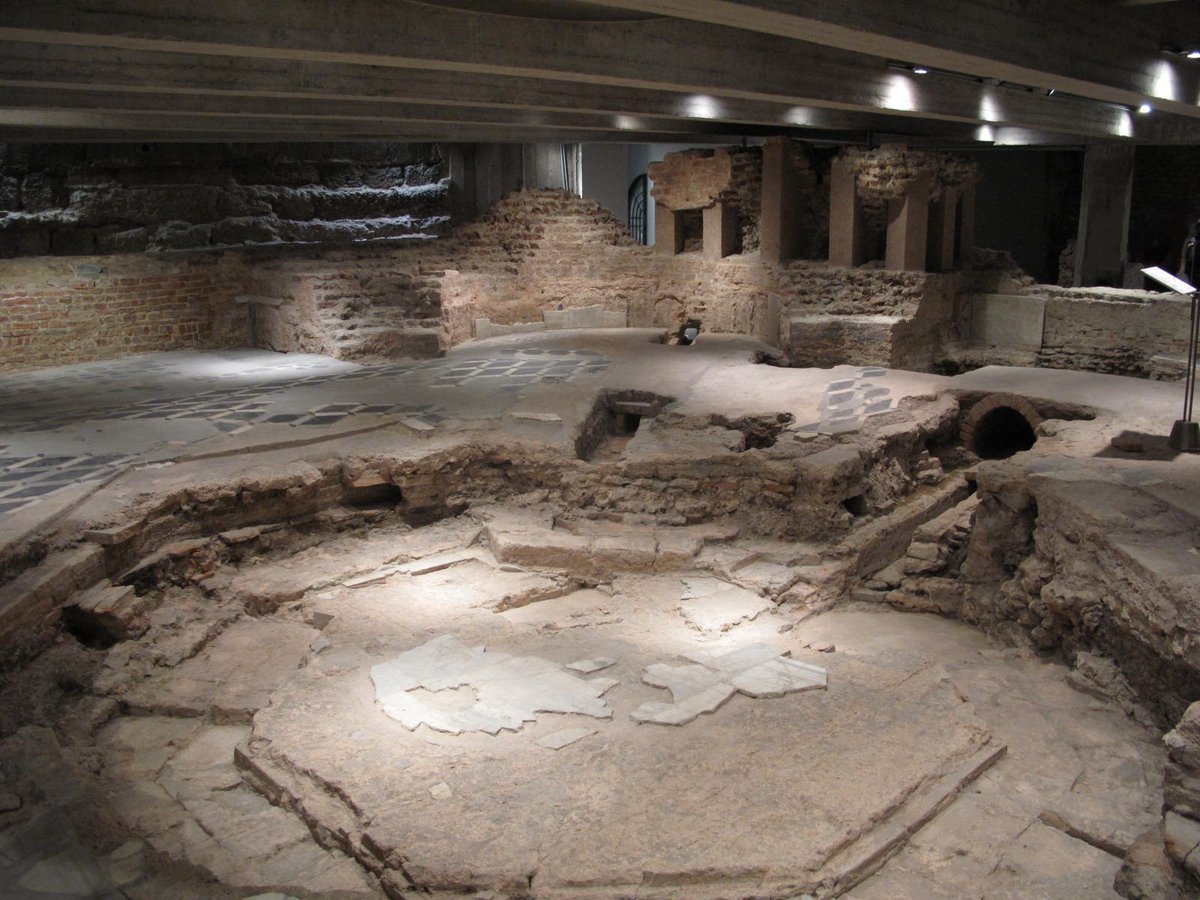

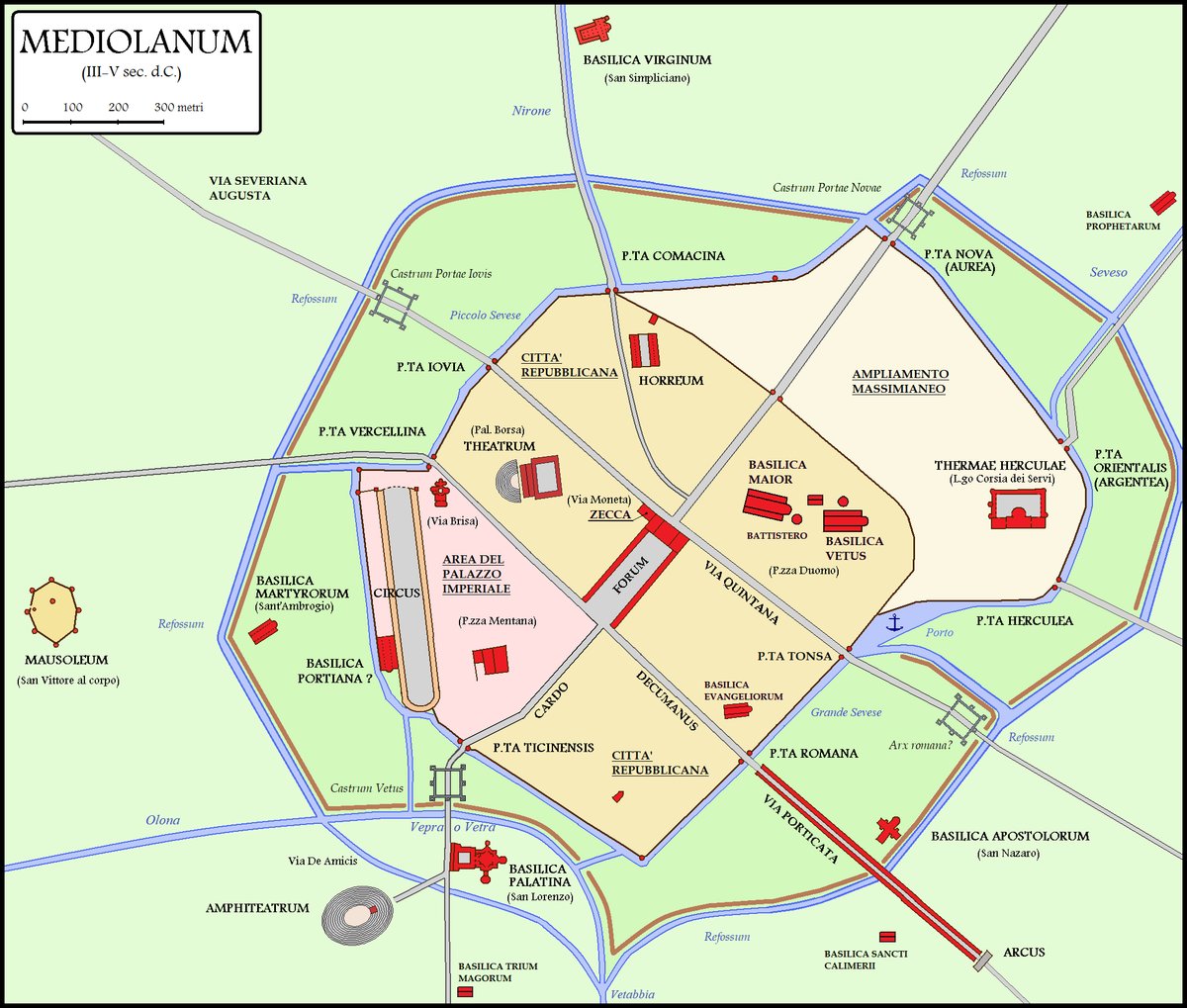
Hidden beneath the modern Piazza del Duomo lies the Battistero di San Giovanni alle Fonti. Built between 378 and 397 for St. Ambrose, it dates back to the period when the city of Mediolanum served as the capital of the Roman Empire. The site was part of an episcopal complex that included two closely situated basilicas, a layout common in bishop-led cities during this era.
This specific baptistery was reserved for men, while women were baptized at the nearby baptistery of Santo Stefano alle Fonti. The building's octagonal shape took inspiration from the imperial mausoleum of San Vittore al Corpo, which was realized in the 4th century in Milan. The layout served as a symbolic path: the baptismal candidate, recalling the function of the mausoleum as a monumental tomb, would die to the old self to rise to new life through baptism.
The interior boasted gold mosaics with vegetal motifs and niches featuring columns of red porphyry. During the 6th century, the baptistery was renovated with marble floor and wall coverings, as well as glass inserts and local precious stones. Though it was demolished in 1388 to make room for a service shed during the construction of the Duomo, the site remains visitable by the public as an archaeological area from inside the cathedral.
Sources: Wikipedia, OpenStreetMap, Wikidata, Wikimedia Commons




Written by Nicolo Ciampini
Discuss this with the author and others
No comments yet. Be the first to start the conversation.