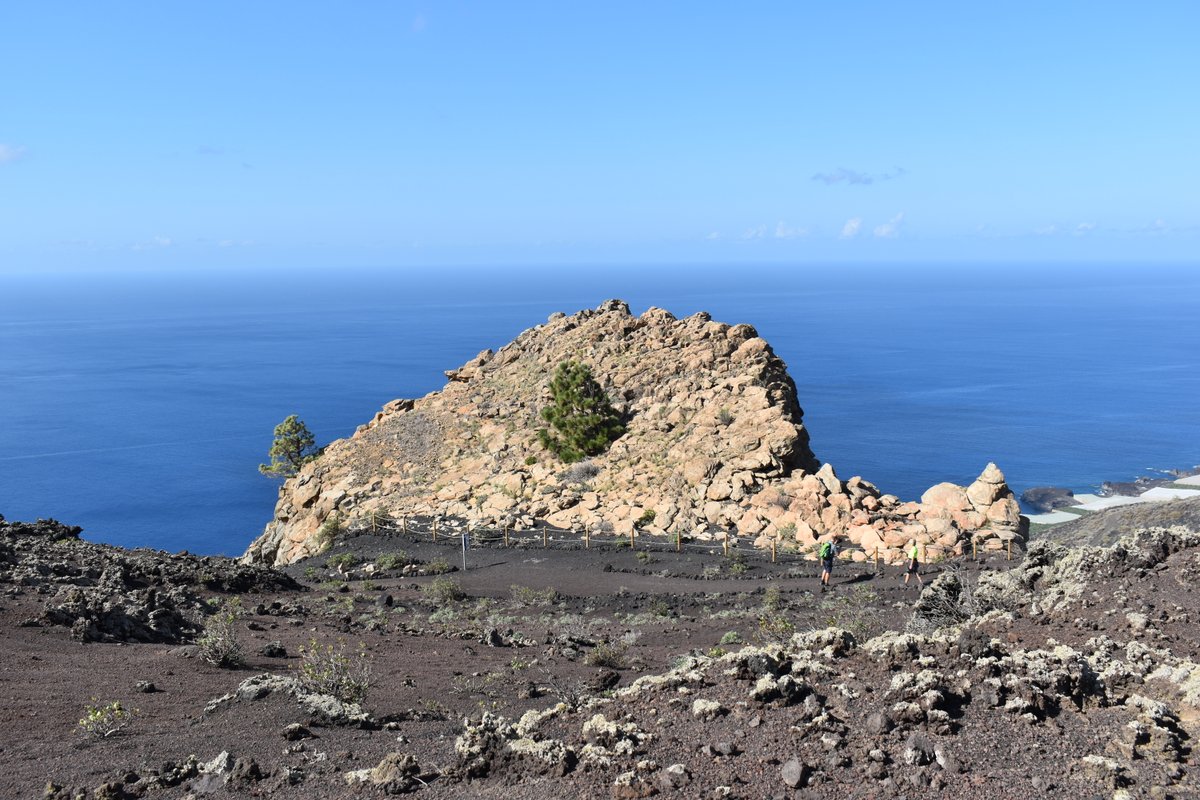

The Roque de Teneguía rises like a golden tooth from a jaw of black stone. While the landscape around it was born of recent fire, this formation is an old ancestor - a tower of haüynite phonolite that glows against the dark fields of the San Antonio volcano.
Long ago, the people of this land carved their dreams into its eastern face. They etched spirals, labyrinths, and meanders into the stone, creating the largest station of petroglyphs on La Palma with 85 panels, being surpassed only by that of the Lomo de Tamarahoya VI. These marks are silent ghosts of a pre-Hispanic world, some overlapping like whispered secrets shared across centuries.
For a time, the stone was almost lost to the greed of men. In the 20th century, it sat in the path of a planned aqueduct, waiting for the dynamite to turn it to dust. Only the quick thinking of an archaeologist and a group of determined citizens saved the rock from the blast, preserving the ancient carvings for our eyes.
Today, the site is a protected monument where the wild cabezuela flower grows in its only home. Visitors find a place where history is scarred. The rock bears the marks of modern vandals and the weight of thousands of feet, yet it still holds the memories of ritual sacrifices, funerary fires, and a healing spring that was buried by the mountain's breath in the 1600s.
Sources: Wikipedia, OpenStreetMap, Wikidata, Wikimedia Commons
Written by Mutabor
Discuss this with the author and others
No comments yet. Be the first to start the conversation.