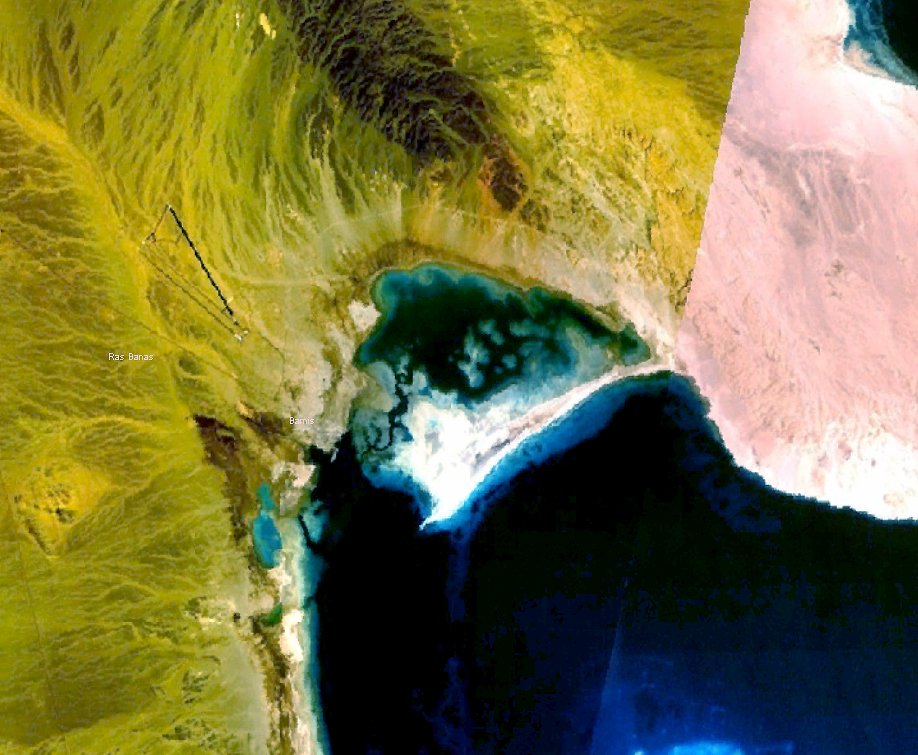

Situated about 825 km south of Suez, 260 km east of Aswan, and 140 km south of Marsa Alam, this city was sited upon a narrow rim of shore between the mountains and the Red Sea. Named by Ptolemy II Philadelphus after his mother, Berenike I of Egypt, the port was known as Berenice Troglodytica or Baranis. The name Troglodytica refers to the native people of the region, the "Troglodytai" or "cave dwellers". The city fell silent after the 6th century, and the bay has since nearly filled with sediment.
Surrounded on three sides by sheltering walls - the high peninsula of Lepte Extrema to the north and a chain of small islands, including the Island of Ophiodes, to the south - it lies at the head of the Sinus Immundus, a south-facing bay. One of the islands, Ophiodes, was one of a few sources of gemstones local to Berenice. Once a marginal harbor, the port was improved by engineering and became a famous and prosperous center for trade in antiquity.
Berenike served as a critical way-station for commerce between the Indian subcontinent, Arabia, and Upper Egypt from the 1st century BCE until the 2nd century CE. It was connected to Antinoöpolis on the River Nile by the Via Hadriana in 137 CE. The port also generated local commerce from the mines of Gebel Zabara and Mons Smaragdus in the adjacent mountains, which were rich sources of gemstones at that time called "topaz" and "emerald".
Sources: Wikipedia, OpenStreetMap, Wikidata, Wikimedia Commons

Written by Mutabor
Discuss this with the author and others
No comments yet. Be the first to start the conversation.