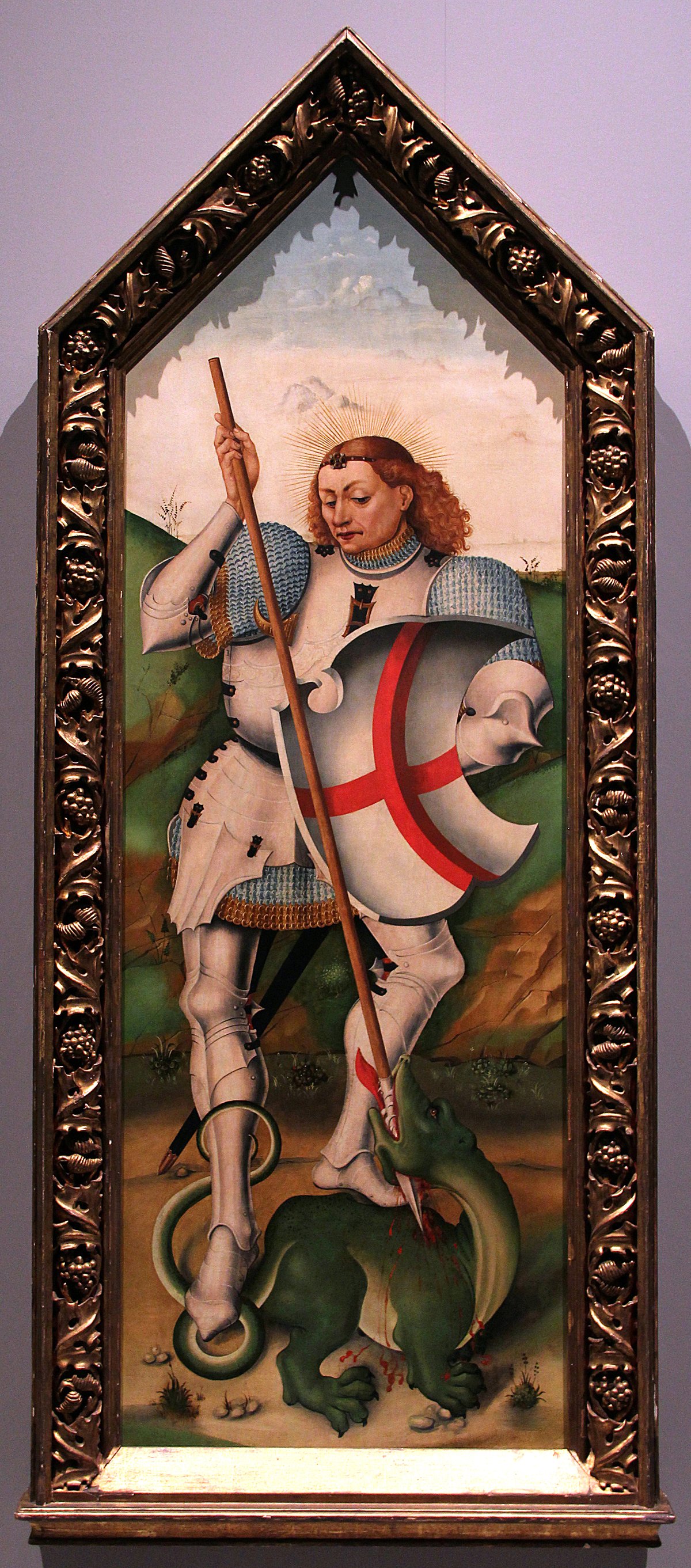

St. George, revered in Christianity and among the Druze, is famous for his legend, in which he defeats a dragon. However, the legend did not originate with St. George but has roots in several pre-Christian stories. Heroes battling serpents or dragons existed long before St. George, with examples found in Greek mythology, such as Perseus saving Princess Andromeda from a sea monster. These ancient stories established a pattern that later shaped the Christian legend.
The dragon-slaying story didn't originally belong to St. George; instead, it was first attributed to St. Theodore Tiro in the 9th and 10th centuries. In the early Byzantine art and literature, St. Theodore was the dragon-slayer, but this eventually changed, and St. George became associated with the dragon-slaying legend in the 11th century. The oldest known record of St. George slaying a dragon is found in a Georgian text of the 11th century. The legend then spread rapidly through the Byzantine cultural sphere in the 12th century and reached Western Christian tradition still in the 12th century, via the Crusades.
The Golden Legend, a popular collection of hagiographies, provided a definitive version of the saint's story, including his battle with a dragon.
Sources: Wikipedia, OpenStreetMap, Wikidata, Wikimedia Commons
Written by Nik Frost
Discuss this with the author and others
No comments yet. Be the first to start the conversation.