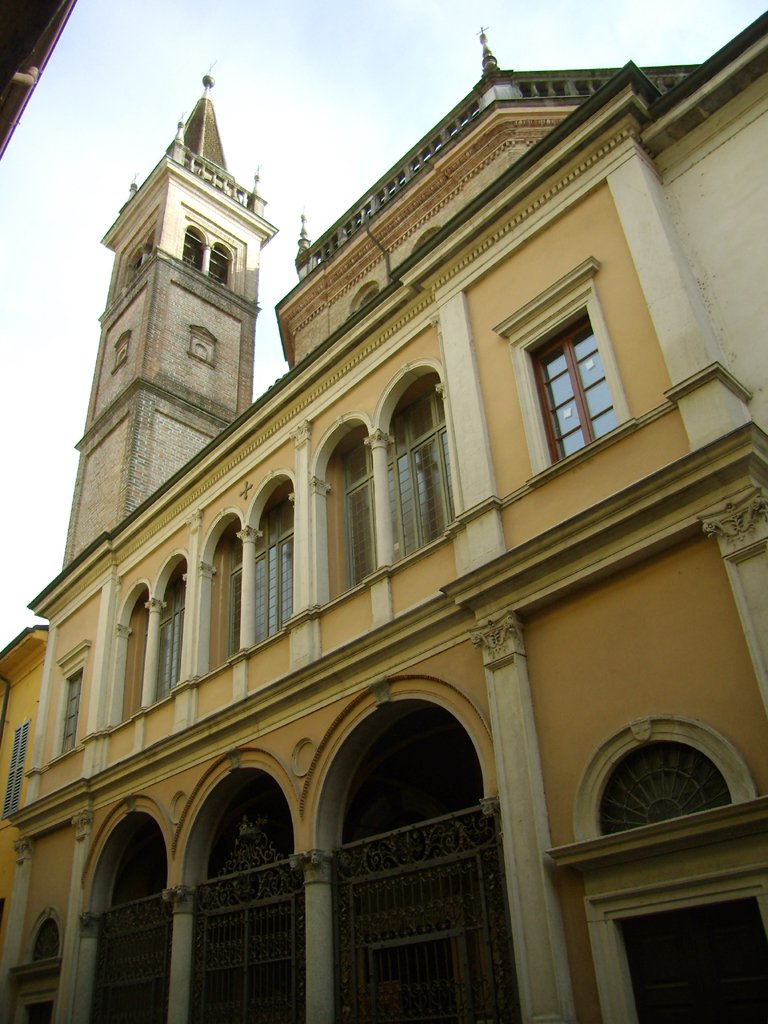

The Temple Civic of the Crowned Virgin, nestled in Lodi, Italy, is a one-kind masterpiece of the Lombard Renaissance, conceived in 1488 by Giovanni Battagio, a Bramante acolyte. This architectural wonder showcases a distinctive fusion of design elements, drawing from Bramante's streamlined Classicism, and the intricate details characteristic of the Lombard Renaissance. Besides Battagio, other artists such as Gian Giacomo Dolcebuono and Giovanni Antonio Amadeo also contributed to the project.
The structure, commissioned by the Lodi commune, boasts an octagonal plan, crowned by a dome, with a bell tower constructed in 1503. The interior is a breathtaking spectacle of detailed embellishments, including an arcaded matronaeum, featuring blue and golden columns. Priceless artworks from the latter half of the 15th century to the early 19th century adorn the church, the works of multiple Lodi-based masters. Among the notable works within the church are four panels credited to Bergognone, the Berinzaghi Polyptych, and an Incoronation of the Virgin, painted by the Piazza brothers.
Callisto Piazza and Stefano Maria Legnani have also left their enduring mark inside the church. The façade was completed in 1879 by Alfonsino Truzzi.
Sources: Wikipedia, OpenStreetMap, Wikidata, Wikimedia Commons
Written by Nicolo Ciampini
Discuss this with the author and others
No comments yet. Be the first to start the conversation.