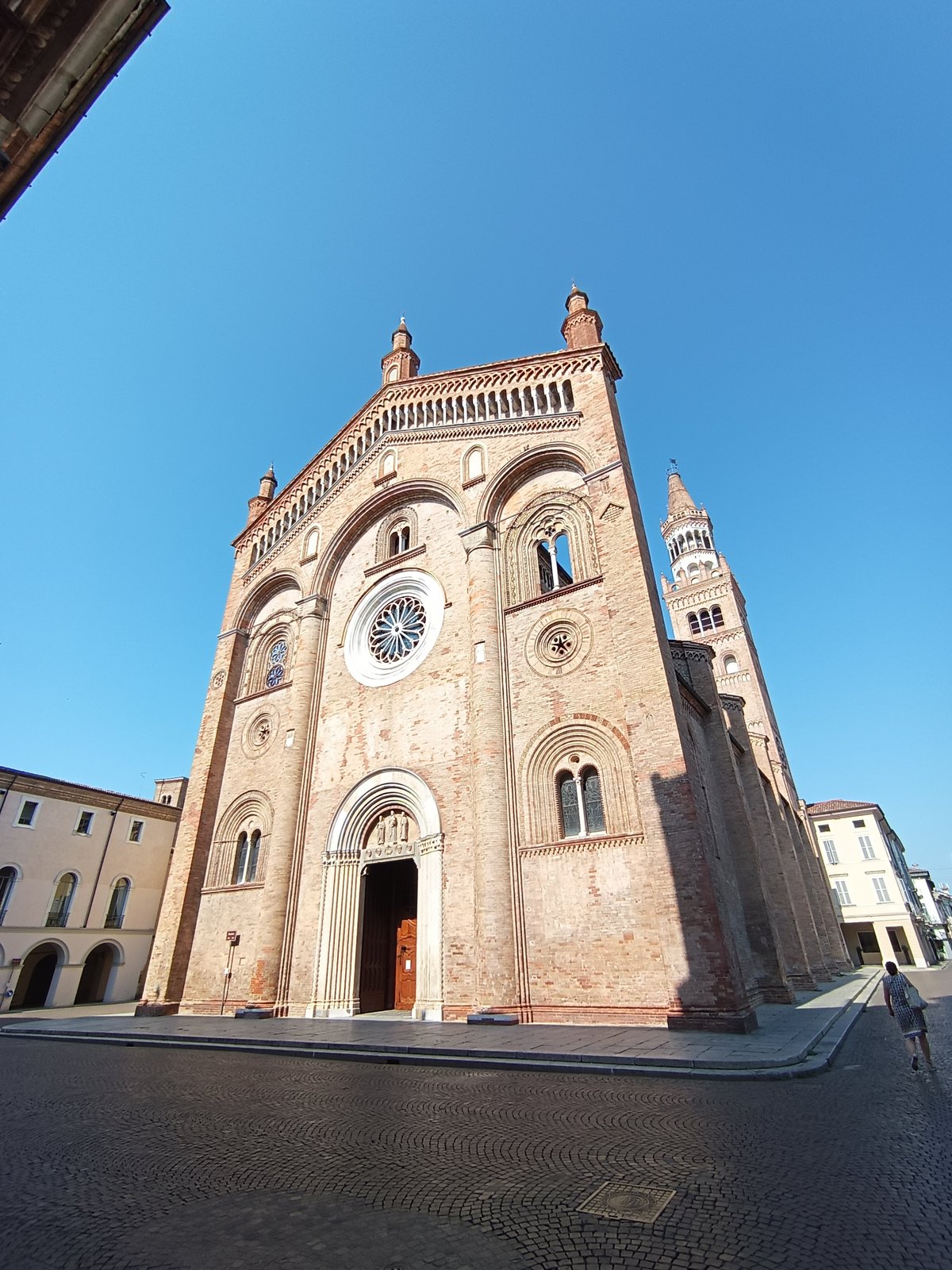

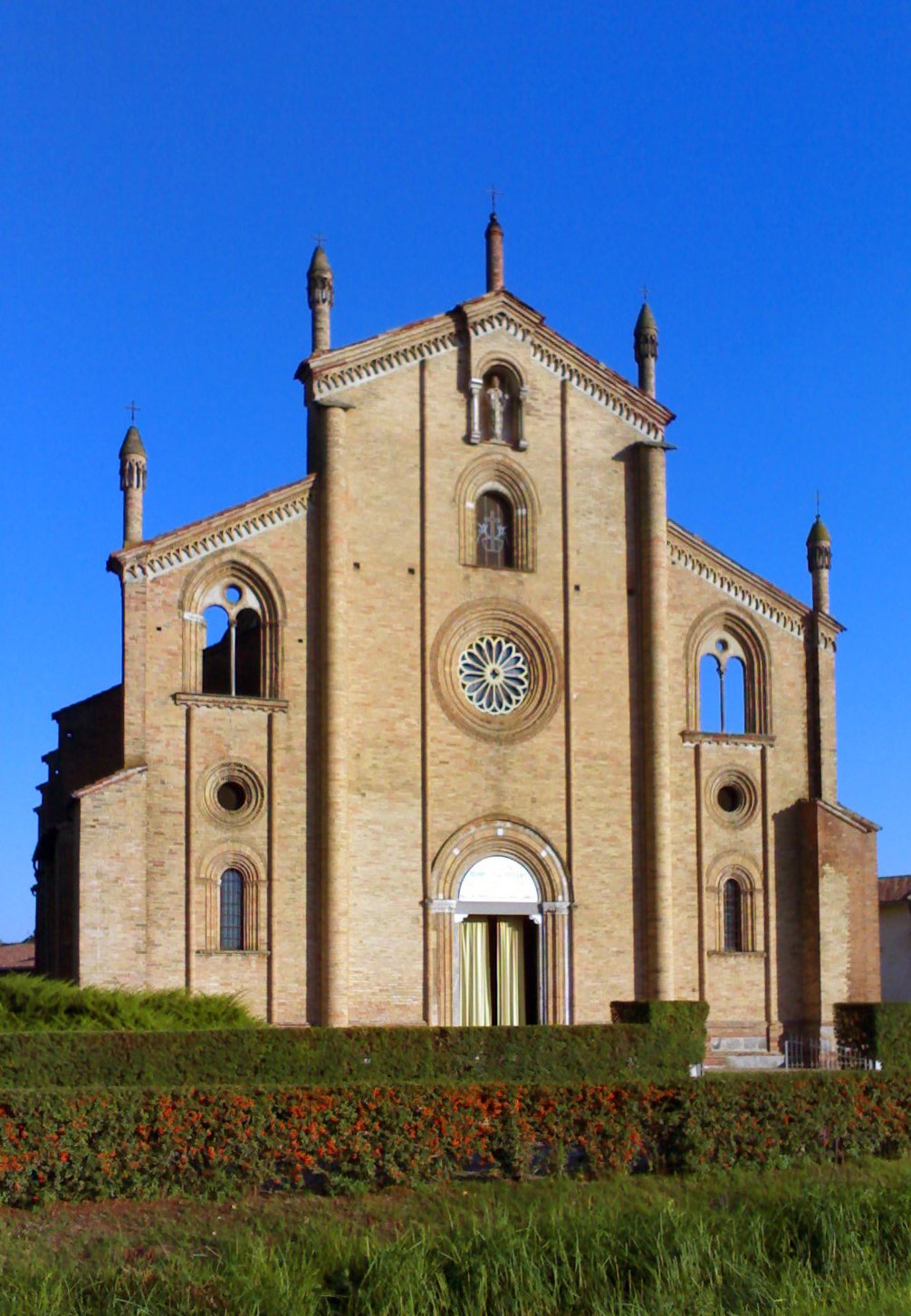
The Crema Cathedral, or Duomo di Crema, is the main and oldest place of worship of the Catholic faith in the city of Crema. It serves as the episcopal seat of the Diocese of Crema. The site's history is obscured by a lack of documents before the year 1000, though Roman artifacts found during restorations in the 1950s suggest the possibility of an ancient pagan temple. Tradition holds that a small church dedicated to Santa Maria della Mosa existed here in early Christian times, on a defensible ridge protected by natural watercourses.
In the 11th century, a large church nearly identical in size to the current structure existed on the site. Documents from 1098 and 1143 identify it as Ecclesia Sancte Mariae, featuring three naves with composite pillars ending in three semicircular apses. Beneath the base of the current bell tower, the remains of a small altar sink 40 cm below the floor, featuring traces of an archaic fresco possibly predating the Romanesque period.
Following a siege in 1159 - 1160, reconstruction began in 1185 under Frederick Barbarossa. The project incorporated the portal, masonry, and internal pillars of the previous structure. Construction was interrupted in 1212 when jurisdiction moved to the Diocese of Cremona, and resumed in 1284 under the Diocese of Piacenza. The new church took 57 years to complete, with work frequently halted by wars between the Guelphs and Ghibellines.
From the 1400s through the 1500s, the cathedral underwent significant changes. The crypt was excavated to raise the level of the presbytery, and new altars were added. In 1580, Pope Gregory XIII elevated Crema to a diocesan seat, making the cathedral the official episcopal seat. By the 18th century, the interior underwent a radical transformation as the simplicity of the Lombard Gothic style fell out of favor.
Sources: Wikipedia, OpenStreetMap, Wikidata, Wikimedia Commons
Written by Nicolo Ciampini
Discuss this with the author and others
No comments yet. Be the first to start the conversation.