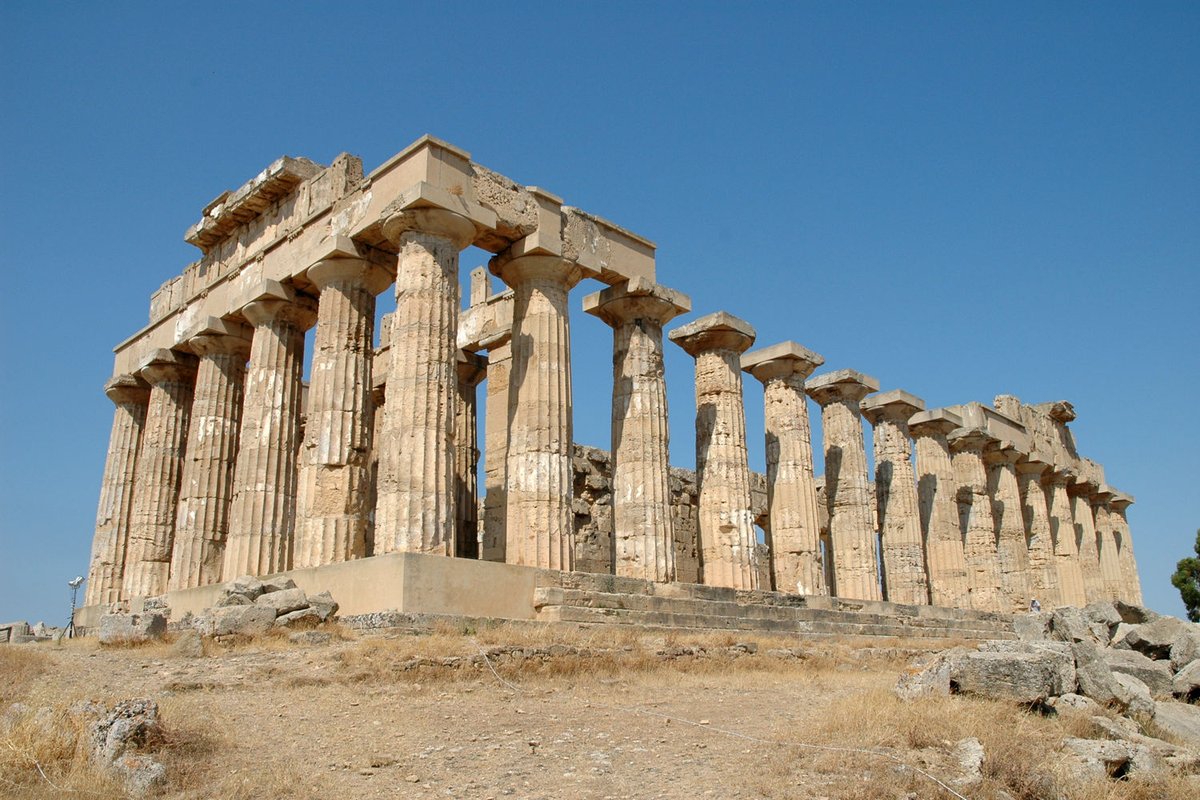

The Greeks of Selinunte were situated on the southwestern coast of Sicily, where quantities of wild celery grew on the spot. They adopted the celery leaf as the symbol on their coins.
According to the historian Thucydides, the city was founded by a man named Pammilus, though other sources place the founding date as early as 650 or 654 BC. Located between the valleys of the Cottione and Modione rivers, the city amassed enough wealth to construct massive temples and stockpile resources for war. By the fifth century BC, it was a powerful city with a population estimated between 14,000 and 19,000 people, enclosed by walls covering an area of approximately 100 hectares.
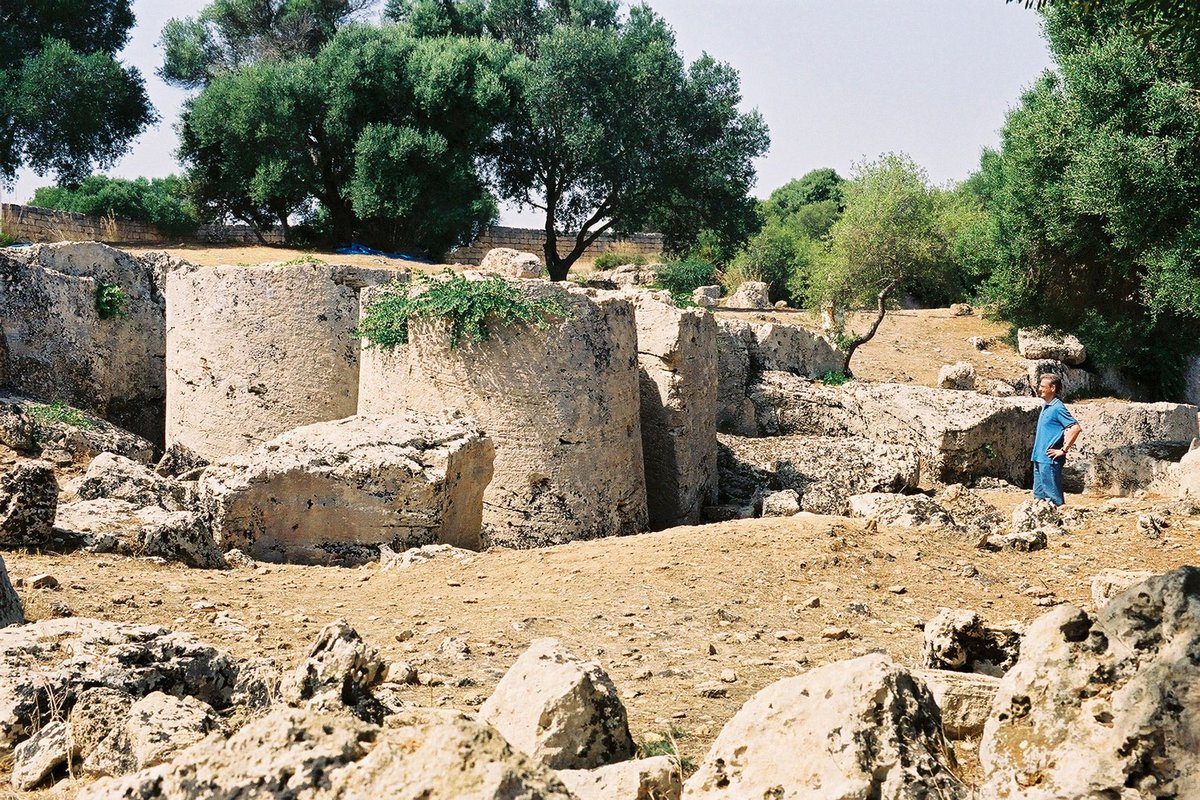
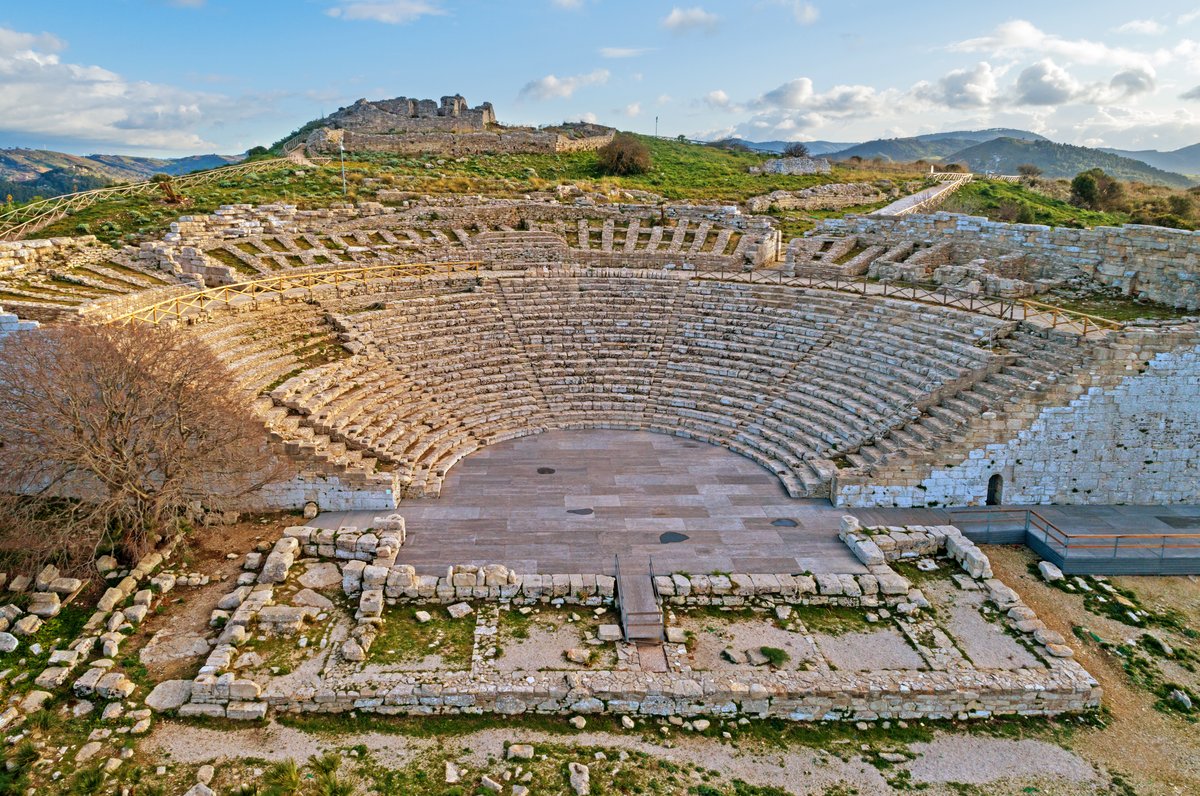
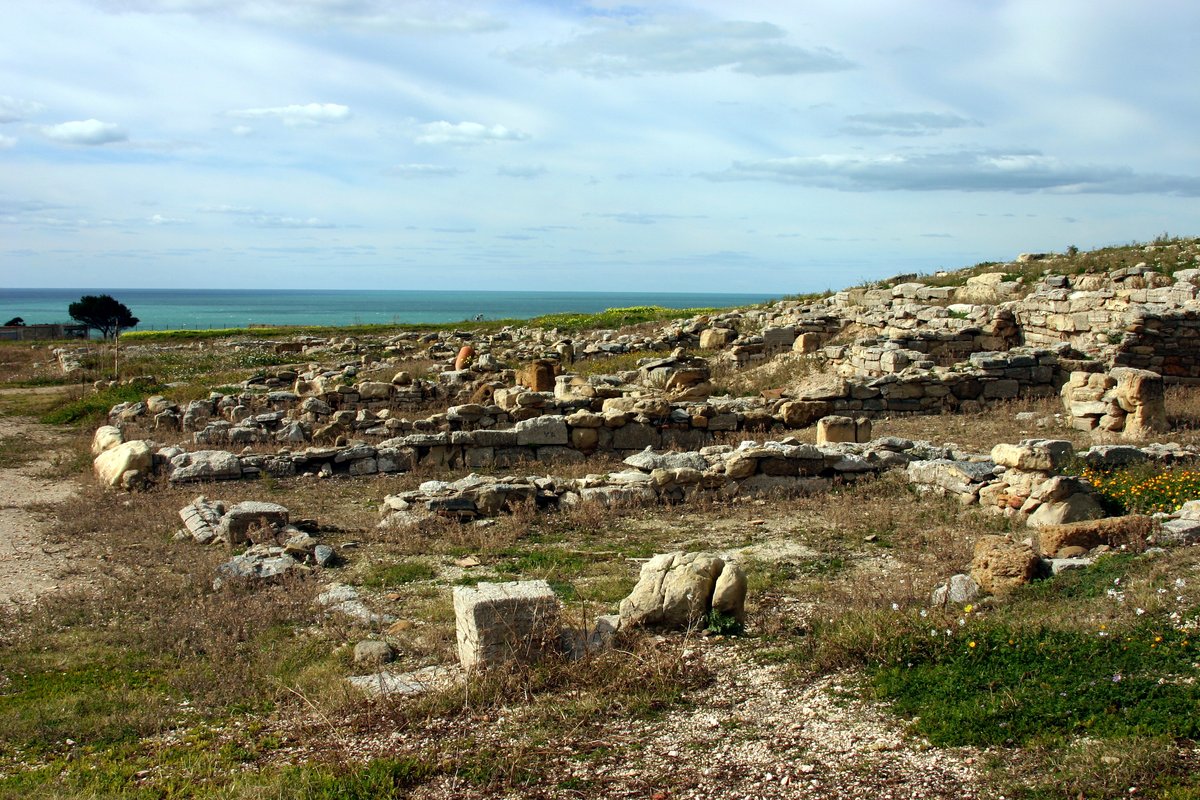
The city was eventually destroyed and abandoned in 250 BC and was never reoccupied. You can still see the many great temples today, with the earliest dating from 550 BC. While it was a significant center of trade and conflict with the Phoenicians and Segestans, very little information survives about its specific history. You can still visit the archaeological site to see the remains of this extensive ancient Greek city.
Sources: Wikipedia, OpenStreetMap, Wikidata, Wikimedia Commons
Written by Nicolo Ciampini
Discuss this with the author and others
No comments yet. Be the first to start the conversation.