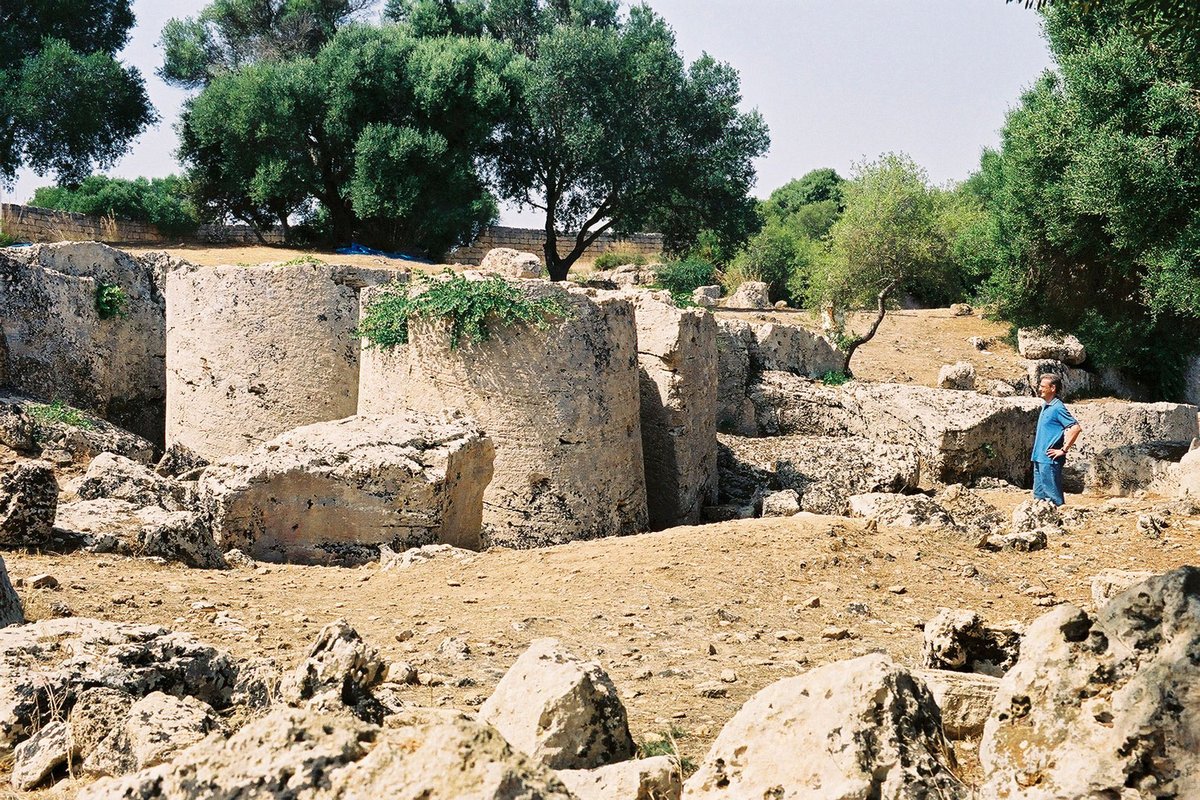

For centuries, Cave di Cusa served as a monumental stone quarry for the ancient Greek city of Selinunte, providing the essential building materials for its sacred temples. Its stone was a favorite choice for its unique texture and resistance to wear, making it ideal for constructing the local Greek temple. This site, located approximately 3 kilometers south of Campobello di Mazara, was mined for about 150 years. It is estimated that 150 people worked on the site, and it has been suggested that many of the workers were slave laborers.
However, in 409 BC, the quarry was abruptly abandoned due to the arrival of Carthaginian invaders, leading to the eventual defeat of Selinunte. Today, Cave di Cusa is an official Sicilian archaeological site and a tourist attraction. It is tucked away on a ridge that spans from east to west, measuring 1.8 kilometers in length. Upon arrival, visitors can observe 60 blocks of stone, strewn haphazardly around the site, in various stages of carving. The stone at Cave di Cusa was intended for the construction of columns at the temple, and many pillar components still exist at the site today.
Intriguingly, the rock is in different stages of being quarried, suggesting that the abrupt abandonment occurred quickly. Evidence of pick marks on the rocks from various stone tools hint at the efficient and advanced methods used to quarry the stone. Some stones even show grooves and holes put on ‘architraves’ to allow ropes and beams to be threaded through them, facilitating the lifting of the rock. Cave di Cusa is a testament to ancient craftsmanship and ingenuity.
Today, the site remains a popular tourist destination, where visitors can marvel at the educational and beautiful pillar components that have been well preserved.
Sources: Wikipedia, OpenStreetMap, Wikidata, Wikimedia Commons
Written by Nicolo Ciampini
Discuss this with the author and others
No comments yet. Be the first to start the conversation.