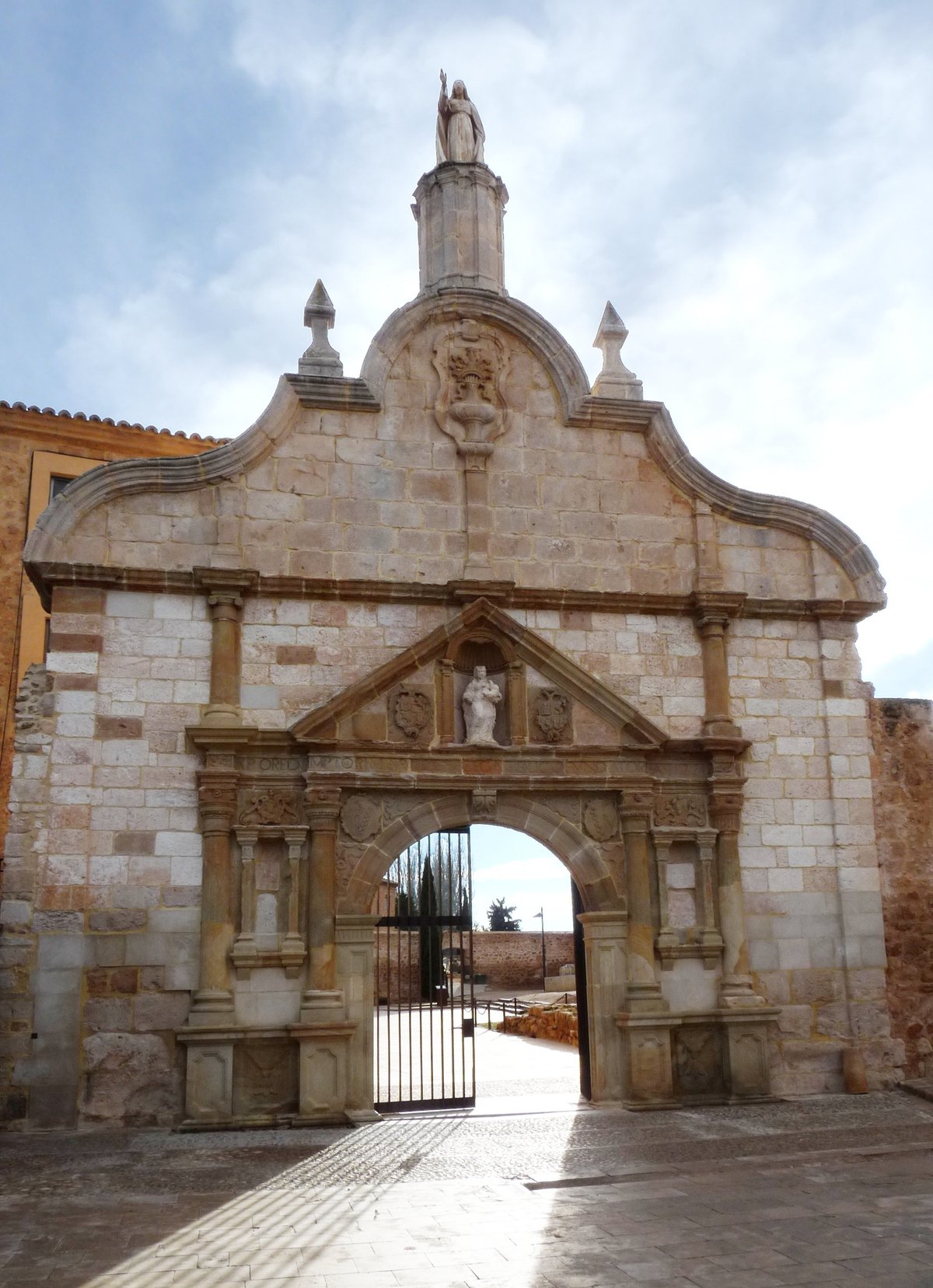

The history of this monastery begins with a firm royal vow. Following the siege of Coria in 1142, King Alfonso VII of León and Castile committed to establishing a Cistercian community. He initially brought monks from the abbey of Berdoues in Gascony to Cántabos. However, the lack of water required a strategic relocation to the banks of the Jalón river in 1162. This movement shows a persistent commitment to finding the right environment for the community to flourish.
King Alfonso VII laid the foundation stone on 20 March 1179. Supported by royal protection and heavy donations, the construction progressed with impressive speed. The church follows a traditional Cistercian model with a three nave plan, a transept, and five apsidal chapels. While the complex was enlarged in the 16th century, the undercroft and the church maintain their austere 12th century character. Each stone invites us to look closer at the architectural integrity of the past.
The Gothic cloister serves as a final resting place for the Lords of Molina, including the first holder of the title, Manrique Pérez de Lara. The site faced potential ruin in the 19th century, but the archaeologist Enrique de Aguilera y Gamboa saved it by documenting and inventorying its artworks. Since 1930, a community of monks of the Cistercian Order of the Strict Observance (Trappists) has lived here.
Sources: Wikipedia, OpenStreetMap, Wikidata, Wikimedia Commons
Written by Nik Frost
Discuss this with the author and others
No comments yet. Be the first to start the conversation.