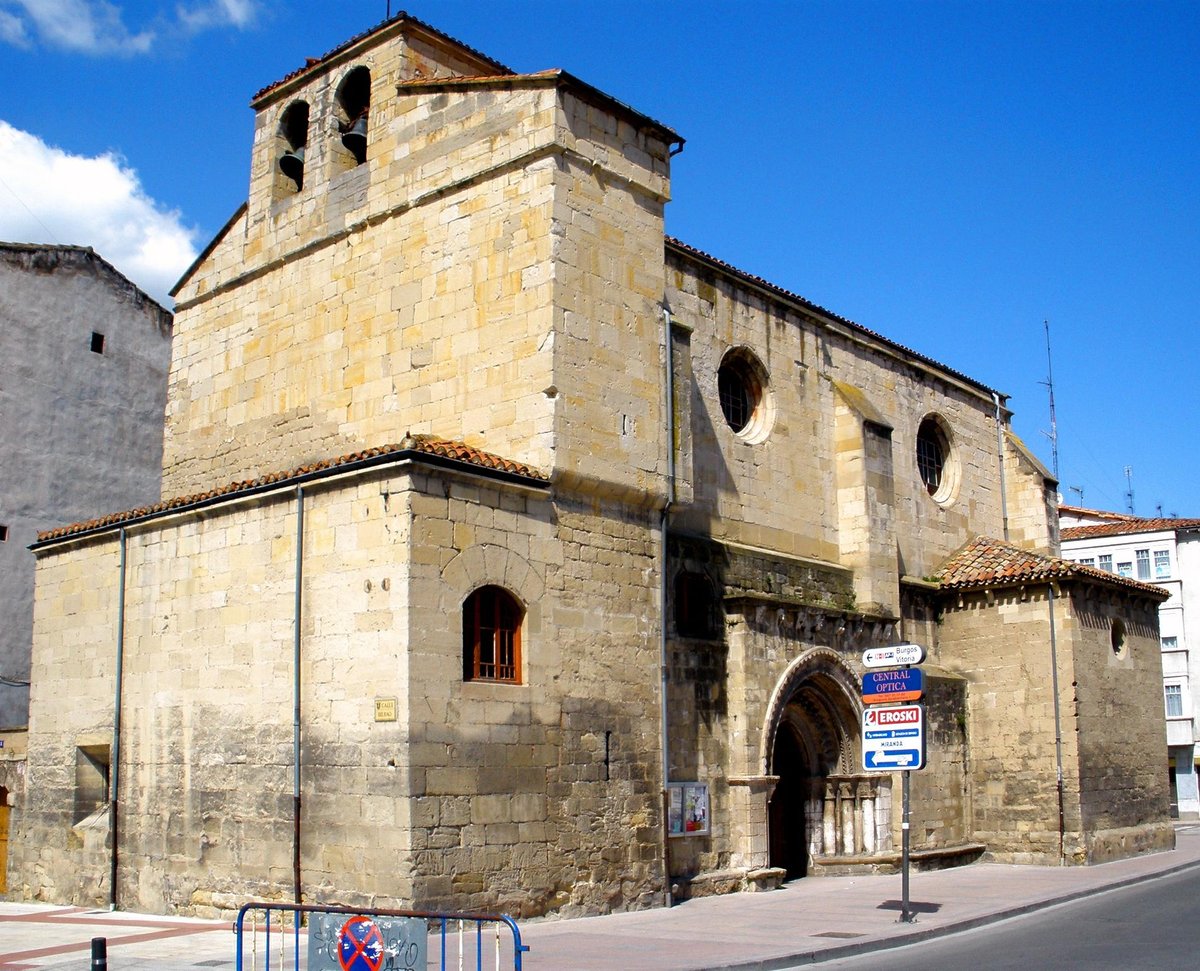

The Espíritu Santo Church, originally dedicated to San Nicolás until the Spanish Civil War, is a Romanesque-style cathedral located in Miranda de Ebro. Its apse, a rare feature in Romanesque architecture, consists of five separate sections, each section having five deeply recessed, semicircular-arched windows. The apse is covered with a barrel-vaulted ceiling formed with thick ribs. The church's apse is a protected monument in the Historical-Artistic Asset of Miranda de Ebro. The four iconographic capitals depict religious symbols related to sin, while the two vegetal capitals represent symbols associated with the union of the Kingdoms of Castile and León in 1230. These capitals are believed to have been carved around the time of the union, predating the church's official construction.
Sources: Wikipedia, OpenStreetMap, Wikidata, Wikimedia Commons
Written by Nik Frost
Discuss this with the author and others
No comments yet. Be the first to start the conversation.