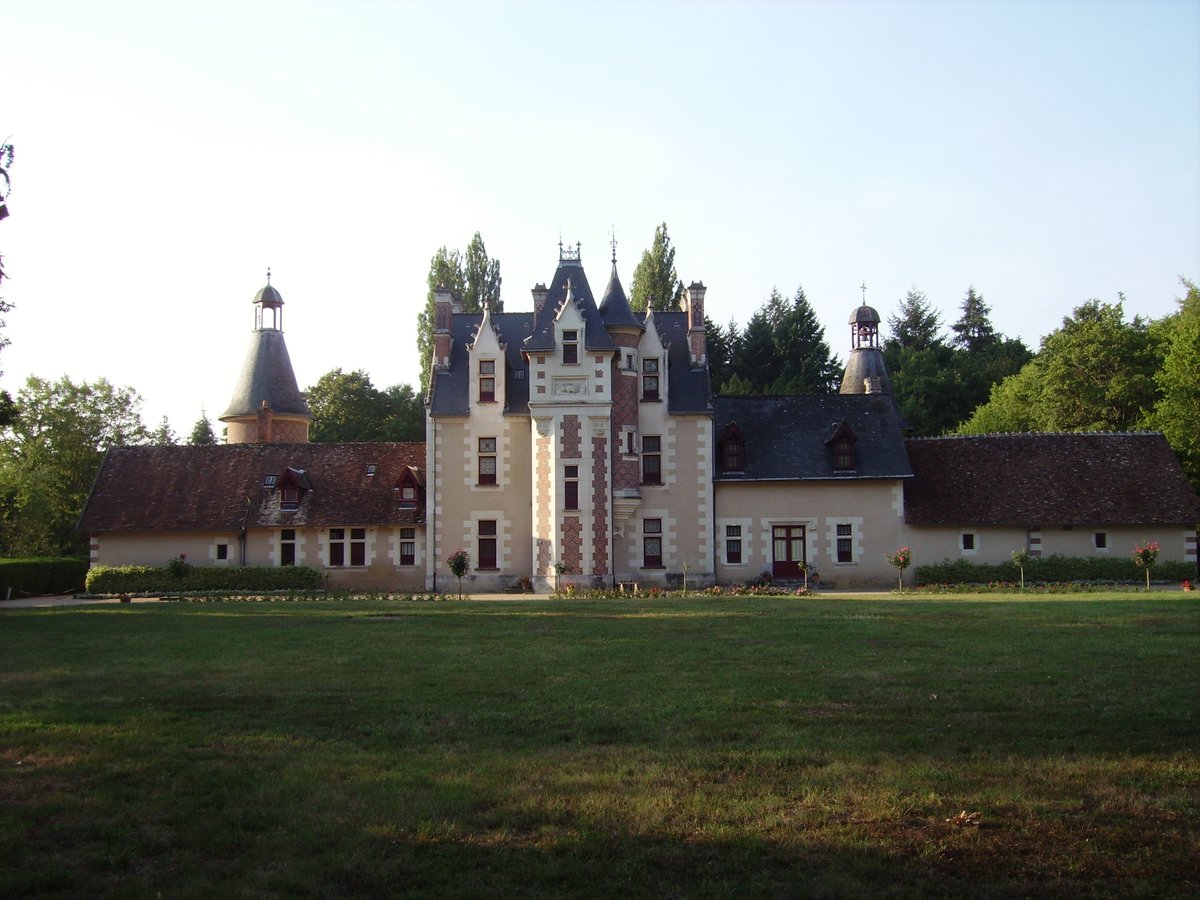

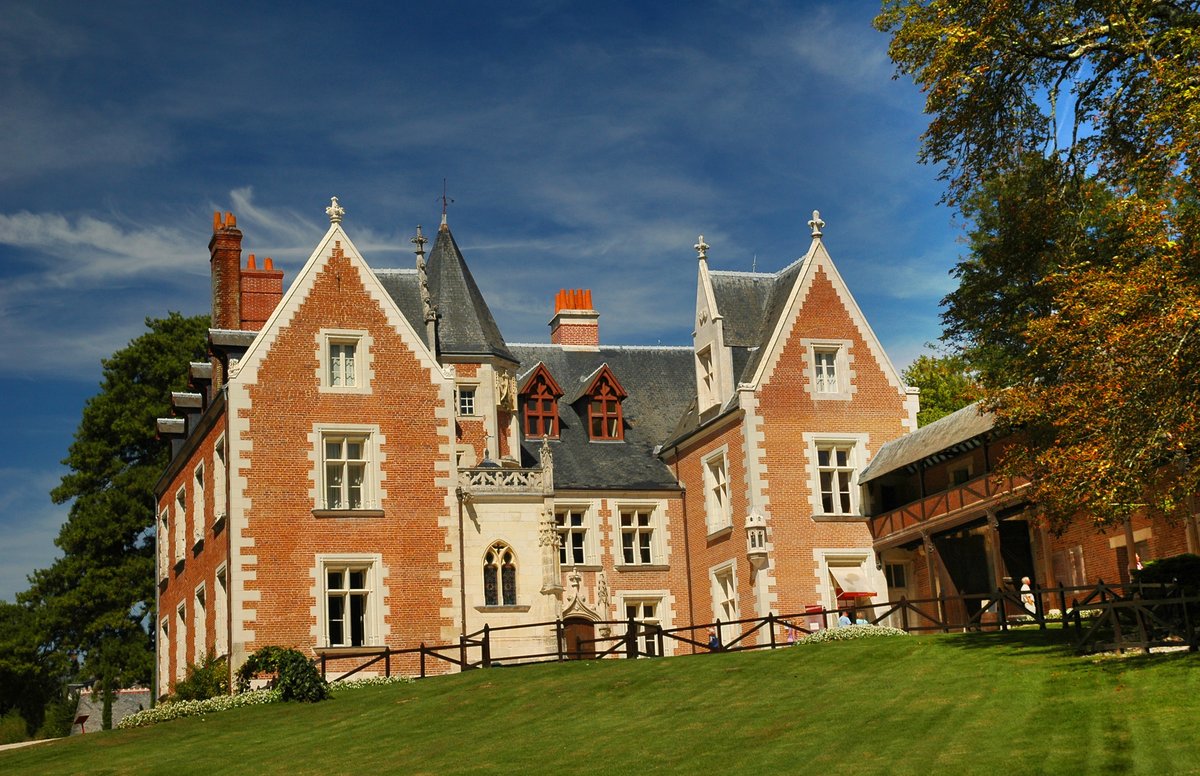
The Château de Troussay is one of the smallest châteaux in the Loire Valley, located in Cheverny. Originally a small manor house, it belonged to Louis de la Saussaye in the 19th century. De la Saussaye was noted for his work in the preservation of old buildings. His restoration of Troussay allowed him to integrate many styles and objects into the building, giving it a very eclectic style, described as akin to a 6-year-old who raided her mother's wardrobe.
De la Saussaye was a historian of the Loire châteaux and a friend of Prosper Mérimée and Félix Duban. He recognized the problems of protecting the Loire inheritance following the destruction of many châteaux during the Revolution. Following his motto "fort à l'abandon," he restored the château with the architect Louis de la Morandière and incorporated decoration from other destroyed châteaux. This included a Renaissance capital from the Château de Bury and a porcupine emblem from l'hôtel Hurault de Cheverny in Blois.
The façade of François I is heavily influenced by the Château de Chambord, featuring insets of slate in the chimneys and stone mullion windows. The garden façade is in the Louis XII style, a mixture of late Gothic and early Renaissance styles. One notable feature is the door to the tower, the original main door to the château, which de la Saussaye moved from the François I façade because it was considered too small. Above this door, he engraved a Greek sentence ascribed to the general Themistocles.
Visitors can access six rooms on the ground floor, which are tiled throughout with red and yellow tiles dating from the late 15th century. The ceilings are of notable interest; in the Dining Room, the ceiling à la française is inspired by the François I wing of the Castle of Blois and is beamed with painted decoration, while the Music room remains one of the original ceilings. The château remains a privately owned and inhabited property today.
Sources: Wikipedia, OpenStreetMap, Wikidata, Wikimedia Commons
Written by Nicolo Ciampini
Discuss this with the author and others
No comments yet. Be the first to start the conversation.