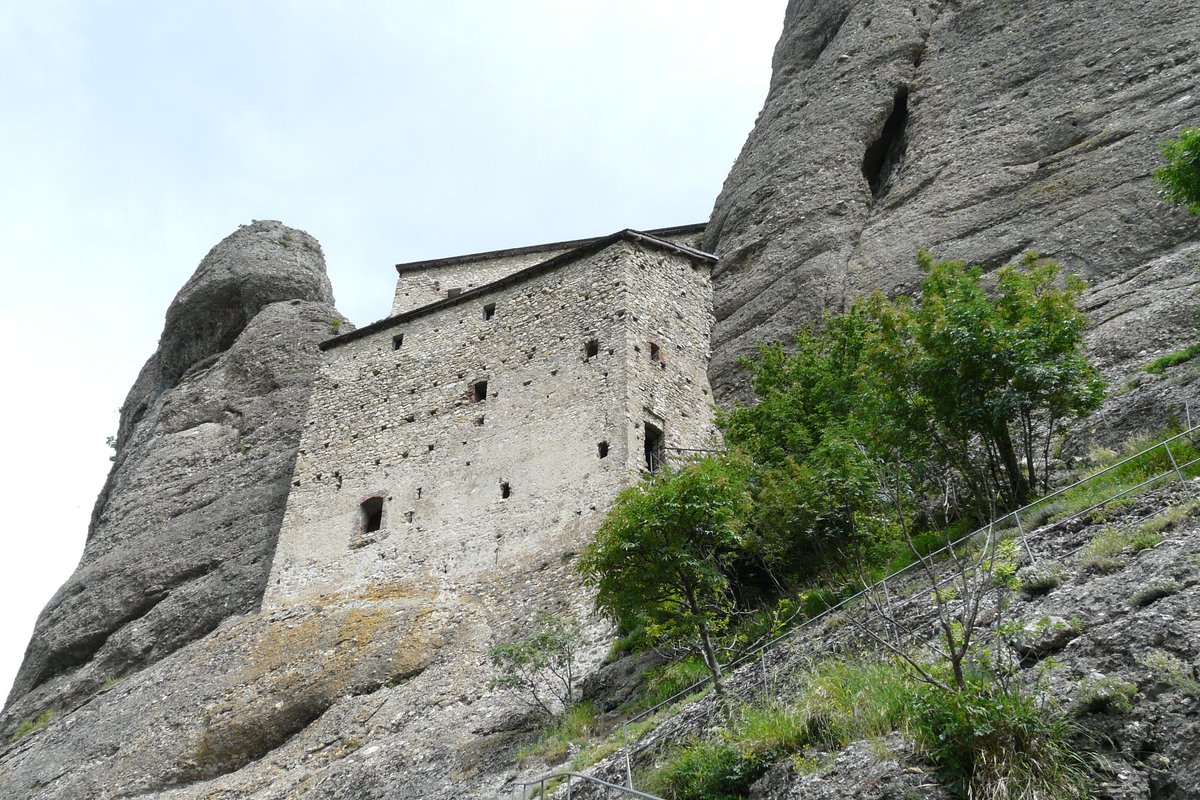

In 1252, a feudal lord named Opizzone assumed the surname della Pietra because of his link to this formidable fortress. The structure is situated between two spurs of rocky conglomerate that serve as natural bastions, dominating the road along the Vobbia torrent. Visitors can reach the site by trekking twenty minutes through a woodland path from the provincial road or by taking the longer Sentiero dei Castellani from the hamlet of Torre di Vobbia.
The castle has a long history of ownership and conflict. It passed to the Spinola family and then to the Adorno brothers in 1518. In 1579, bandits seized the fortress until it was reclaimed by the Republic of Genoa. In 1797, French troops arrived in the Apennines and, by the will of Napoleon Bonaparte, the Feuds were suppressed. The manor was abandoned by its last charismatic castellan, Michele Bisio, and after a few years was set on fire, leading to its progressive ruin. The bronze from the cannons was taken by the bishop of Tortona to be used in melting the bells of the church of Santa Croce di Crocefieschi.
Today, the ruins are managed by the Ente Parco dell'Antola and are open to the public for guided tours of the interior and the Torrione Grande. The site features a restored central hall with a vaulted ceiling and a reconstructed attic. One of its most significant features is a cistern carved directly into the rock at the foot of the "torrione", the natural rocky spur to the west, which collected rainwater from the roofs through channels still visible today.
The castle can be visited on holidays and, by prior agreement with the Ente Parco Antola, for groups and teams on other weekdays. During the summer period, from April to October, the park organizes a program of historical events and provides a refreshment point promoting typical local products.
Sources: Wikipedia, OpenStreetMap, Wikidata, Wikimedia Commons

Written by Nicolo Ciampini
Discuss this with the author and others
No comments yet. Be the first to start the conversation.