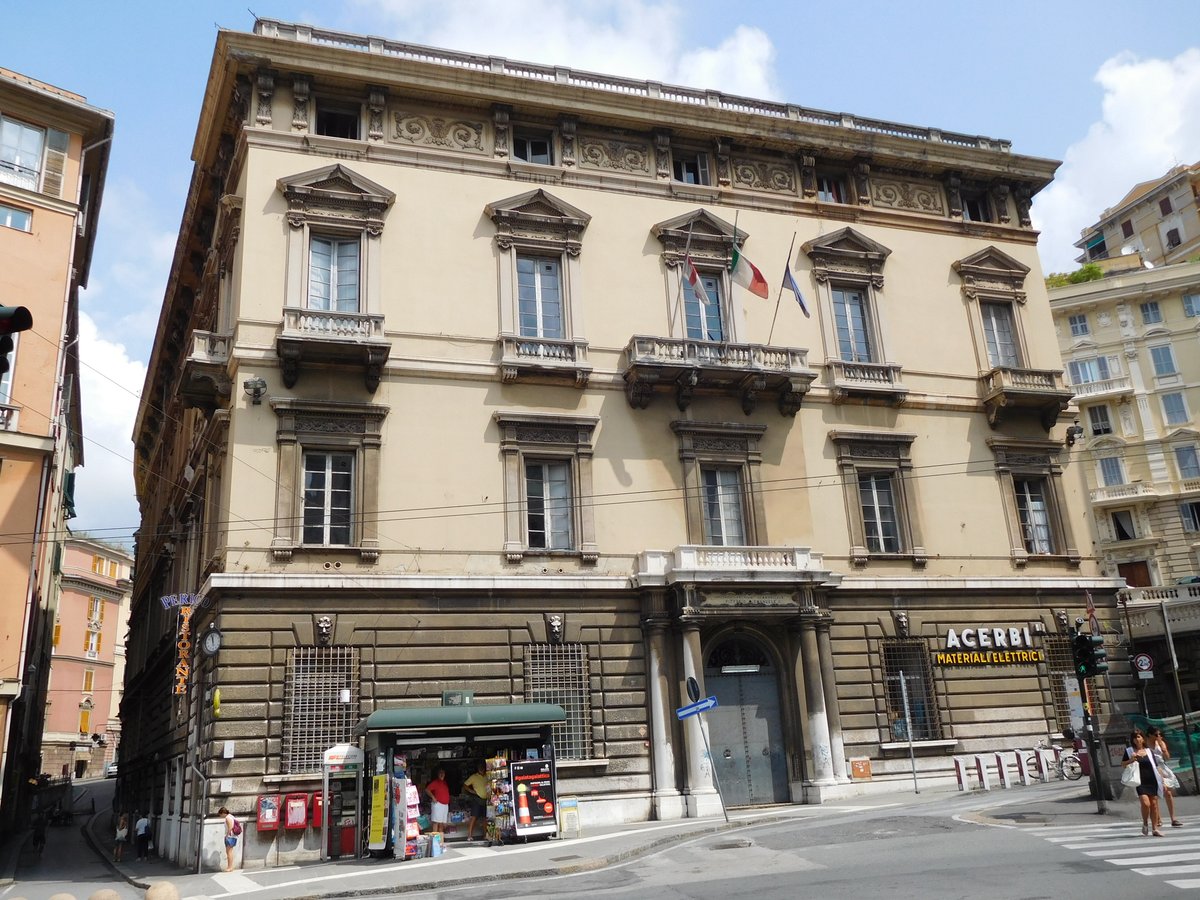

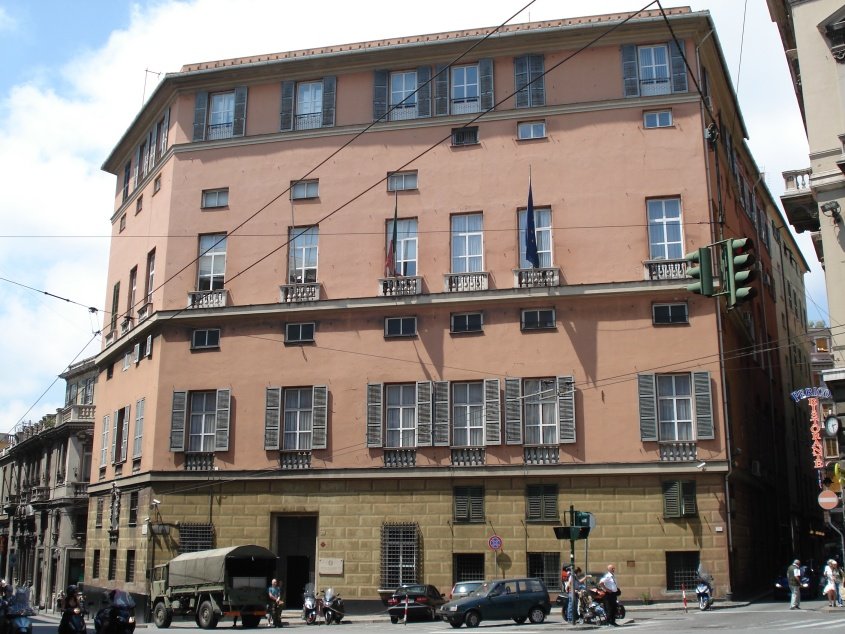
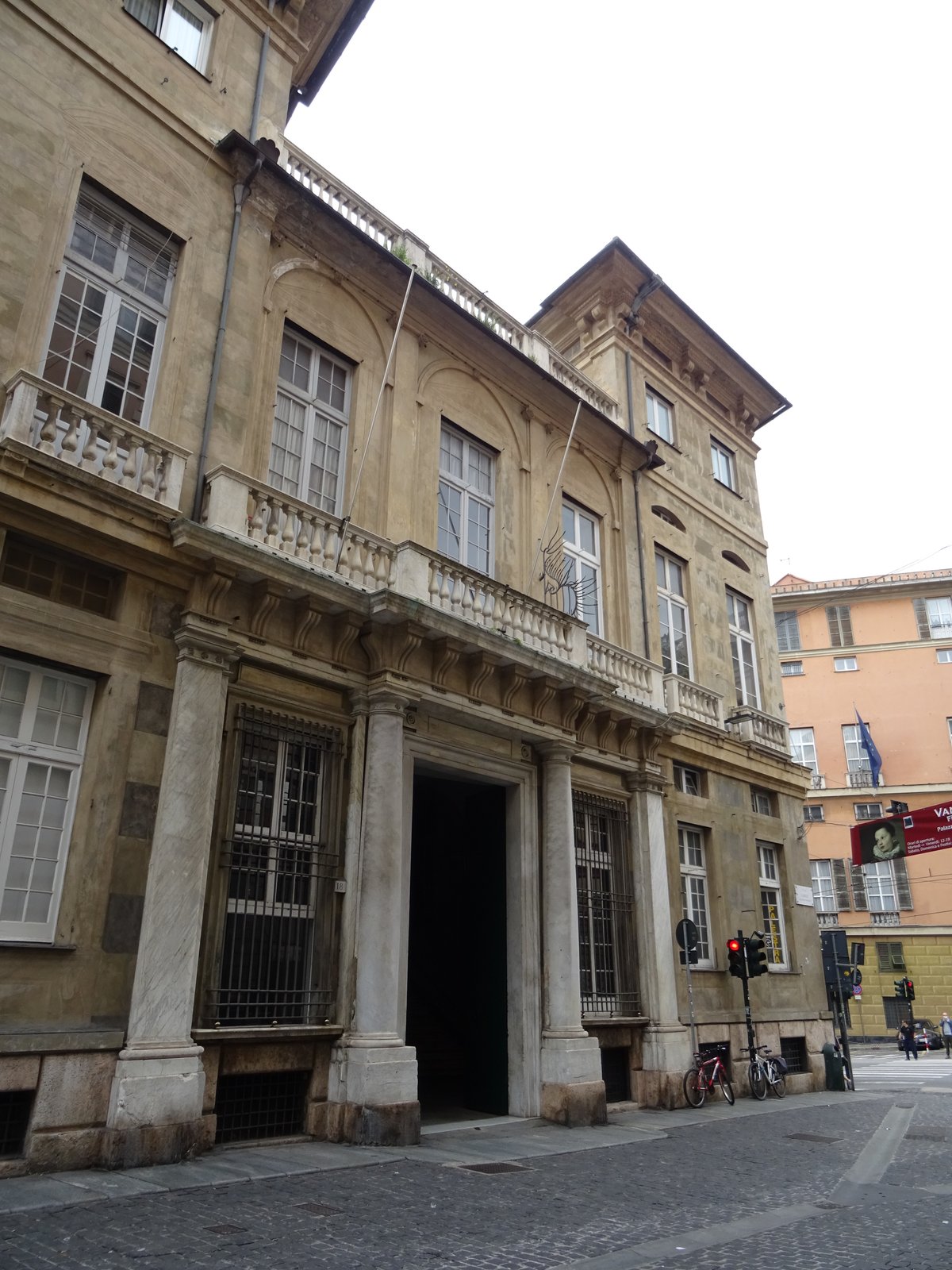
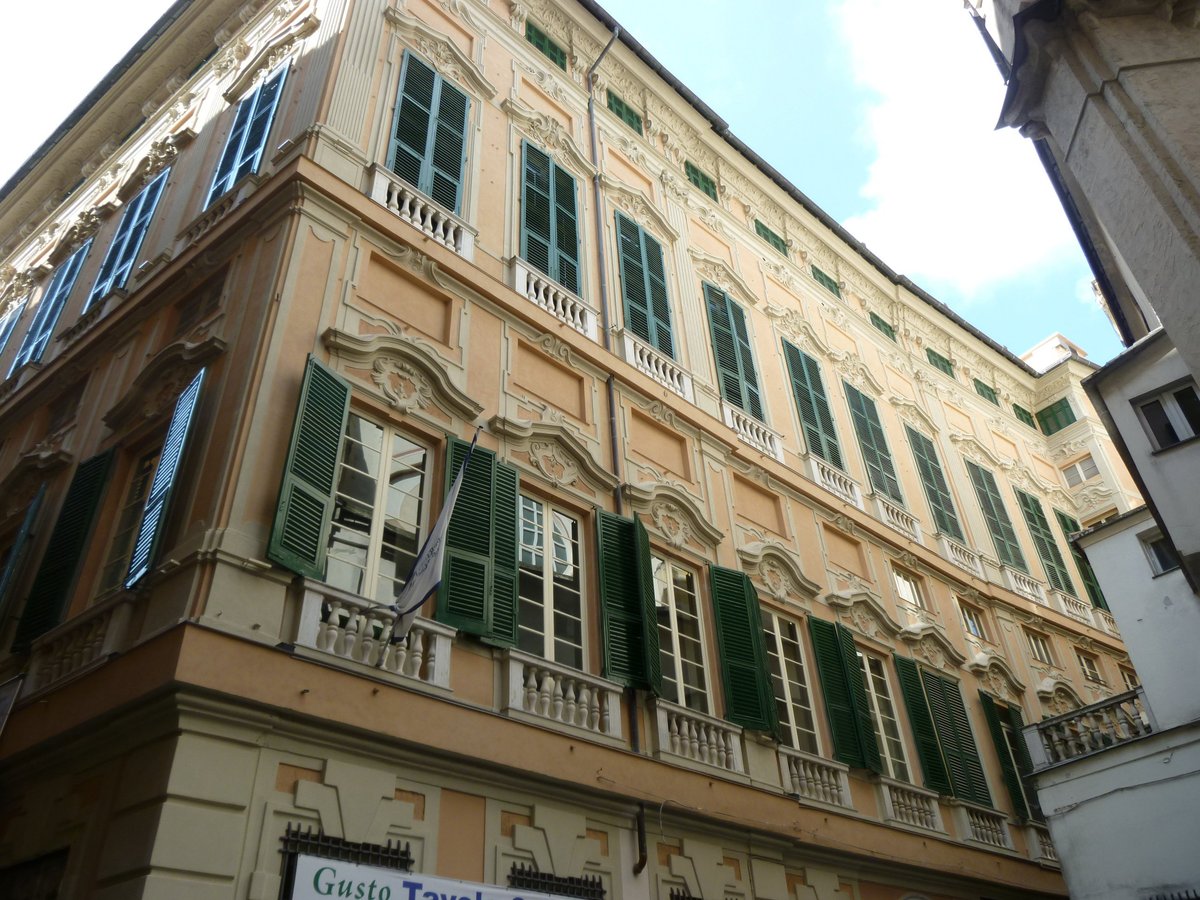
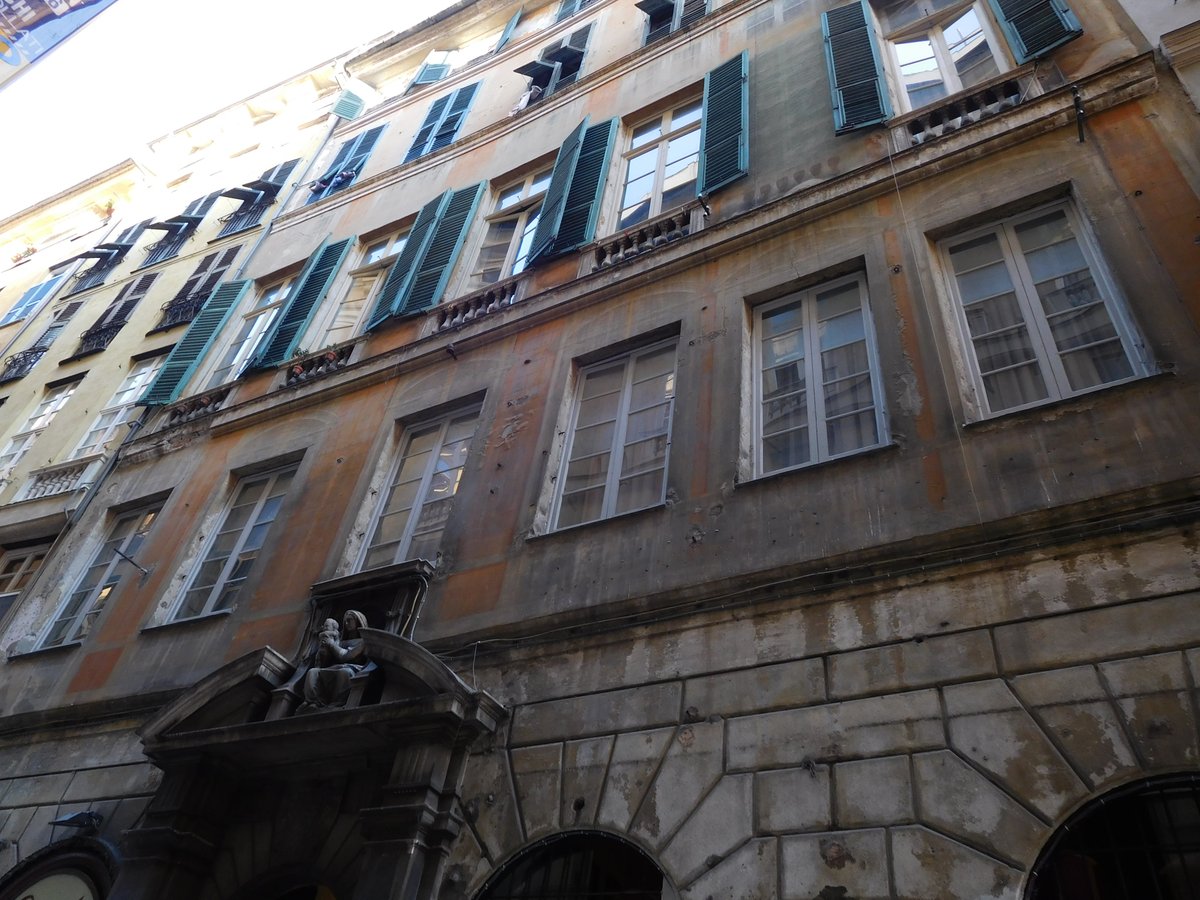
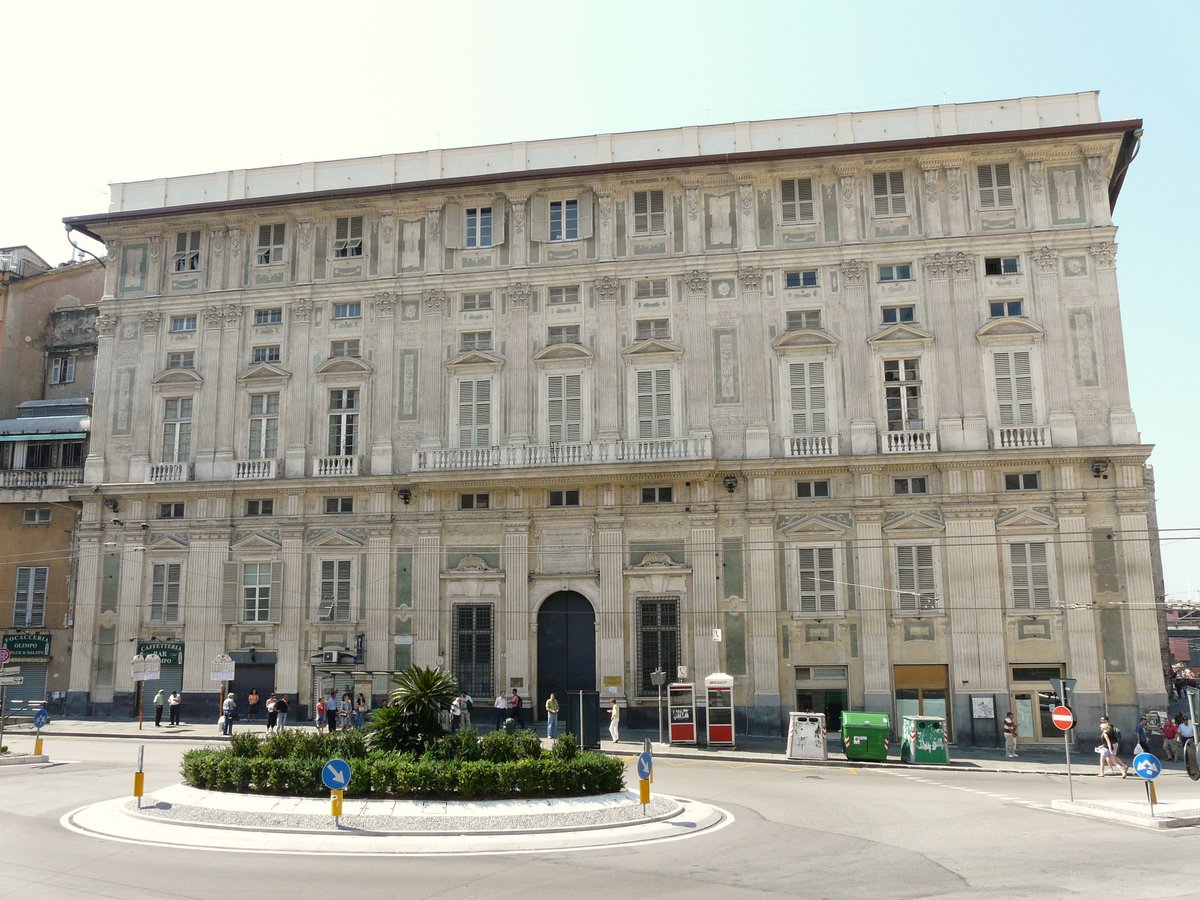
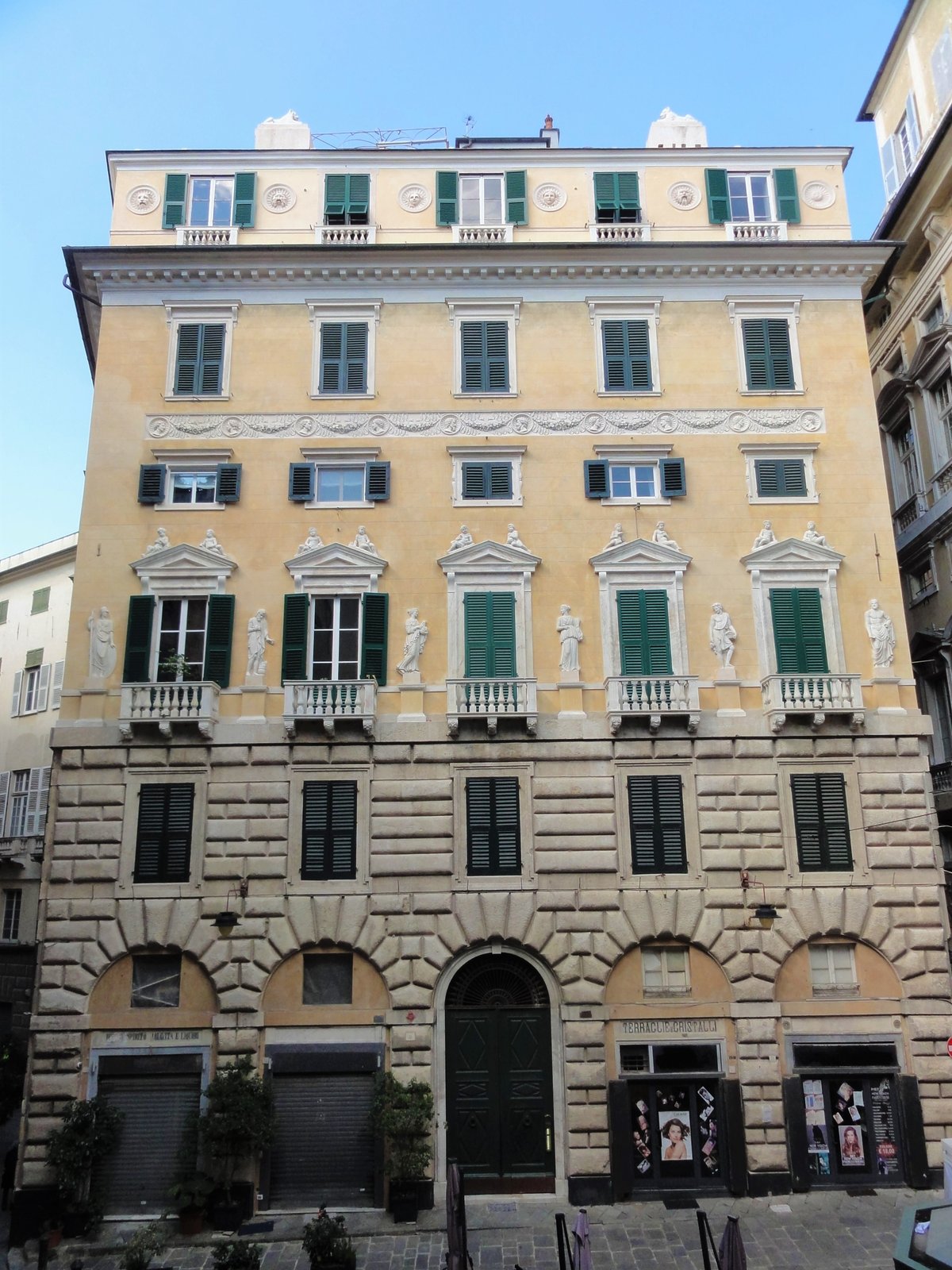
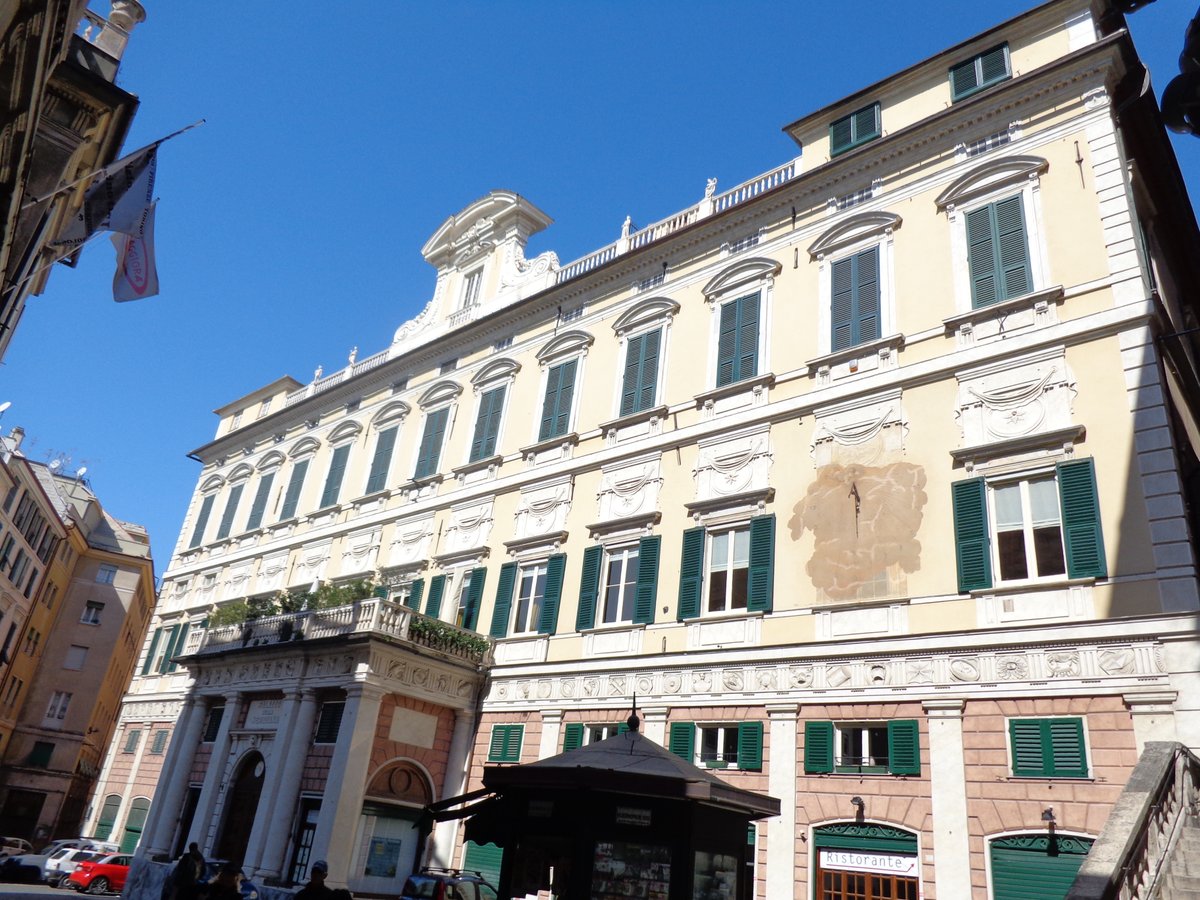
Palazzo Bartolomeo Lomellini stands in the historic center of Genoa, situated in the Vallechiara area. The building occupies a position outside the 12th-century walls but within the old city limits of 1320-1536. Due to large voids in its core, the residential structure appears suburban in character, though its original volume was designed to align harmoniously with the surrounding landscape, a composition captured in the Rubensian prospect.
Constructed between 1565 and 1570 by Bartolomeo Lomellini, the palace was part of the Rolli system from 1588 to 1664, serving as a residence for high-ranking guests during state visits. The building remained in the Lomellini family until 1757, passing through the Rostan Reggio family before being sold to the Raggio family in 1892. Significant modifications occurred in the late 18th century when Agostino Lomellino commissioned updates that included a garden and Rococo internal decorations, including marble busts and stucco work.
Modern alterations and extensions, including a 1908 expansion and additions for its use as a state school starting in 1875, have altered the building's appearance. Damage occurred to the upper floors during wartime, resulting in the loss of a monumental fireplace and decorations that once housed the Arcadi. Despite these changes, the original proportions and some frescoes remain visible, preserved in both the physical structure and the historical records of the site.
Sources: Wikipedia, OpenStreetMap, Wikidata, Wikimedia Commons
Written by Nicolo Ciampini
Discuss this with the author and others
No comments yet. Be the first to start the conversation.