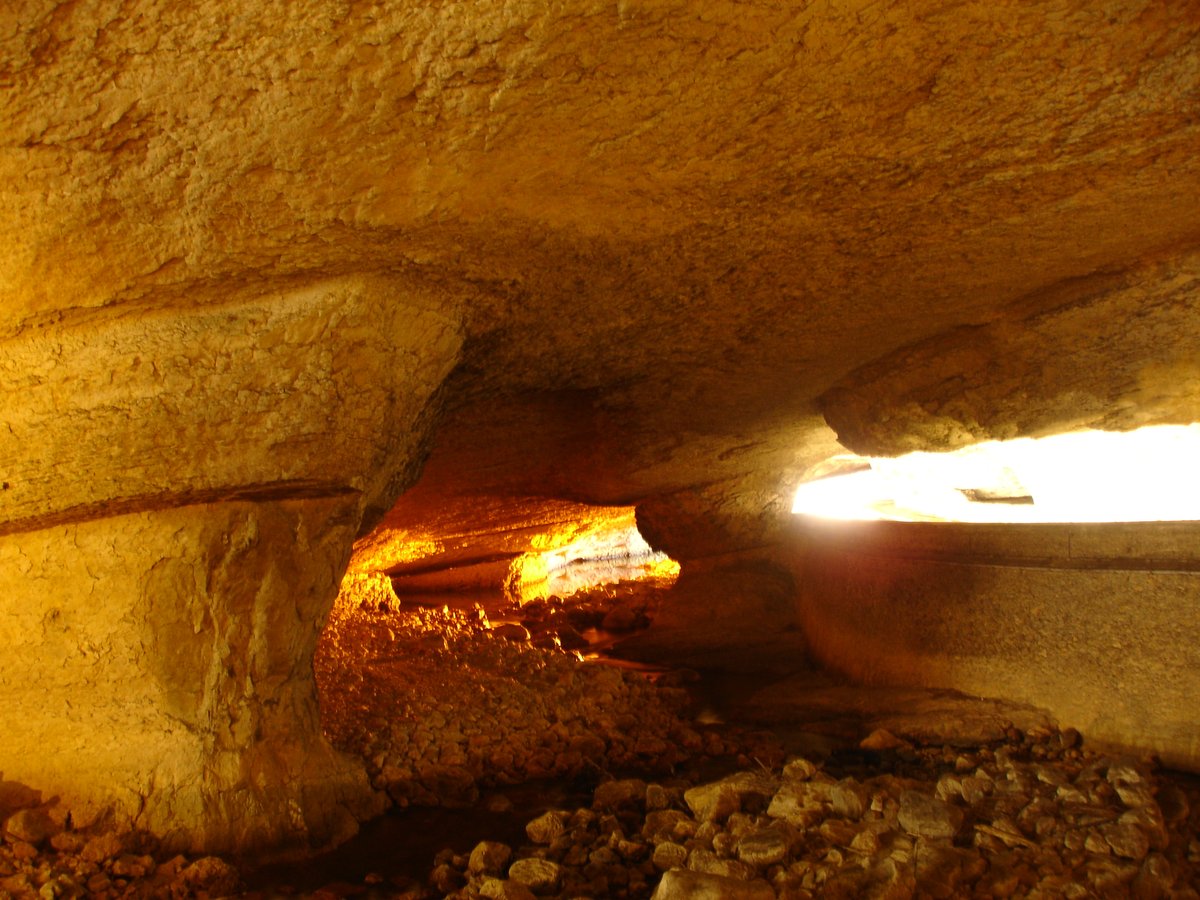

The Grotte du Mas-d'Azil, a cave located in the French commune of Mas-d'Azil, stood the test of time as it was occupied by various prehistoric groups. It was initially the dwelling place of the Fawn with Birds, an artifact dating back to the Middle Magdalenian era, and the Coco des roseaux, a prehistoric hunting scene that showcases the ingenuity of our ancestors. The cave even houses a young girl's skull, 'Magda', adorned with centuries-old carvings, offering a glimpse into the cultural exchanges that occurred between different communities.
Leaving behind their mark in the form of decorated galleries and chambers, the cave's walls are covered in engravings depicting ancient creatures such as bison, fish, and wildlife native to the region. In total, nine human representations were found within the cave, twenty thousand years in the making. The Grotte du Mas-d'Azil earned its fame when the Azilian culture, a Mesolithic industry spanning between the Magdalenian and Mesolithic periods, took its name from the cave.
As we moved into the Neolithic era, the cave continued to serve as a center for cultural and community interactions. The region's inhabitants erected multiple dolmens (large prehistoric tombs) around the village and left behind pottery remnants, some dating back to the Gauls.
The study of the cave and its contents has been a collaborative effort of multiple archaeologists, geologists, and historians throughout the years, including Jean-Jacques Pouech, Félix Garrigou, and more recent excavations in the 2010s that uncovered evidence of dwellings dating back to 35,000 years ago.
With its rich cultural heritage, the Grotte du Mas-d'Azil has been a witness to significant events throughout history, hosting persecuted Christians in the early centuries of the Common Era and serving as shelter for both Cathars and Protestants during the Middle Ages. The cave was even requisitioned by the Société nationale des constructions aéronautiques du Midi during World War II, although plans for an aircraft factory within the cave were ultimately abandoned.
Sources: Wikipedia, OpenStreetMap, Wikidata, Wikimedia Commons
Written by Nicolo Ciampini
Discuss this with the author and others
No comments yet. Be the first to start the conversation.