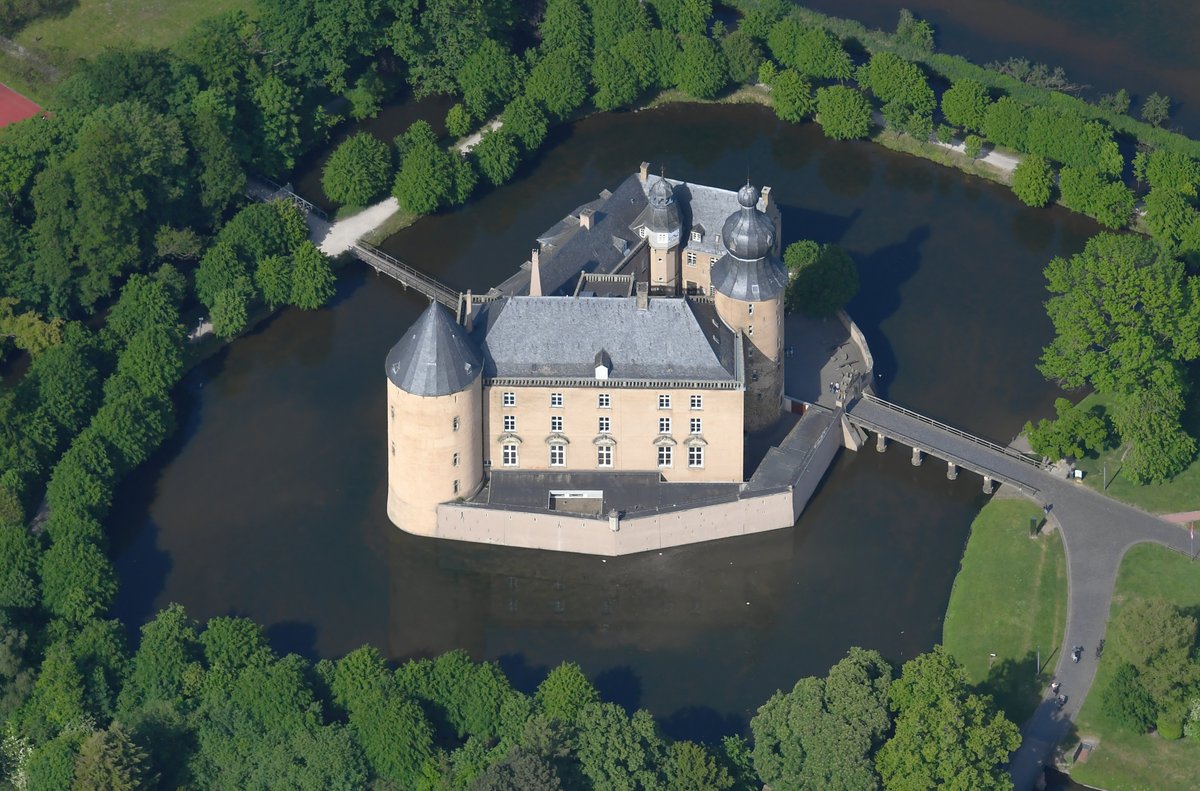
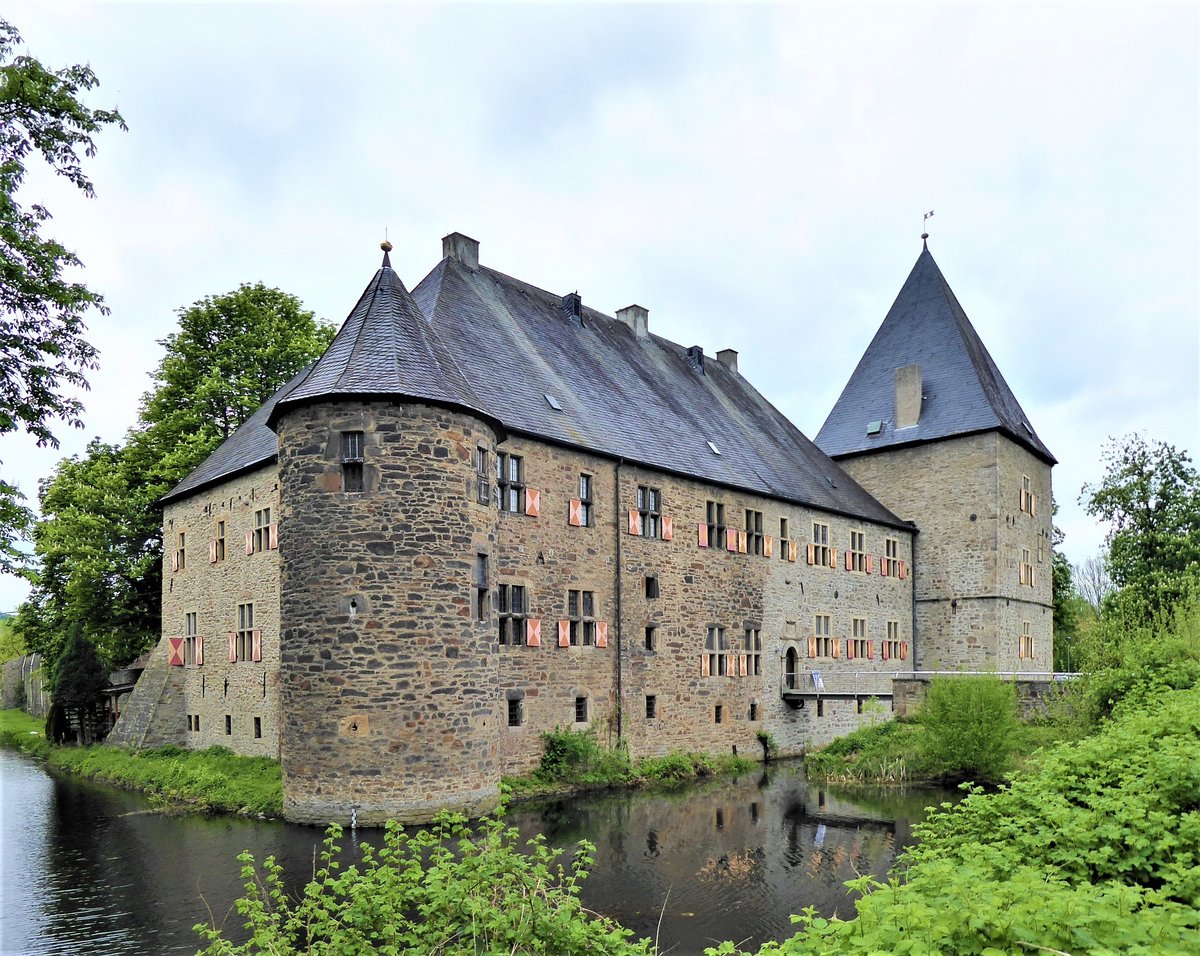
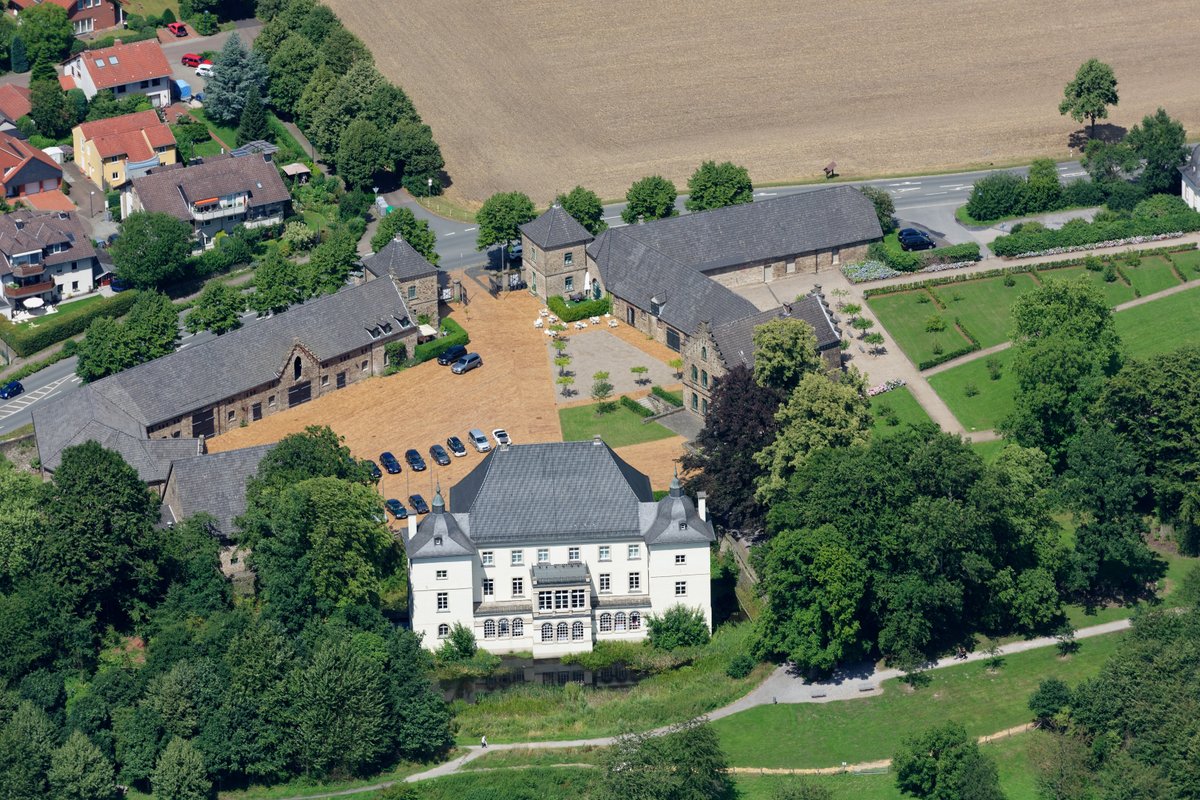
The castle is situated on two islands surrounded by an extensive system of moats in a former swamp area of the Bocholter Aa. This current palace developed from the gradual conversion of a water castle over 900 years old. The original water castle was built by the Lords of Gemen, an influential Westphalian noble family. The district of Gemen in North Rhine-Westphalia took its name from the castle's former Schlossfreiheit. Records date a farm called Gamin to 962 under Mathilde, who claimed lineage from Duke Widukind. By 1100, the name Ghemene emerged for the Vredener vogts. From the 12th century, these lords resisted the Prince-Bishops of Münster. They wove alliances with the Dukes of Cleve, the Archbishop of Cologne, and the free imperial city of Dortmund to preserve their immediacy.
Marriage ties and inheritance expanded boundaries during the late 13th century. In 1370, Heinrich III secured the castle as private property, expanding the site until 1411. A stone inscription honors him and Katharina von Bronkhorst as builders. By 1492, the male line ended with Heinrich IV, transferring the estate to the Counts of Holstein-Schaumburg through Cordula von Gemen. Centuries of religious shifts and sieges followed. Jobst II sparked the Protestant Reformation in 1560, establishing an early Westphalia community. The Duke of Alba looted the site in 1568, yet Jobst-Hermann preserved the walls during the Thirty Years War.
Legal strife began after Jobst-Hermann died in 1635. Agnes von Limburg-Styrum won the land, passing it to her nephew. The family fought for sovereignty, defeating the Bishopric of Münster in 1694. By 1700, the lordship gained Imperial Immediacy as the fortress morphed into a residence. In 1775, Count Simon August von Lippe-Detmold tried to seize the property via deceit. He sent soldiers disguised as peasants, but frozen ditches allowed access from every side. The Limburg family reclaimed the stronghold in January 1776. In 1800, Freiherr Alois Sebastian von Bömelberg zu Erolzheim inherited the grounds. Today, the Diocese of Münster uses the palace for youth education in the same parkland where noble tension once lingered.
Sources: Wikipedia, OpenStreetMap, Wikidata, Wikimedia Commons

Written by Aurora
Discuss this with the author and others
No comments yet. Be the first to start the conversation.