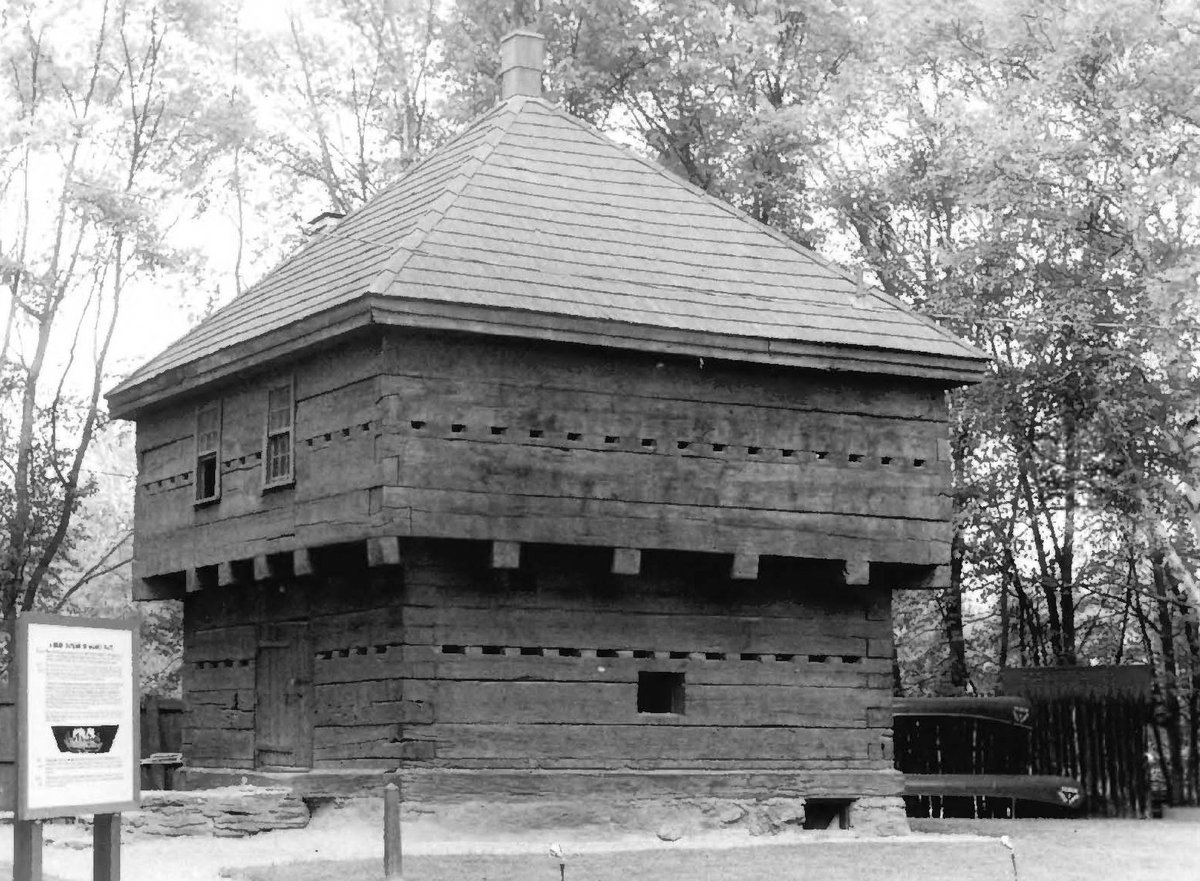
The U.S. and Great Britain spent decades bickering over who owned the land along the Saint John River. By the 1820s, Maine and New Brunswick were actively pressing development of the disputed area and authorities from both sides acted against each other's settlers and agents. To manage the tension, Maine built a series of forts along the southern bank of the Saint John River. Fort Kent was one of them, and it is the only fort in that series still surviving today.
Construction of Fort Kent began in 1838 and it was named after Governor Edward Kent. In 1839, the arrest of a US government agent in New Brunswick prompted Congress to authorize 50,000 federal troops for northern Maine. At this time, the fort was enlarged to include barracks, officers' quarters, and other buildings. General Winfield Scott was sent to the area to negotiate a settlement. Scott and New Brunswick Lieutenant Governor John Harvey were long-established friends, and they worked to reduce tensions until the Webster-Ashburton Treaty was negotiated in 1842. US troops remained at Fort Kent until 1845.
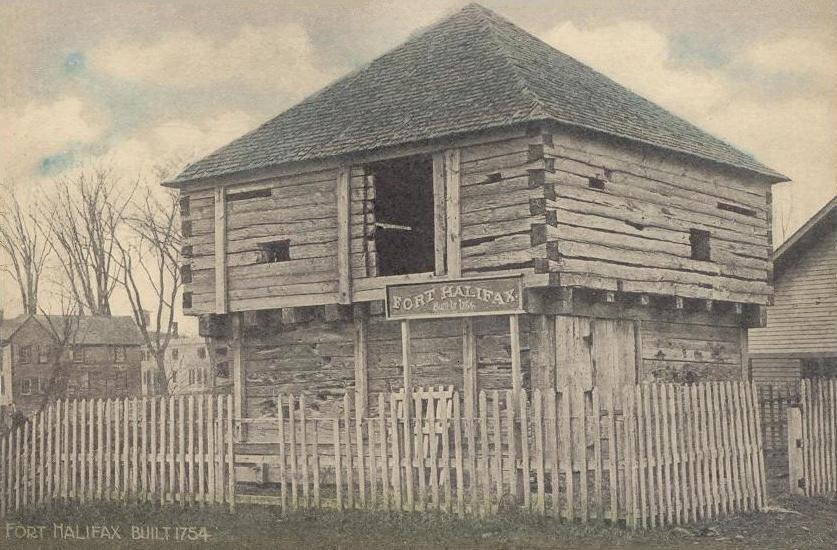
All that remains of the site is a two-story blockhouse measuring 23 feet 5 inches square. Built out of hand-hewn cedar timbers, the structure features an overhanging second story and a pyramidal roof with gabled dormers on each side. The first floor has four rifle ports flanking the main entrance, and twelve rifle ports on each of the other three sides. The second floor has eleven rifle ports on the east and west sides and fifteen on the north and south sides. While there are two cannon ports on the first floor north and south sides, guns were never placed in them due to a lack of funds.
Today, the blockhouse is preserved as the Fort Kent State Historic Site on a slight rise overlooking the Saint John River. The interior has been disturbed to install heating and plumbing, as well as to provide for museum displays. The site features the original log blockhouse, which is open for visits in the summer.
Sources: Wikipedia, OpenStreetMap, Wikidata, Wikimedia Commons


Written by Kyle McLonely
Discuss this with the author and others
No comments yet. Be the first to start the conversation.