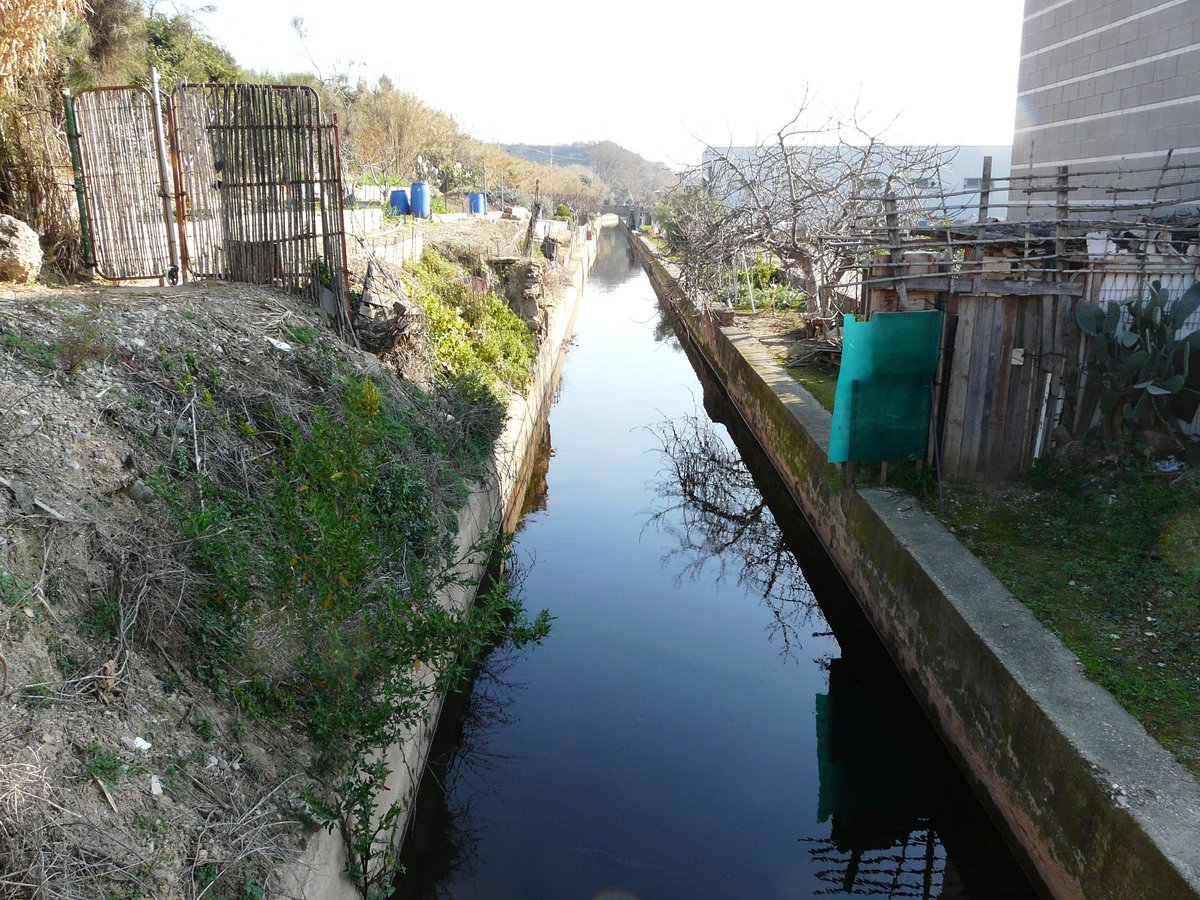

The Canal de la Infanta, a 6-kilometer long aqueduct built between 1817 and 1820, is situated in the Hospitalet area of Barcelona. Initially named the Canal de Castaños after its promoter, it was later renamed the Canal de la Infanta after a Spanish princess, Luisa Carlota de Borbón. The construction was authorized by a Royal Order on September 2, 1817. The cost of the work exceeded the initial budget of 3 million rals, reaching a total cost of 4,350,000 rals.
The canal was built to irrigate the lands of Cal Trabal in the Hospitalet area of Barcelona. However, there were concerns about managing the construction system and the total private funding. Due to this, a group of property owners presented a complaint to General Castaños in March 1820. The conflict arose because the water supply of the canal was taken from the sewage of the mills and factories of Papiol and Molins de Rei. The lawsuit between the Junta de Govern of the canal and the mill and factory owners resulted in compensation, details of which are unspecified.
Sources: Wikipedia, OpenStreetMap, Wikidata, Wikimedia Commons
Written by Nik Frost
Discuss this with the author and others
No comments yet. Be the first to start the conversation.