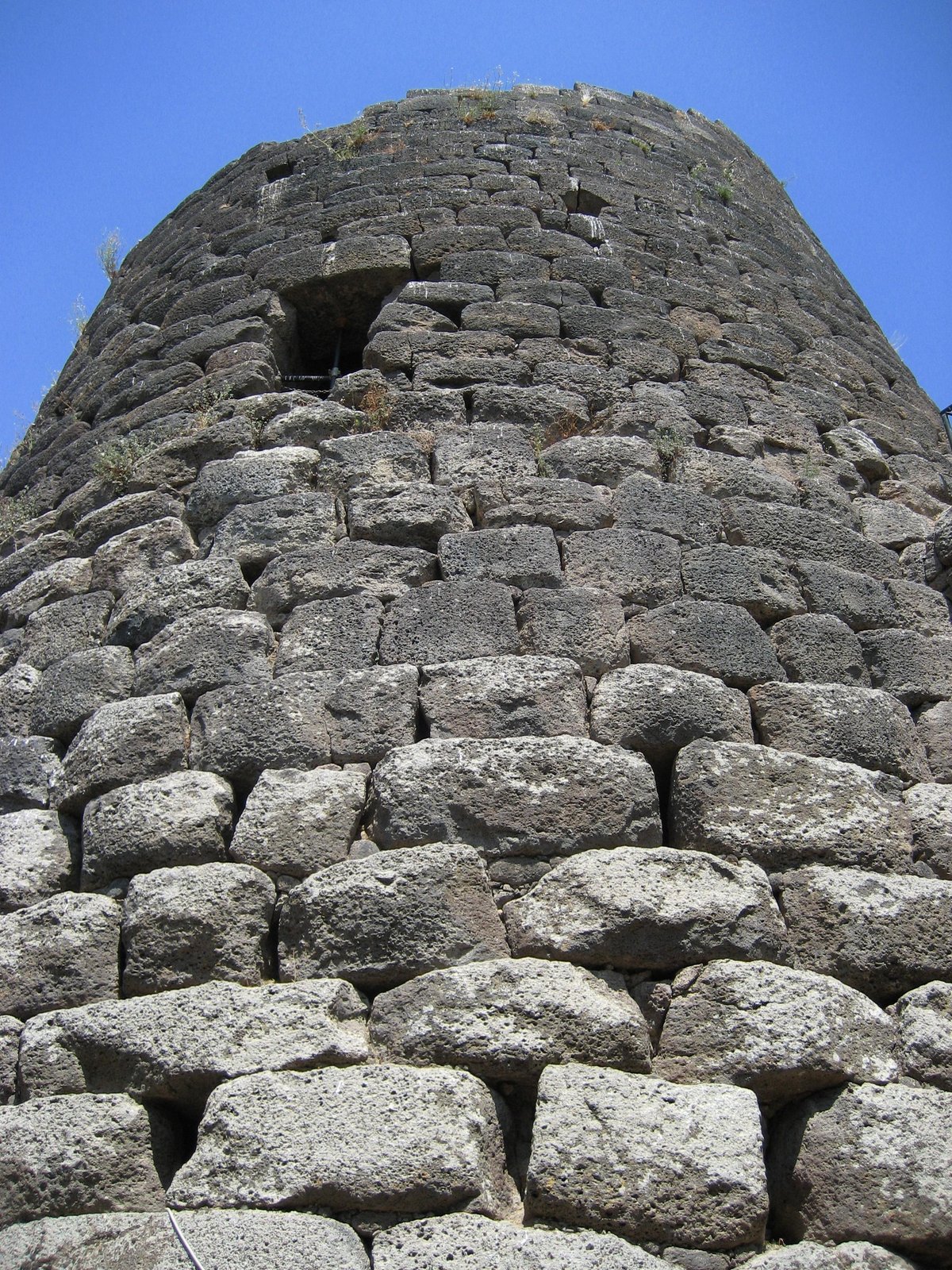
Su Nuraxi, located in Barumini, Sardinia, is an impressive archaeological site. Constructed around the seventeenth century BC, it consists of a central tower with three superposed chambers and a surrounding village. This complex was strategically connected to other sites, such as the polylobate nuraghe found beneath the fifteenth-century Palazzo Zapata in the village of Barumini.
Although the purpose of the nuraghe is still debated, the oldest part of the complex was built in blocks of basalt between the seventeenth and thirteenth centuries BCE. During the Late Bronze Age, four towers joined by a curtain wall were added around the central tower. Other archaeologists believe the oldest part may have been for religious or civil purposes, while the towers were intended for military use or as storage.
Archaeological excavations between 1950 and 1957, under the direction of Giovanni Lilliu, revealed that Su Nuraxi was a vibrant, active center up to the first century BCE during the Roman period. Important artifacts, such as tools, weapons, pottery, and ornaments, were brought to light during these excavations.
Sources: Wikipedia, Wikidata, Wikimedia Commons
Written by Sardinian
Discuss this with the author and others
No comments yet. Be the first to start the conversation.