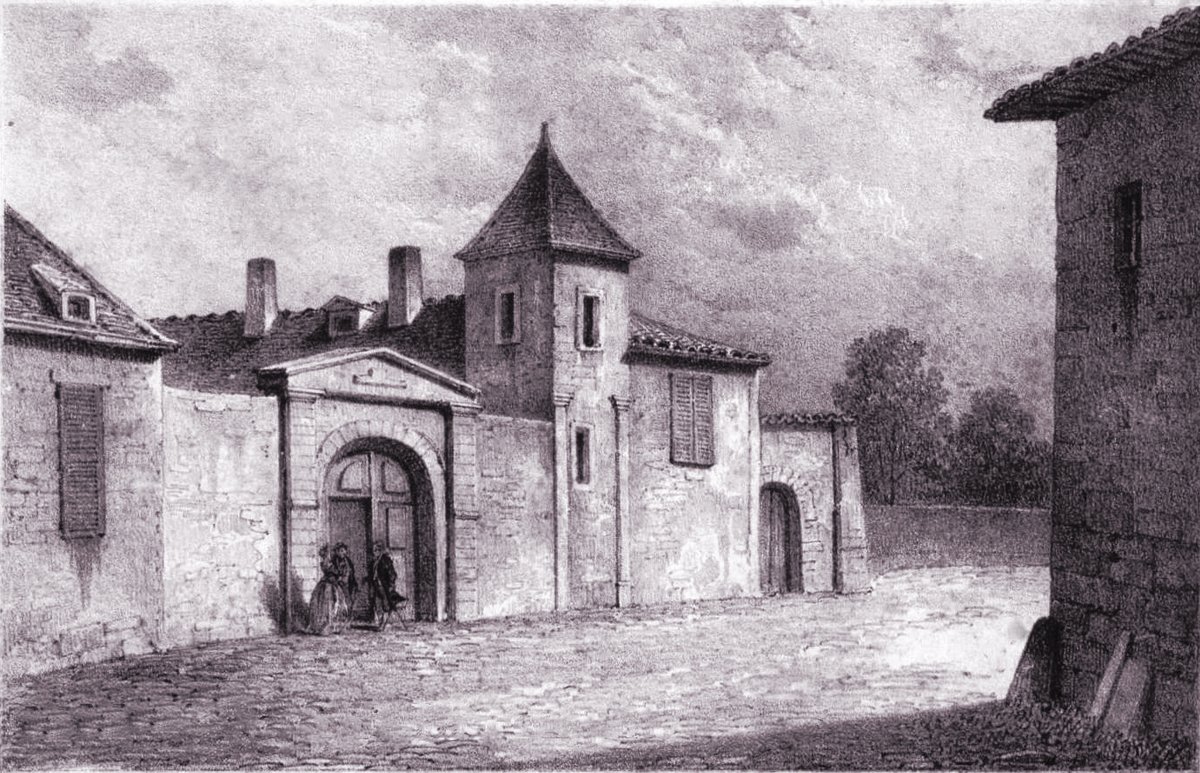

Why are three tangled croissants carved into this specific facade? They represent the personal cipher of Diane de Poitiers, the famous favorite of Henri II. While the exact reason for this royal mark on the birthplace of Jean de La Fontaine remains unknown, the decoration remains a striking feature of the 16th-century building.
Jean de La Fontaine's father bought this grand mansion, an impressive hôtel particulier, probably around 1617. Jean spent his youth here before balancing a social life in Paris with his time at the family lands in Château-Thierry. He inherited the home in 1658, but faced financial difficulties that eventually forced him to sell the property to his cousin, Antoine Pintrel, in 1676.
The courtyard, with its stone and brick perron and old well, provides a noble and gracious atmosphere. Visitors can still see the vaulted stone staircase and the original timber ceilings from the days when the poet walked these floors. Many of these elements remain as they were during his time in the house.
The building has housed a museum since 1898. Following a period of restoration supported by the municipality of Château-Thierry starting in 2008, the local government preserved this historic site. You can wander the rooms today to see how the poet's domain was saved, even though the fabulist himself could not afford to hold onto it.
Sources: Wikipedia, OpenStreetMap, Wikidata, Wikimedia Commons

Written by Nicolo Ciampini
Discuss this with the author and others
No comments yet. Be the first to start the conversation.