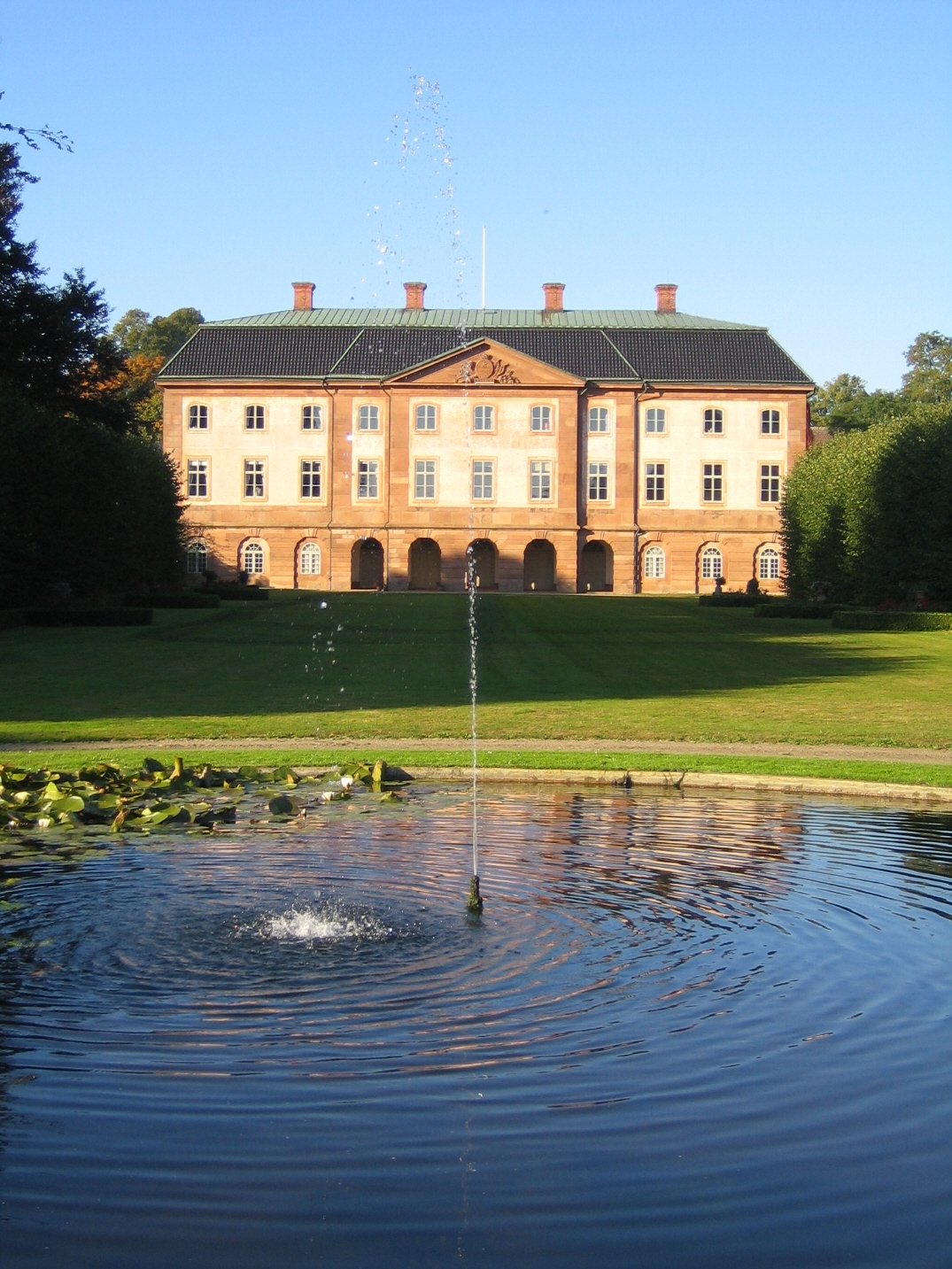

Övedskloster Castle, established in the Middle Ages as a Premonstratensian monastery, served as a key player in the region's religious and social landscape until the Protestant Reformation, which resulted in its transfer to the Danish Crown. The original monastery complex succumbed to a destructive fire in the early 17th century, leaving only remnants of its medieval structures. The castle that now stands, rebuilt between 1765 and 1776 under the guidance of Hans Ramel, displays Swedish aristocracy's preference for the French Rococo architectural style in the post-Renaissance 18th century.
While the castle does not allow full public access to its interior, its gardens present an opportunity for visitors to appreciate the estate's historic charm and natural beauty. The gardens, designed according to plans by Carl Hårleman, exhibit a distinctive Rococo style, and the castle's interior houses a collection of objets d'art created by several well-known artists, including Jean Eric Rehn.
Sources: Wikipedia, OpenStreetMap, Wikidata, Wikimedia Commons
Written by Nik Frost
Discuss this with the author and others
No comments yet. Be the first to start the conversation.