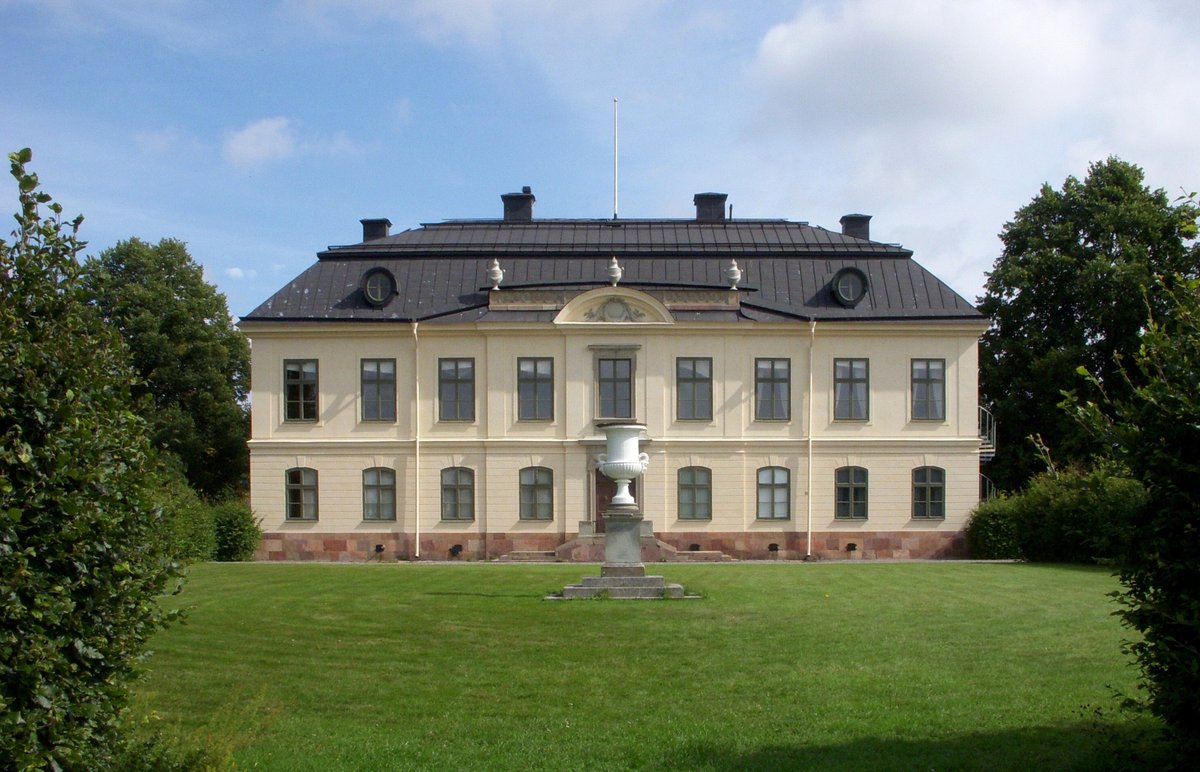

Sturehov Manor, located in Botkyrka Municipality, a suburb of Stockholm, is a remarkable testament to the historical and architectural legacy of Sweden's past. This manor house, originally named Averhulta in the Middle Ages, gained its current name in the 1680s in honor of statesman Svante Stensson Sture. The Sture family owned the estate for some time before passing it on to other noble families, such as Johan Oxenstierna, Johan Liljencrantz, and Stockholm Municipality.
The manor, designed by Carl Fredrik Adelcrantz, features well-preserved 18th-century interiors and a rich décor that sets it apart from other manor houses of the time. The manor's façade is a work of art in its own right, with urns, sculptures by Tobias Sergel, and original paintings on the wooden walls in the wings. The interior also boasts a cocklestove, considered the most accomplished one in Sweden, and pieces by John Broadwood, Georg Haupt, and other renowned artists.
Sturehov's history is not just about its grand design, but also about the people who once lived and worked there. The manor has witnessed various changing hands and periods of neglect and renovation, ultimately leading to the restoration of its 18th-century interiors in the 1950s. Today, it stands as a beautiful and well-preserved historical monument, offering a glimpse into Sweden's rich past.
Sources: Wikipedia, OpenStreetMap, Wikidata, Wikimedia Commons
Written by Nik Frost
Discuss this with the author and others
No comments yet. Be the first to start the conversation.