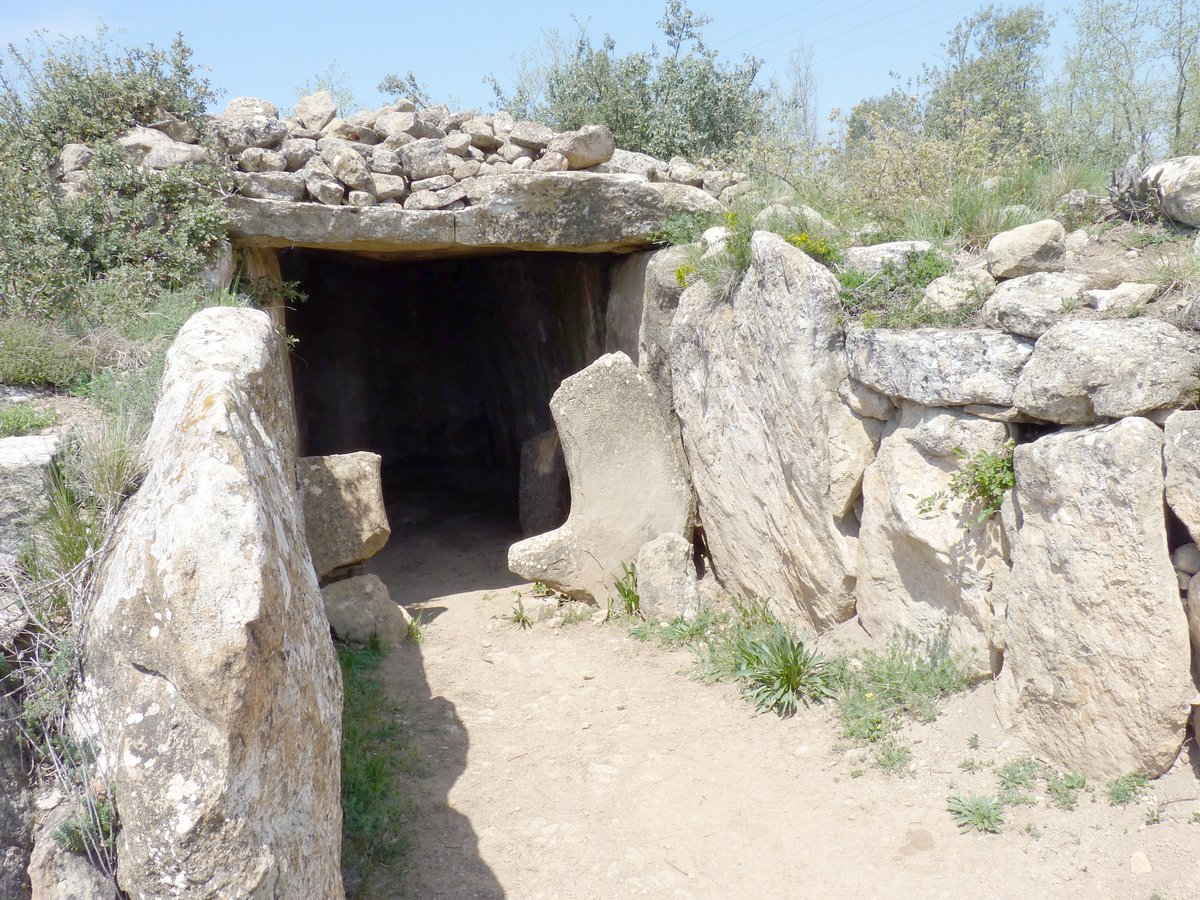

Excavated in 1916 by Mn. Joan Serra Vilaró, the Dolmen de Llanera is a prehistoric burial site situated in the former term of Llanera, a municipality that joined Torà in 1968. It is located about 500 m east of the Mas Vila de la Gola dels Bous, near the border with Llobera.
Probably the largest and best-preserved megalithic structure in Catalonia, it is declared a Bé cultural d’interès local. Dated to 2550 aC via carbon-14, the construction dates to the late Neolithic. The tomb was reused continuously for two millennia to practice funerary rituals and bury the dead. Anthropological study of the remains indicates a life expectancy of 26.4 years for these humans.
The structure follows the 'galeria catalana' typology, featuring a large rectangular funeral chamber accessible through a wide corridor. At the entrance, there is a small chamber separated by a pierced stone where offerings were placed. The inhabitants practiced cereal agriculture and were primarily involved in livestock farming, specifically the herding of cows, sheep, and goats.
In 2017, the Ajuntament de Torà initiated the declaration of the site as a Bé Cultural d’Interès Nacional (BCIN). Today, the site remains a significant piece of heritage, though it has suffered from historical looting by treasure seekers during the Iberian and Roman periods.
Sources: Wikipedia, OpenStreetMap, Wikidata, Wikimedia Commons
Written by Nik Frost
Discuss this with the author and others
No comments yet. Be the first to start the conversation.