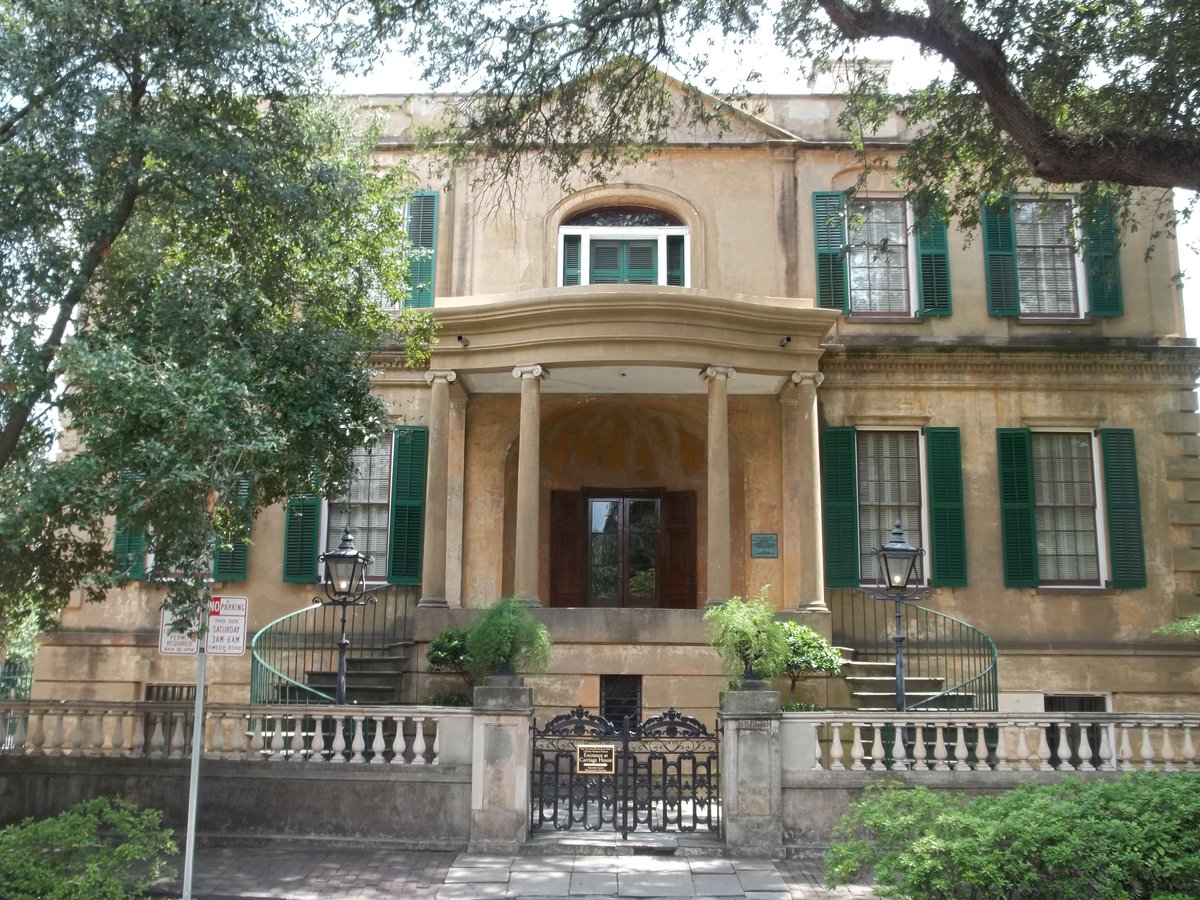
The Owens-Thomas House, set in the heart of Savannah, Georgia, is a timeless treasure that invites every history enthusiast. Constructed between 1816 and 1819, this stunning historic dwelling serves as a testament to English Regency architecture, designed by the skilled William Jay from Bath. Initially known as the Richardson House, it was later acquired by George Welshman Owens in 1830 for $10,000. In 1951, the Telfair Academy of Arts and Sciences took guardianship of this grand abode, now managed by Telfair Museums.
Chronicles of the past reverberate within its walls. The early cast iron side veranda with elaborate acanthus scroll supports was the stage for the Marquis de Lafayette to address the citizens of Savannah on his visit in 1825. The Owens-Thomas House isn’t simply a beautiful relic of the past. It also shelters one of the oldest and best preserved urban slave quarters in the American South, uncovered during renovations in the 1990s. Decorated in a tradition to keep ghosts at bay, the slave quarters boast the color haint blue.
The restored slave quarters include the pantry and other elements of the Gullah cooking, along with the cellar where meals and laundry were once prepared. The Owens-Thomas House collection is a veritable gallery of furnishings and decorative pieces from the English Regency era, most of which date from the years 1790 to 1840. Notable items include English Georgian and American Federal period furniture, early Savannah textiles, silver, Chinese Export porcelain, and 18th- and 19th-century artwork.
The formal garden in the courtyard, redesigned in 1954 based on a 1820 design by Clermont Huger Lee, reflects the blending of English-American styles. With its rich history, captivating architecture, and tales that beg to be shared, a visit to the Owens-Thomas House allows for a living journey back through time.
Sources: Wikipedia, OpenStreetMap, Wikidata, Wikimedia Commons
Written by No Other
Discuss this with the author and others
No comments yet. Be the first to start the conversation.