
Twenty-year-old Evdokia Lopukhina was married off to the 17-year-old Tsar Peter against his will — the wedding was insisted upon by his mother. On the eve of the wedding, the bride’s name was urgently changed, along with her patronymic. She was Praskovya Illarionovna, and became Evdokia Fedorovna. Peter’s co-ruler, Tsar Ivan, already had a wife named Praskovya, who was pregnant, so there was no time to delay the wedding: Peter urgently needed heirs. Nine years later, her name would be changed again. She would become Elena, a disgraced wife and nun in 1698.
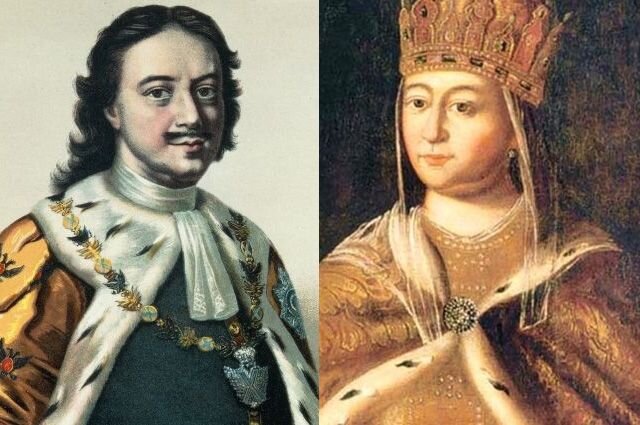
She was considered a desirable bride because she was beautiful, educated, and of noble origin (her relatives served as court clerks and were boyars). The future tsarina’s childhood was spent at her father’s estate — the village of Serebryano, near Meshchovsk, and in Moscow, where her father traveled for official duties. A contemporary of Praskovya, born in the same year 1670, was Stepan (baptized Stefan) Glebov, son of Bogdan Glebov. The Lopukhins and Glebovs had long maintained friendly family relations, so Stepan was jokingly called the fiancé in Larion Lopukhin’s house, and Praskovya the bride. The fleeting time separated the participants of childhood games and amusements. It became more appropriate for them to engage in other activities: for her — reading “Lives of the Saints” and the “Prayer Book,” interspersed with needlework; for him — marching in Peter Alekseevich’s “toy army,” where Stepan stood out for his strength and courage. Frankness and strength — that was his downfall. At Peter’s call to his “toy soldiers” to spar with him, only Glebov responded, not playing “softly,” but pinning his commander down. It is said that a disconcerted Peter, himself known for extraordinary strength, remembered this for life, delaying Stepan’s promotion. But let’s not get ahead of ourselves.
Peter and Evdokia’s marriage did not work out immediately; Peter did not love his wife. Their aspirations were too different, and Evdokia did not get along with her mother-in-law. Even before their wedding, Peter had a steady relationship with a German woman, Anna Mons, and the tsar even planned to marry his mistress.
The only obstacle was the lawful wife, who refused to voluntarily become a nun. Even the birth of children did not save the marriage. The tsareviches Alexei and Alexander were born close together; the youngest son lived only a year, leaving only one child, the unfortunate tsarevich Alexei. Peter grew tired of waiting for his despised wife to free his hands. Following the example of the Rurik dynasty tsars, he decided to forcibly tonsure Evdokia.
Before this episode, the Romanovs had not treated their wives this way and lived peacefully until death separated them; moreover, even after the reforming tsar, Romanov wives were not sent to monasteries.
The archimandrite of the Pokrovsky Women’s Monastery in Suzdal refused to forcibly tonsure Evdokia, and he himself was then taken into custody. Despite the tsarina’s resistance, she was forcibly tonsured and officially became Elena. Peter did not allocate funds for the maintenance of his former wife, and she lived in the monastery on her relatives’ money. She did not agree with the tonsure, believing that a forced tonsure had no power before God. After six months, the woman stubbornly removed her monastic garments and lived in the convent as a laywoman.
Here, ten years later, fate again brought Praskovya-Evdokia-Elena together with Stepan Glebov, who was sent to Suzdal to recruit soldiers. Stepan learned that his childhood friend, who had become tsarina and unwillingly turned into a nun, was confined in the Suzdal monastery. Yes, earthly happiness for these people, separated by insurmountable circumstances, lasted a full ten years. Ten letters from Evdokia to Stepan have survived to us.
Here are words from one letter: “My light, my father, my soul, my joy! It seems the cursed hour is coming when I must part with you. I wish my soul would part from my body! Oh, my light, how can I live without you, how can I live at all? Alas, I will be broken! And God knows how dear you are to me. There is no one dearer to me than you, by God! I will not leave you until death, you will never leave my mind…”
Their secret affair, which many in Suzdal knew about, continued for several years until in 1718 the painfully suspicious Peter initiated a case against Tsarevich Alexei, his son with Evdokia.
The search for conspirators allegedly wishing to enthrone Alexei swept across all of Russia like a frequent delirium. A search was conducted in Evdokia’s cell, and love letters from Stepan were found. The arrested major was subjected to terrible tortures. The woman clearly felt no guilt: she considered the tonsure invalid, was separated from her son, and her husband did not remember her. She received affection and emotional warmth from Major Glebov.
He was seized and brought to the Preobrazhensky Prikaz, where he was interrogated. It seemed that Peter’s male pride was wounded by the fact that someone dared to awaken feelings in his former wife. During the first interrogation, as recorded in the investigation files, “Stepan was given 25 lashes with a whip at first, and he was not accused of anything in the search.”
Glebov was accused of letters written in “cipher,” in which he poured out “dishonorable reproaches concerning a known high person of His Tsar Majesty, and inciting rebellion against His Majesty among the people.” The Austrian diplomat Pleyer wrote home: “Major Stepan Glebov, terribly tortured in Moscow with whips, red-hot irons, burning coals, tied to a pole on a board with wooden nails for three days, confessed to nothing.” According to a legend recorded in April 1731 by Lady Rondo, “spitting in Peter the First’s face, he said he would not speak with him if he did not consider it his duty to justify his mistress (Tsarina Evdokia).” For this, the major’s fresh wounds were cauterized with a red-hot iron and he was tied to a board studded with nails for three days. After this confrontation, Evdokia and Stepan confessed their “fornication” to the tsar. At the interrogation, Glebov stated: “And I fell in love with her through the elder Kaptelina and lived with her fornically.” The elders Martemyana and Kaptelina testified that the nun Elena “let her lover come to her day and night, and Stepan Glebov embraced and kissed her, while they either sent us, the heat-bearers, to sew in our cells or drove us out.” Nine letters from the tsarina to him were also found with Glebov. However, both Stepan Glebov and Evdokia Lopukhina immediately admitted their affair without hiding. From Glebov, they also demanded a confession of “malicious intentions” against the person of the Sovereign.
All supporters of Tsarevich Alexei were subjected to terrible executions, but jealous Peter reserved a special torment for Stepan Glebov. He was impaled, and near the place of execution stood a simple cart on which Evdokia Lopukhina sat. She was guarded, and two soldiers held her head, not allowing her to close her eyes so she could see everything.
On March 15, 1718, in twenty-degree frost, the tortured Glebov was brought to Red Square, filled with crowds of people (the eyewitness to the events, Hanoverian resident Weber, mentions 200–300 thousand people). Peter I arrived in a heated carriage and stopped near the place of execution (however, according to other information, this is no more than a legend, as Peter left for Saint Petersburg a day before the executions). To prolong the suffering of the unfortunate man and prevent him from freezing, Stepan, already impaled, was wrapped in a fur coat, warm boots, and a hat. Glebov’s agony lasted 14 hours, during which the major did not utter a sound and refused to repent, saying he had nothing to repent for.
Glebov’s wife did not survive the terrible grief and took her own life.
After the execution of her son, Evdokia was sent to another monastery, where her conditions were sharply tightened. And Peter did not forget about Glebov. In 1721, the emperor ordered the Holy Synod to anathematize the long-deceased major for his blasphemous liaison with the nun.
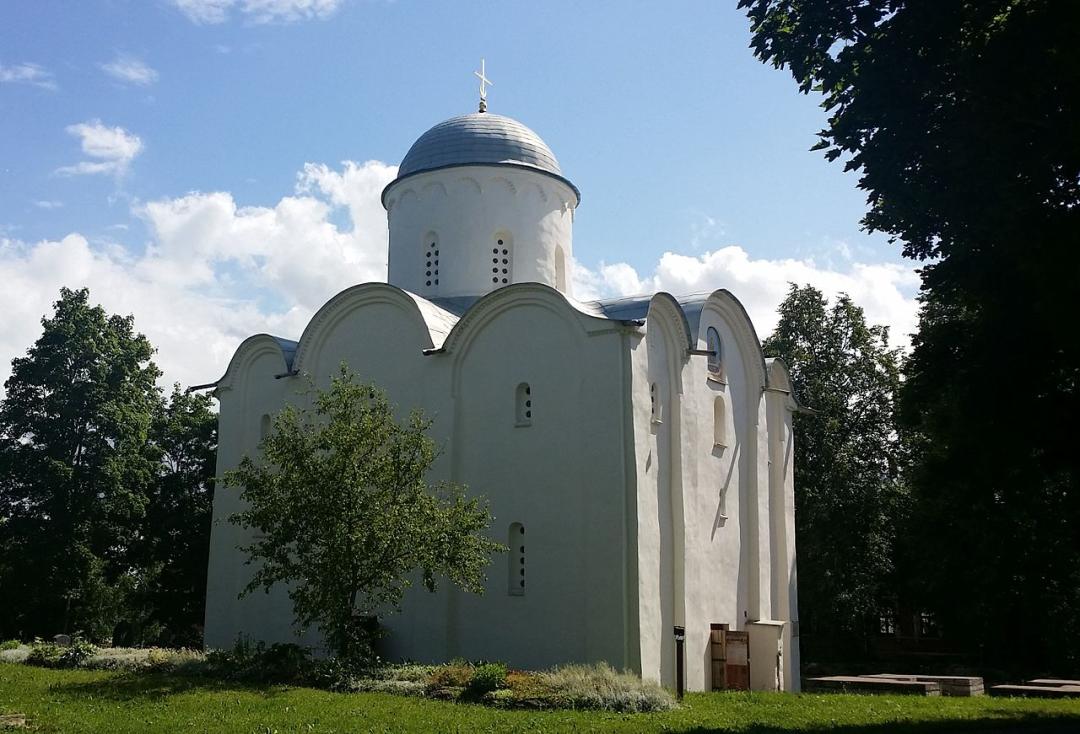
On April 30, 1718, Peter I’s first wife, Evdokia Fedorovna Lopukhina, tonsured as Elena, was brought to the Staraya Ladoga Assumption Women’s Monastery. The disgraced tsarina lived here until March 1725.
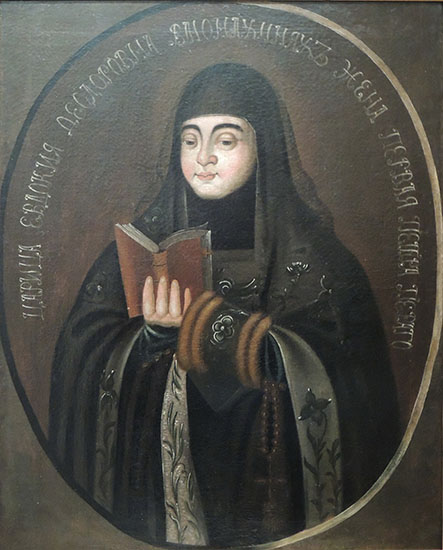
“Under the threat of the death penalty, it was forbidden for outsiders to speak with her. To isolate the monastery from the world and prevent the tsarina’s communication with outsiders, by Peter I’s personal decree a double palisade was built near the monastery…” Day and night, Evdokia Fedorovna was guarded by several soldiers. At present, no traces of the tsarina-nun’s stay in Staraya Ladoga remain.
Under Empress Catherine I, Evdokia Lopukhina was imprisoned in Shlisselburg and held in strict secret confinement as a state criminal under the name “a known person.” With the accession of Peter II, Evdokia’s grandson, she was transferred to Moscow’s Novodevichy Monastery — she was given a large annual allowance of 60,000 rubles and special care. Lopukhina played no role at Peter II’s court. Emperor Peter II, with his beloved sister Natalia Alekseevna and aunt — the young beauty Elizabeth Petrovna, in whom young Peter was in love, settled in the Kremlin Palace. There, his grandmother Evdokia visited him, but the royal grandchildren soon grew tired of her admonitions. Emperor Peter II, surrounding the former recluse with honors and providing her financially, which she had long been deprived of, considered his duty fulfilled. After the death of the young Emperor Peter II and the extinction of Peter I’s direct line, Evdokia Lopukhina’s candidacy was even considered by the Supreme Privy Council as a possible claimant to the throne, but Lopukhina refused the crown. In her last years, she lived in the Novodevichy Monastery in chambers later called “Lopukhina’s.” Favored by the new Empress Anna Ioannovna, Tsarina Evdokia Fedorovna peacefully passed away on August 27 (September 9), 1731, in the Moscow Novodevichy Monastery.
Until her last days, she cherished the memory of the officer who loved her more than his own life.
Sources:
https://petrovka-38.com/item/lyubovnoe-delo-vjol-sam-pjotr
https://diletant.media/articles/45263438/
https://dzen.ru/a/W2b_gzUmkACphqQS
https://www.vest-news.ru/article/14060
http://uspenie-ladoga.ru/evdokia_lopuhina/
Written by Jermaine
Discuss this with the author and others
No comments yet. Be the first to start the conversation.