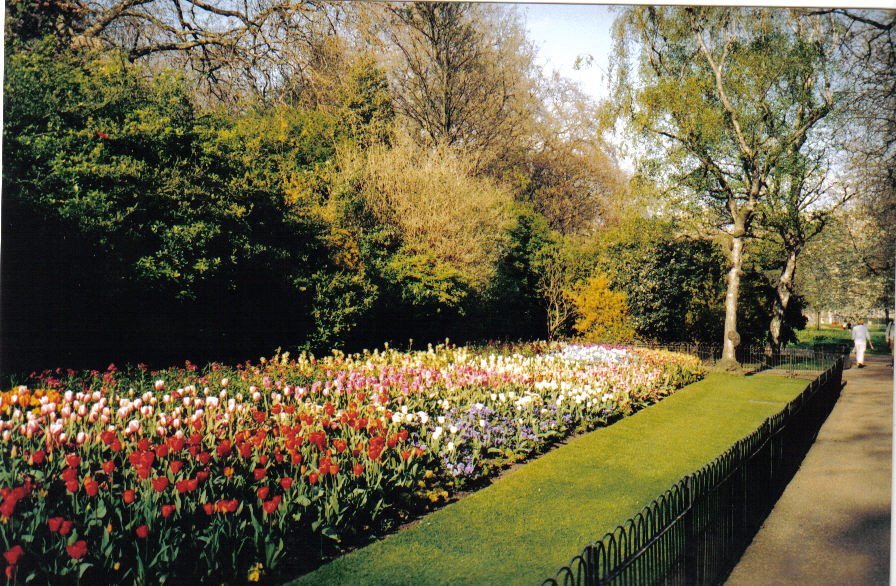
St. James's Park, a 23-hectare (57-acre) urban oasis in central London, carries the oldest royal moniker on the map. But this grand park did not start as a park at all. It started as an exclusive hunting ground for King Henry VIII in 1532, when he purchased the then marshy land as part of his collection of royal estates. Although initially used as a deer hunting area and a hunting lodge, it was transformed to serve as a space for revelry and illicit pleasures, catering primarily to the whims and desires of Henry VIII's inner circle.
For the next thirty years, St. James's Park continued to serve as the capital's playground for the aristocracy, a place for elaborate feasts, polo matches, and private entertainments, complete with exotic animals like camels, crocodiles, and even an elephant. André Mollet, a French gardener, redesigned the park in a more formal style, building the Blue Bridge, a crossing for the park's pond, and a Chinese-style bridge over Duckberry Brook, now the Swire Fountain.
In 1664, he donated four pelicans to the park, a gift to Charles II that remains to this day. By the late 18th century, the park was no longer reserved for royalty and was opened to the public at large, though it attracted an infamous reputation as a center for lewd activities. In the 19th century, the park's landscape, which included Horse Guards Parade and Buckingham Palace, expanded and shifted, making St. James's Park London's gateway to the monarchy.
In 1887, The Mall was turned into a grand processional route, opening the park to the public for the first time. Today, St. James's Park remains a central fixture in London, with trees like London planes, Scarlet oak, black mulberry, and a fig tree, a resident colony of pelicans, and miles of well-tended lawns.
Sources: Wikipedia, OpenStreetMap, Wikidata, Wikimedia Commons
Written by Nicolo Ciampini
Discuss this with the author and others
No comments yet. Be the first to start the conversation.