

Customs officers began to settle on Sandhamn at the end of the 17th century. Previously, a custom post was located at the island. The state had leased marine customs in 1726 to a company called 'Generaltullarrendesocieteten'. After that, Sandhamn had a customs house. Sandhamn Customs was a so-called entry station, which meant that ships here could show their ship's papers, whereafter the cargo was inspected and sealed. The actual customs clearance took place in Stockholm. Along with the construction of a new customs wharf, a small watchhouse was built as protection for the patrolling customs officials in bad weather. The watchhouse was later used as a brewery and is now a folklore museum. The customs station ceased to exist in 1928.
The first customs house was replaced by the current building in 1752, designed by castle architect Carl Hårleman. The customs house is a national building heritage monument. It is owned by Värmdö harbors and is now used as rental apartments.
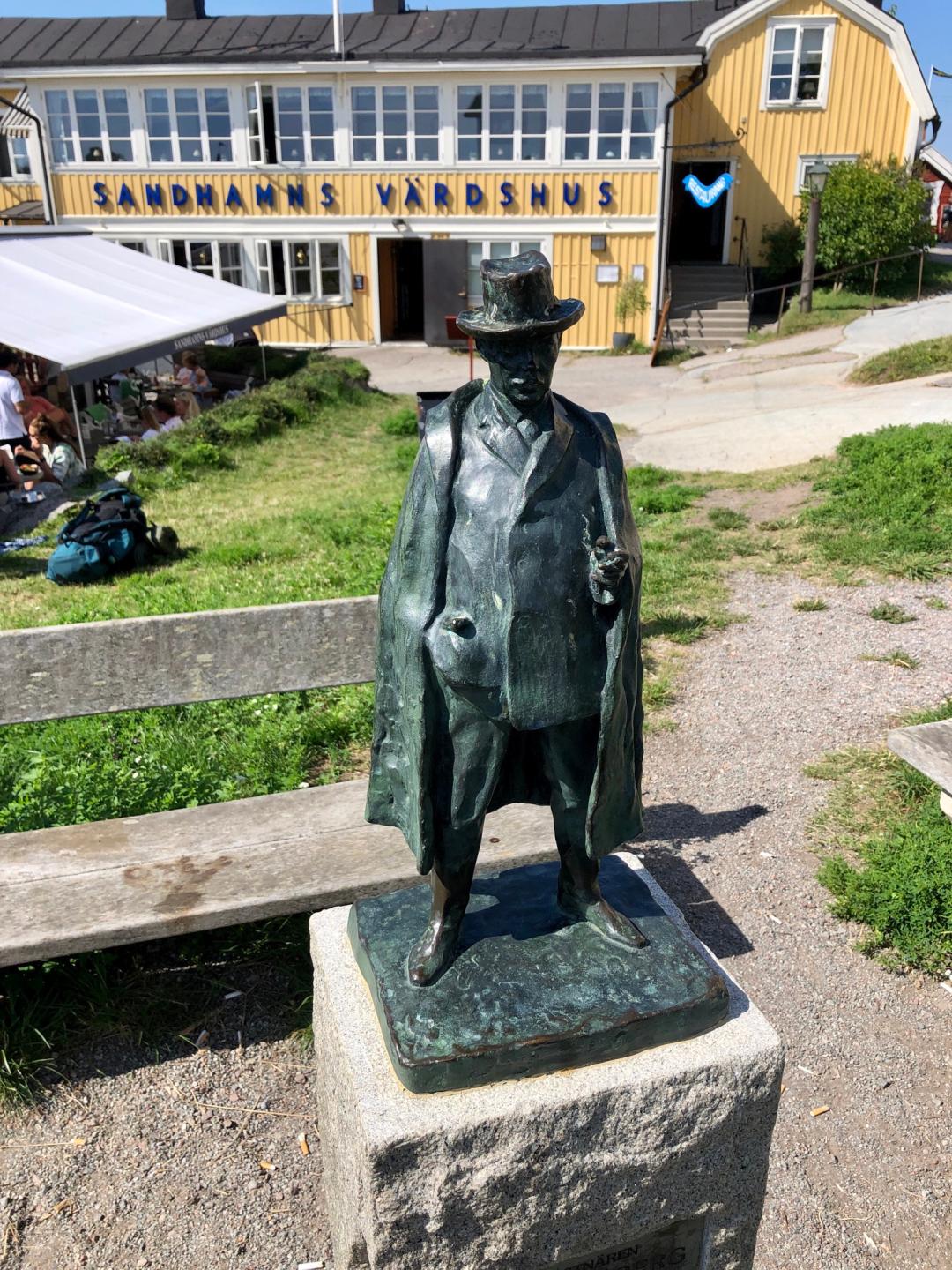
The most famous customs inspector on Sandön was Elias Sehlstedt, who was also a poet and an artist. During his time (1852-1869) the island was still rather sparse and uninhabited, and Elias was by no means happy in his position. It was said that he was forced to this penal colony for economic reasons. In his poems one can clearly read how he experienced his time on Sandön. It must have been more enjoyable for Sehlstedt during the summer. Sandhamn began to be a summer resort with regular boat traffic in the middle of the 19th century, and it is said that Sehlstedt during the summer often received visits from friends from the city as they played cards late into the night.
‘You ask what I do God's long day.
Ack! I have many tasks of various kinds:
Each morning summer, cloudy or clear.
I rise up, once I first awake.
In the regulation it says: when the rooster crows,
One should dab one's old customs journal.


Written by Alexa
Discuss this with the author and others
No comments yet. Be the first to start the conversation.