


The history of this unique art university is an amazing pattern of events painted with a variety of colors.
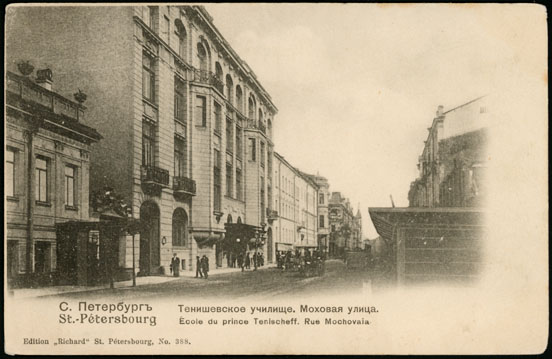
The Baron Stieglitz Academy is known not only in Russia but also abroad as a forge for producing remarkable artists. Its history began in 1876 and is inextricably linked with the name of Alexander Ludwigovich Stieglitz. By the last quarter of the 19th century, Russia was feeling a shortage of its own artistic personnel capable of keeping pace with the times and creating utilitarian works of art. This problem was taken on by the prominent patron and major industrialist Baron Alexander Ludwigovich Stieglitz, who lived from 1814 to 1884. The museum building as we know it today was not constructed simultaneously with the founding of the school.
The industrialist and banker was also famous as an active patron supporting various projects, but it was the school that became Stieglitz’s true contribution to eternity.
People from all social classes, both men and women, were admitted here—elementary education and a successfully passed drawing exam were sufficient. The school trained applied artists, drawing and drafting teachers.
It should be noted that before the revolution, the institution was funded at the highest level. A sufficient amount was allocated for its maintenance to keep the building in perfect condition (there was even electricity in the classrooms), to invite the best teachers, to create conditions rare for those times for students, to finance their trips abroad, and to support underprivileged pupils. Branches of the school were opened in several Russian cities.
Graduates worked at the Imperial Porcelain Factory, the Fabergé jewelry firm, the workshops of the Imperial Theaters, the Moscow chintz-printing manufactory, and others.
A brilliant chapter in the school’s history is connected with the work of its director, architect Maximilian Messmacher. When the magnificent collection of artworks grew so large that a separate building was needed to house it, Messmacher himself created the sketch for the future museum of the Central School of Technical Drawing. In this project, the architect surpassed himself, acting as an architect, educator, manager, and artist.
Knowing how important proper lighting is for artists, in the main hall, which occupied a third of the museum’s entire area, Messmacher provided for a huge glass dome. The architect used the most modern technologies of the time—metal structures, fireproof rafters, and so on.
Of course, he paid no less attention to the museum’s interior content. Messmacher aimed to demonstrate to students through the museum’s exhibits how applied art developed from the most ancient times. The Florentine halls with stunning frescoes and statues—both originals and copies made by students; spaces decorated in Russian style; the Venetian hall reminiscent of the Doge’s Palace library with five canvases by Tiepolo; the Flemish hall with leather-covered walls and breathtaking tapestries—these are just a small part of the treasures of this unique museum, which would honor any city, let alone an educational institution.
Messmacher’s twenty years as director ended with his resignation in 1896 due to a financial dispute. Students literally carried their beloved director out in their arms, presenting him with an honorary address filled with warm words. Messmacher’s resignation marked the beginning of a dark period for the school. Ten years later, the school was closed. The time of bloody revolutions demanded weapons other than brushes and paints… The building changed hands repeatedly, housing warehouses and workshops for making gas masks. Academy of Arts student Iosif Vaks, upon learning how the beautiful museum was perishing before their eyes, together with friends hired movers and transported part of the exhibits to the Academy. However, the then director of the Academy did not appreciate the initiative, and the wonderful casts were crushed into crumbs and scattered over the courtyard… The school as such was closed, broken up into small art-industrial workshops, and the museum was transferred to the Hermitage’s jurisdiction, which allowed some of the exhibits to be preserved.
And Iosif Vaks would return to the school… He would return in even more terrible years, during the Siege of Leningrad. He would return as the director of the art university—and begin to think about who would restore the city. Then, in the besieged city, he searched for freezing and starving masters and artists who had once worked at the Stieglitz school, literally bringing them back to life—and to work.
After the war, the country, destroyed to the ground, was in dire need of restorers. And the Stieglitz school literally rose from the ashes, albeit under a different name—the Leningrad Art and Industrial School, which in 1953 was named after the sculptor V.I. Mukhina (many still simply call the institution “Mukha”).
During the years of inactivity, many museum halls fell into disrepair, some of the beautiful wall finishes and frescoes were painted over with ordinary paint, and the magnificent parquet flooring was dismantled. With the school’s return to its rightful place, partial restoration of the museum building began. Once again, students of the school actively participated. Of course, most of the exhibits were not returned to the museum from the Hermitage; it gradually replenished its collections from museums around the world. Also, the logic of Messmacher’s hall compositions, where each hall fully belonged to a single idea and era, was not restored. Incidentally, the museum building itself, damaged by bombing, was in need of restoration. But restoration of the original interiors was out of the question—experts, while appreciating the quality of the construction work, called the building “extremely tasteless and decadent.”
Nevertheless, the building was gradually brought back into order, though not to its former level. Parts of the school museum’s collection returned from the Hermitage and other museums. And since 1980, large-scale restoration of the art university began. Already in the 21st century, the company “Stalrekonstruktsiya SPb” restored the famous dome of the museum building…
Today, the museum’s collections include more than 35,000 items of applied art from antiquity to the present day. The exhibition occupies 14 halls and the first-floor gallery, showcasing about 2,000 exhibits.
The new name seemed to give the school a second life. Practically everything that surrounded the Soviet person was created by the “offspring” of the Mukhina school: from the LOMO camera and the Niva car to the graphics of the Moscow 1980 Olympics and household electronics.
Among the school’s graduates over the years are Kuzma Petrov-Vodkin, Arkady Rylov, engraver and painter Anna Ostroumova-Lebedeva, sculptor Matvey Manizer, Mikhail Shemyakin, and Dmitry Shagin… And whatever name this educational institution bore (in 1994 it was renamed the Saint Petersburg State Art and Industry Academy, and in December 2006 the academy was restored to the name of its founder Alexander Stieglitz), it will always remain a Russian art university where they teach to honor the traditions of the past while directing their creative thought toward the future.
One of the traditions that applicants get acquainted with long before entrance exams is connected with the lanterns standing in Solyany Lane in front of the museum entrance. Two lanterns are decorated with figures of little angels, to whom applicants bring flowers before the exams. It is believed that they bring good luck in the exams.

At the beginning of the 21st century, the lanterns were removed for restoration but reappeared in spring 2006. Only they were installed “incorrectly”—rotated 180 degrees. You can notice this yourself in the photos.

The building was filmed in the movie "The Adventures of Sherlock Holmes and Dr. Watson" in the episode "The Treasures of Agra" as the Lyceum Theatre.

Sources:
https://www.ghpa.ru/
https://archidom.ru/journal/arkhitektura/academy-named-after-stieglitz-from-the-19th-century-into-the-21st-century/
https://peterburg.guide/muzei/akademija-imeni-a-l-shtiglica-ili-prosto-muha/
https://www.221b.ru/geo/7-solyanoy.htm
https://dubikvit.livejournal.com/34231.html



Written by Jermaine
Discuss this with the author and others
No comments yet. Be the first to start the conversation.