

At the very end of 1701, Russian troops under the command of Boris Petrovich Sheremetev finally won their first victory over the Swedes. The Swedish General Slippenbach was utterly defeated at Erestfer, and Peter, delighted by this unexpected victory, promoted Sheremetev to General Field Marshal and sent him the Order of St. Andrew along with his portrait adorned with diamonds. Inspired by the victory, Sheremetev and his army rapidly advanced through Livonia, devastating everything in their path. In August, they approached Marienburg. The frightened residents of Marienburg partly fled and partly came out of the city gates to meet the Russian troops, showing complete submission and hoping for the mercy of the victor. Among those greeting the victorious army was the family of Pastor Johann Ernst Gluck.
Johann Ernst Gluck was born in 1652 in Wettin, near Magdeburg (Saxony), into a priest’s family. He studied theology and Eastern languages at the universities of Wittenberg and Leiden. In 1673, Gluck settled in Livonia, preached the word of God, learned the Latvian language, and decided to translate the Holy Scriptures for the Latvians. However, realizing that his knowledge of Hebrew and Greek was insufficient, Gluck went to Hamburg to improve his knowledge of these languages. In 1680, Gluck returned to Livonia and three years later became a pastor in Marienburg and Seltinshof, and later the senior priest (provost) of the eastern lands of Livonia bordering the Moscow state.
In 1685, with Gluck’s participation, the New Testament was published in Latvian in Riga, and in 1689 the Old Testament followed. Gluck devoted much effort to educational activities: he established a public school in Marienburg and schools for training teachers at church parishes. Concerned about educational issues, in 1684 he visited King Charles XI of Sweden, under whose rule Livonia was at the time. Among other matters, Gluck presented the king with his projects for translating textbooks into Russian and establishing Russian schools in Livonia for the Old Believers living in eastern Livonia. Charles XI showed interest in Gluck’s projects (possibly for political reasons), but the king’s death prevented their implementation.
Gluck himself, having learned Russian quite well thanks to his acquaintance with monks from the Pskov-Pechory Monastery, did not abandon his plans. In 1699, he sent a letter to Moscow stating that he had prepared schoolbooks in Russian and was working on translating the Slavic Bible into simple Russian.
Thus, by 1702, at the time of the capture of Marienburg, Gluck was already known in Russia. Sheremetev informed Peter I about Gluck’s capture, and the tsar ordered him to be brought to Moscow, apparently intending to use his knowledge. On January 6, 1703, the prisoners were brought to Moscow to the Razryadny Prikaz building, and by January 19 it was ordered that the “Svensk Apta” (the title given to Gluck in documents of that time), who was skilled in “many school, mathematical, and philosophical sciences in various languages,” be taken for “state affairs” to the Ambassadorial Prikaz.
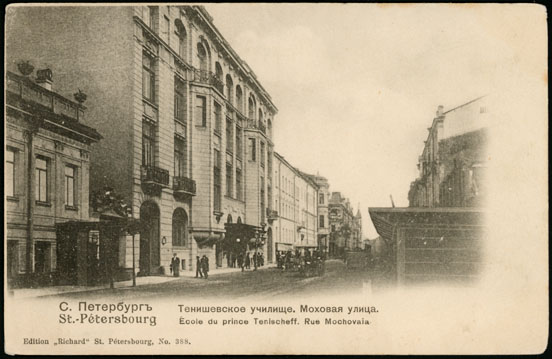
The Ambassadorial Prikaz had a “German school” where Russian youths preparing for government service were taught “various European languages.” The rector of this school, located in the German Quarter, was the translator of the Ambassadorial Prikaz, a native of Saxony, Nikolai Shvimmer. In February 1703, six former students of Shvimmer were assigned to Gluck for training. Already in 1703, Gluck replaced Shvimmer as the school’s rector. While Shvimmer taught his students only foreign languages, Gluck significantly expanded the curriculum. Addressing the head of the Ambassadorial Prikaz, Count Golovin, Gluck wrote that he could “serve His Royal Majesty in various sciences, namely: Latin, German, Hebrew, and other Eastern languages; also in Slavic language rhetoric, philosophy, geometry, geography, and other mathematical parts and politics...,” and even medicine, in which he was also skilled. Along with this letter, Gluck included a request for a house in the German Quarter where he could teach various sciences to Russian youths. In March 1704, the “German apt with teachers and students” was moved from the German Quarter to Bolshaya Pokrovskaya Street (now Maroseyka) into the courtyard of the late boyar Naryshkin, at the corner of Pokrovskaya Street and Zlatoustinsky Lane. Today, house No. 11 stands on this site, where at the beginning of the 20th century the Elizabethan Gymnasium was located. However, the chambers were in a deplorable state: windows, ceilings, floors, doors needed repair, stoves and chimneys had to be fixed, and a room for teachers arranged. Gluck submitted a petition for 278 rubles for repairs, which was a considerable sum at that time.

By decree dated February 25, 1705, the new educational institution, which entered history as Pastor Gluck’s Gymnasium, was officially established. The decree stated: “...and in that school, children of boyars, okolnichy, duma members, close attendants, and all ranks of service and merchant class, who willingly come to enroll in that school, shall be taught Greek, Latin, Italian, French, German, and other various languages and philosophical wisdom.”
According to the decree of March 7, 1705, the school admitted eager learners of “all estates.” Upon enrollment, the applicant had to name the language chosen for study. Education was free, and an annual budget of 3,000 rubles was allocated for the school’s maintenance. By that time, the school had eight foreign teachers and thirty students.
Seeking to attract public attention, Gluck composed an ornate appeal titled “Invitation to Russian Youths, as Soft Clay Suitable for Every Kind of Shaping.” Following the “Invitation” was a “Catalog of Teachers and Sciences” available at the new school. For example, the director’s son, Christian Bernard Gluck, taught Cartesian philosophy and languages Greek, Hebrew, Syriac, and Chaldean to those “seeking theological delights”; Stefan Ramburg, “dance master,” taught physical grace and compliments in German and French; Johann Strumevel, “horse teacher,” taught horseback riding and horse training.
The curriculum shows that the main focus was on foreign language study, although considerable attention was also given to other subjects. General education subjects (geography, philosophy, history, arithmetic, including algebra, geometry, trigonometry), as well as dancing, fencing, horseback riding, and “compliments,” were mandatory for all students regardless of their chosen language. The school’s timetable has survived to this day, revealing that students living at the school rose at 6 a.m., the day began with prayer and reading church books. From 9 to 10 a.m., they studied “Pictures of the World” by Jan Amos Comenius; from 10 to 12, Latin and Latin grammar; from 12 to 1, they had breakfast; from 1 to 2, spelling and preparation for the next lessons; from 2 to 3, calligraphy, French and German grammar; from 3 to 4, younger students studied arithmetic, translated proverbs, read Virgil and Cornelius Nepos, while older students improved in rhetoric and phraseology; from 4 to 5, younger students had French lessons. The next hour was devoted to history and homework preparation.
After 6 p.m., some students (the younger ones) were sent home, while others studied arithmetic, rhetoric, “philosophy,” or prepared assigned lessons. The “Invitation” naturally aroused interest in the new school, and the number of students significantly increased, reaching 75 by 1710. Among the gymnasium’s pupils were children of officials, wealthy merchants, foreigners, and court nobility (princes Golitsyn, Prozorovsky, Bestuzhev-Ryumin, Buturlin, Golovin).
But Gluck’s efforts for education were not limited to teaching alone. He worked extensively on translating books for the school. He also compiled a geography textbook in Russian and German (dedicated to Tsarevich Alexei Petrovich) and a Russian grammar textbook.
He died on May 5, 1705. Gluck was buried in the Lutheran cemetery in the German Quarter. Later, when this cemetery was destroyed, the pastor’s remains were transferred to the old German cemetery in Maryina Roshcha.
In total, about 250 graduates left its walls over 14 years, proficient in Latin, German, French, and Swedish. Typically, gymnasium graduates entered government service. For example, Samoylo Kopyev was sent as a translator to the Embassy Field Chancellery in 1709. In July of the same year, Avraam Veselovsky, future Russian ambassador to Austria, went to Hamburg to master the “highest sciences.” The second of the Veselovsky brothers, Fyodor, was ambassador to England; the third was accepted into the Embassy Military Chancellery and in January 1710 was sent to Copenhagen to the Russian ambassador Prince Dolgorukov. Other graduates also served Russia faithfully. Historian Klyuchevsky wrote much later with regret: “Gluck’s Gymnasium was our first attempt to establish a secular general education school in our sense of the word. The idea was premature: what was needed were not educated people but translators for the Ambassadorial Prikaz, and Gluck’s school was reduced to a school of foreign correspondents.”
Gluck’s merits were highly appreciated by the Russian government. His descendants were not forgotten either. Gluck’s elder son, Christian Bernard, taught at his father’s school for some time, later became chamber junker to Tsarevich Alexei Petrovich, assessor, and counselor of the Chamber Collegium. The younger son, Ernst Gotlib, studied at European universities, returned to Russia, and rose to the rank of Actual State Councillor. In 1741, he petitioned Empress Elizabeth Petrovna: “that as a sign of Highest mercy to him and his descendants and his entire family, according to the relevant points of the Table of Ranks, the appropriate diploma and coat of arms, as well as other mercies, be graciously granted.” The emperor’s daughter, Elizabeth Petrovna, granted the heirs’ request, elevating the German pastor’s family to Russian nobility. Thus, the modest German pastor Gluck by the will of fate forever entered the annals of our homeland’s history.
Sources:
http://www.den-za-dnem.ru/page.php?article=645
https://ru.wikipedia.org/wiki/%D0%93%D0%BB%D1%8E%D0%BA,_%D0%AD%D1%80%D0%BD%D1%81%D1%82
Russian Biographical Dictionary by A. A. Polovtsov



Written by Jermaine
Discuss this with the author and others
No comments yet. Be the first to start the conversation.