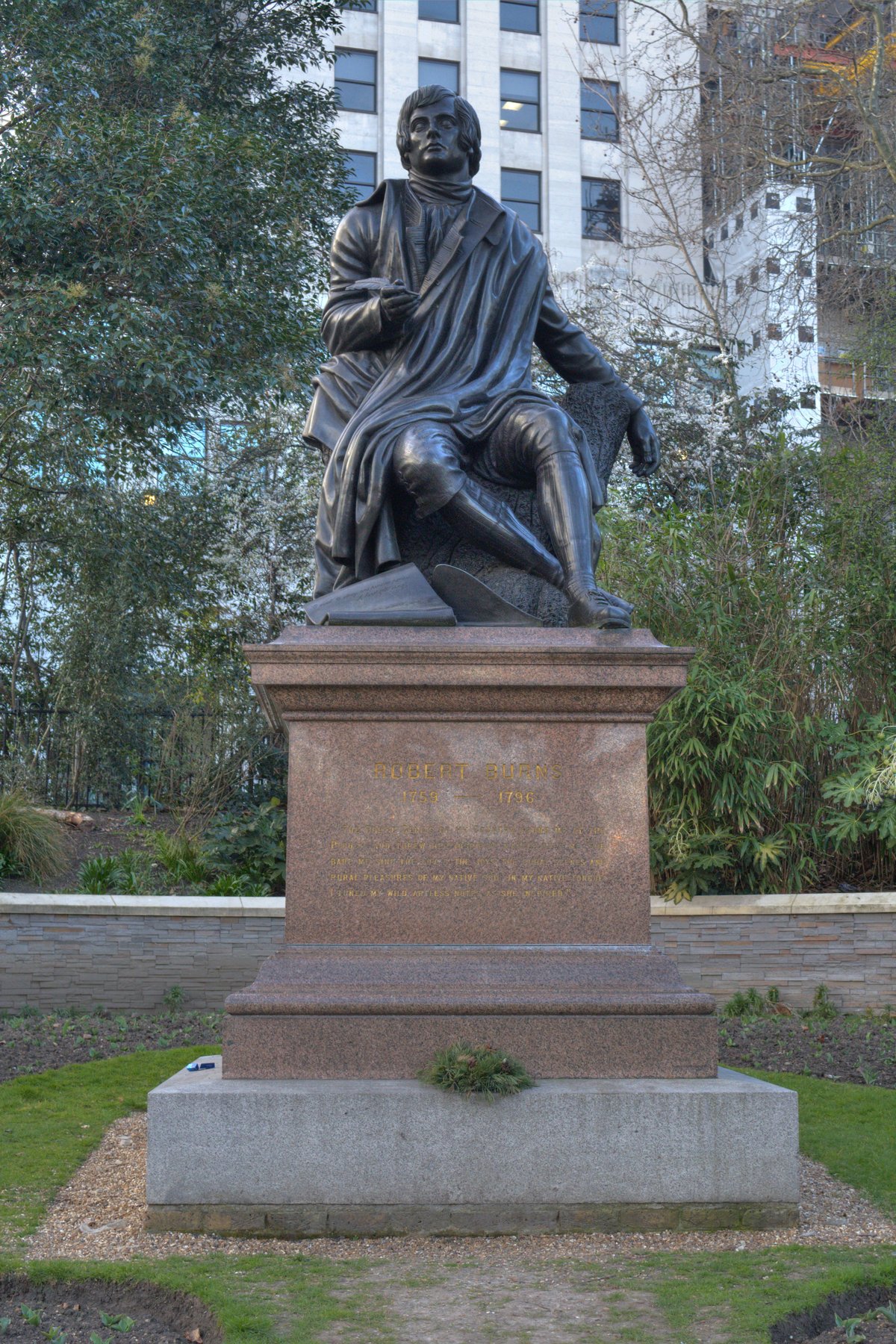
Four bronze portrait statues of the Scottish poet Robert Burns exist today, located in New York City, Dundee, London, and Dunedin. Each was created by the artist John Steell. These monuments capture the poet in a moment of reflection.
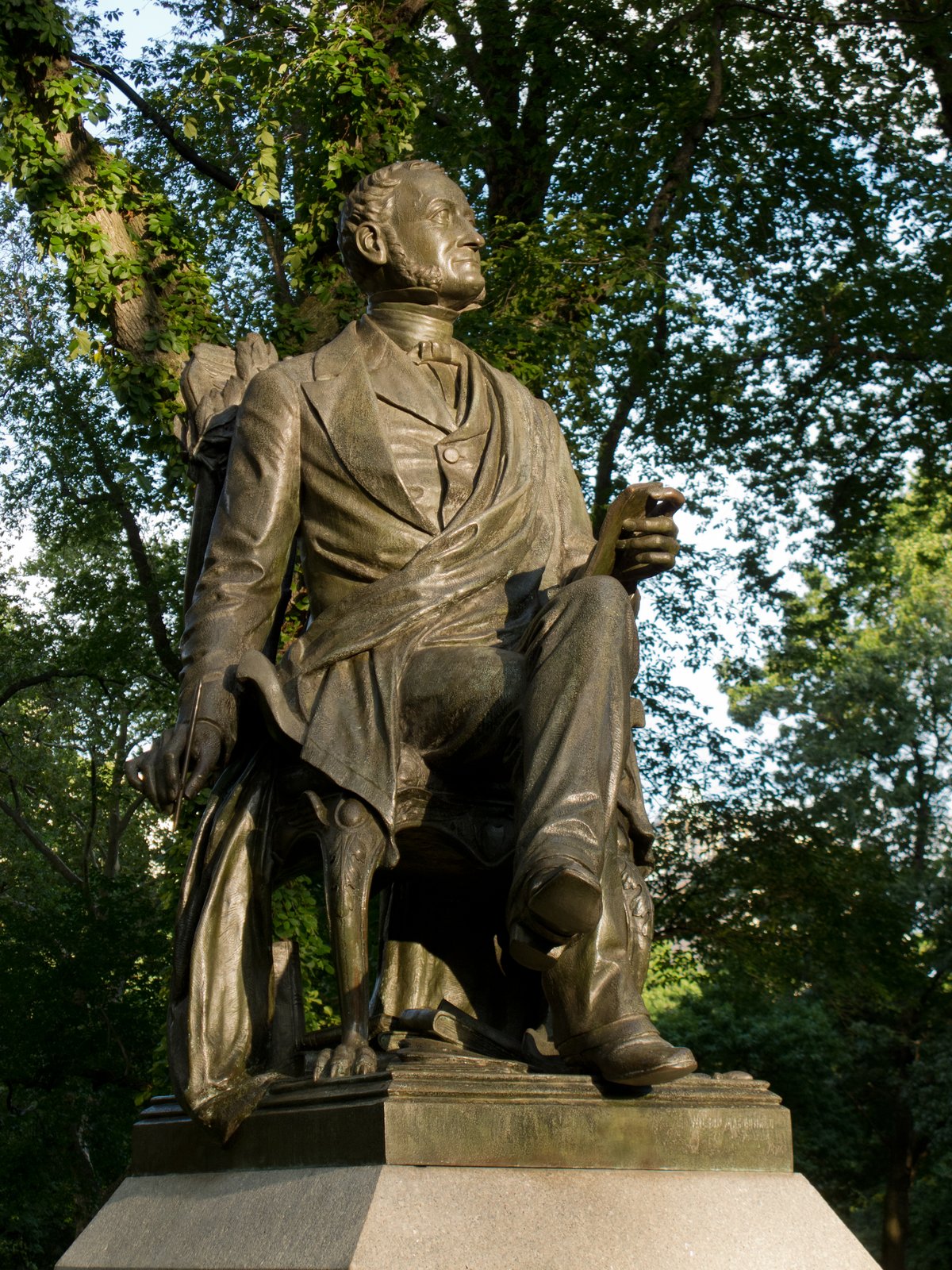
The statue in New York City's Central Park was cast around 1880 and dedicated on 2 October 1880. It was the first statue of Burns to be erected outside Scotland and was a gift from the Scottish-American community. Steell modeled the sculpture closely on an 1787 portrait by Alexander Nasmyth. The bronze figure is seated on a tree stump with a quill pen in one hand, looking toward heaven as he thinks of his true love, Mary Campbell. Inscribed on the scroll at his feet are the words "To Mary in Heaven".
Three other versions were created by Steell. The Dundee statue in Scotland was unveiled only two weeks after the New York statue in 1880, while the London statue on the Thames Embankment was erected in 1884. The Dunedin statue in New Zealand was the last of the set to be unveiled, on 24 May 1887. This version is the most similar in likeness to the one in London.
The Dunedin statue is located in The Octagon, the central plaza of Dunedin. It was unveiled by Miss Burns, a great-grand-niece of the poet, in the presence of Sir George Grey and Mayor Richard Henry Leary. Because of its placement on the McMillan terrace, it has served as a backdrop for many public speeches. In 1988, the New Zealand Historic Places Trust registered this specific statue as a Category I heritage structure.
Sources: Wikipedia, OpenStreetMap, Wikidata, Wikimedia Commons
Written by Friendly Jane
Discuss this with the author and others
No comments yet. Be the first to start the conversation.