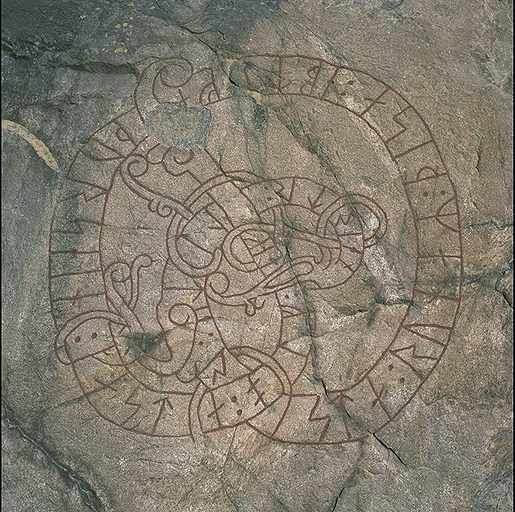

In the heart of the capital city lies a curious relic of the distant Viking past - Riksbyhöjden. The hill, entirely made of granite, hides two mysteries within: Upplands Runic Inscription 59, also known as Fasta Olav’s carving. The runic inscription, 1.07 meters high and 1.02 meters wide, is a circular band that stretches around 1 meter in diameter, uncovering only when you venture onto its stone platform. This runic stone, one of the few surviving remnants of Viking-age literature and art in Sweden, was likely covered under soil and moss for several centuries until 1904 when it was stumbled upon by children collecting firewood.
On the surface, the stone may appear ordinary, but the runic inscription that adorns its face promises a story woven with mystery. The inscription, written in runes, the script used by the Vikings, reads: 'Næstr(? let rista runaʀ þessaʀ æptiʀ faður sinn Fasta olf aik. After being translated, it can be understood as: 'Näst lät rista dessa runor efter sin fader Faste. The end part of the inscription can be interpreted in various ways.
Sources: Wikipedia, OpenStreetMap, Wikidata, Wikimedia Commons
Written by Nik Frost
Discuss this with the author and others
No comments yet. Be the first to start the conversation.