The Birth of the Decadent Poetess 1899-1905

Leontyevskaya St., 17, Saint Petersburg, Russia, 196627

I did poorly in the lower grades, then well. I always resented the gymnasium.

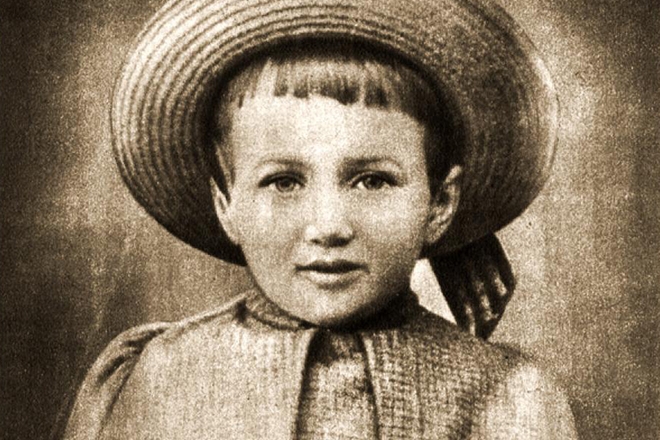
In 1899, Anna Gorenko became a student at the Mariinsky Women's Gymnasium, located at 17 Leontyevskaya Street. The compulsory subjects taught at the Mariinsky gymnasiums included: Law of God, Russian language, history and geography, arithmetic, basics of geometry, penmanship, needlework, gymnastics, "the main concepts of natural history and physics with the addition of information related to household management and hygiene." French and German languages and drawing were also taught. Unlike institutes or theological schools, which primarily aimed to prepare female students for family life, the gymnasiums provided a broader education, striving to make their graduates well-rounded individuals.

As in other gymnasiums, education at the Mariinsky Gymnasium was fee-based, starting from 40 rubles at its opening and rising to 80 rubles by 1911, which limited admission for girls from lower social classes. For example, in 1890, out of 129 students, 77 were children of nobles and officials, and only 2 students came from lower ranks and peasants. In the same year, there were 16 scholarships for underprivileged students, and daughters of employees working at the gymnasium were granted the right to free education.

"She knew how to make a curtsy by folding her hands, courteously and briefly answer an old lady’s question in French, and prayed at the Passion Church in the gymnasium."

"She studied poorly in the lower classes, then well. She always found the gymnasium burdensome. In class, she only befriended Tamara Kostyleva, whom she never met again in life."

"Two years in the 6th grade. She learned German from Frau Schultz. She was at Smolny, but couldn’t endure it—could not live without freedom. French language: when the older children were five years old, they took a Frenchwoman. 'The Queen of Spades'—a translation into French at the gymnasium. Poems—there were two friends to whom she read poems."

"I wrote my first poem when I was 11 years old (it was terrible), but even earlier my father for some reason called me a 'decadent poetess.'"

Recalling her childhood, Akhmatova wrote: "My first memories are of Tsarskoye Selo: the green, damp splendor of the parks, the pasture where my nanny took me, the hippodrome where little dappled horses galloped, the old station, and something else that later entered into the 'Tsarskoye Selo Ode.'"

Nearby, in the Tsarskoye Selo Boys’ Gymnasium, her future husband Nikolai Gumilev studied. In 1905, the family moved to Yevpatoria, and then to Kiev, where Anna completed her gymnasium course at the Fundukleevskaya Gymnasium.


Sources:

https://uznayvse.ru/znamenitosti/biografiya-anna-ahmatova.html

https://antennadaily.ru/2019/06/25/peterburg-akhmatova/

http://kfinkelshteyn.narod.ru/Tzarskoye_Selo/Uch_zav/Mariinskaya_gimn_uch.htm

Follow us on social media

More stories from Anna Akhmatova’s Petersburg

Internal Immigrants 1924

Fontanka River Embankment, 2, Saint Petersburg, Russia, 191187

This is how the Silver Age was dying...

Wild Girl 1889-1905

Pushkin (Station), Saint Petersburg, Russia, 196608

Born in the same year as Charlie Chaplin, Tolstoy's "The Kreutzer Sonata," and the Eiffel Tower

The Birth of a Decadent Poetess 1899-1905

Leontyevskaya St., 17, Saint Petersburg, Russia, 196627

I did poorly in the lower grades, then well. I always resented the gymnasium.

The Relationship of Two "Egotists" 1907-1916

Malaya St., 57, Saint Petersburg, Russia, 196601

Her marriage to Gumilev was considered "doomed" in her family, and, as it would turn out, not without reason.

Pharmacists and the Stray Dog 1911-1912

pl. Iskusstv, 5, Saint Petersburg, Russia, 191186

Any "wanderer," but necessarily a creative person, could come into the basement and warm up.

Tuchka 1912-1914

Tuchkov Lane, 17, Saint Petersburg, Russia, 199053

Аллея была снежной и короткой.

Pagoda 1915

Bolshaya Pushkarskaya St., 3, Saint Petersburg, Russia, 197198

Heartfelt Attachments

Revolution, the End of Youthful Illusions 1917-1918

Botkinskaya St., 17, Saint Petersburg, Russia, 194044

On the Drawbridge On a day that has now become a holiday, My youth came to an end...

Fountain House - North Wing 1919-1921

Fontanka River Embankment, 34litA, Saint Petersburg, Russia, 191014

Having left the Gumilevs, I lost my home.

Fountain House - South Wing 1924-1952

Fontanka River Embankment, 34, Liteyny, Saint Petersburg, Russia, 191014

The idyll did not happen...

Open House 1952-1961

Kavalergardskaya St., 2/48, Saint Petersburg, Russia, 191015

Students from the Oxford literature department have arrived and are demanding a meeting with me. I can't very well receive them in a communal apartment...

Fear and Losses 1921

Fontanka River Embankment, 18, Saint Petersburg, Russia, 191028

In August 1921, Blok, trapped by the new regime, died; Gumilev was executed by shooting. And Anna's older brother, Andrey Gorenko, unable to withstand the trials that befell the family after the revolution, took his own life.

The Last Refuge 1966

Ozyornaya St., 52a, Saint Petersburg, Russia, 197733

Anna Andreyevna Akhmatova died on May 5, 1966.

Booth 1955-1966

23 Osipenko St., Komarovo (Saint Petersburg), Leningrad Region, Russia, 197733

In 1955, when Akhmatova's poems began to appear in print again, Litfond provided her with a small house in Komarovo, at 3 Osipenko Lane, which she herself called the "Booth." The dacha became a center of attraction for the creative intelligentsia.

Writer's Skyscraper

191186, Griboedov Canal Embankment, 9, Saint Petersburg, Russia, 191186

The St. Petersburg Writers' "House on the Embankment"

Adamini House - The Jester's Shelter

Mars Field, 9, Saint Petersburg, Russia, 191186

The southernmost building of the block on the western border of the Field of Mars and the very first on the odd-numbered side of the Moika River Embankment. Named after its founder, merchant Antonov, the building is sometimes called the Antonov House, while its widely recognized name, the Adamini House, comes from the name of its architect, Domenico Adamini.