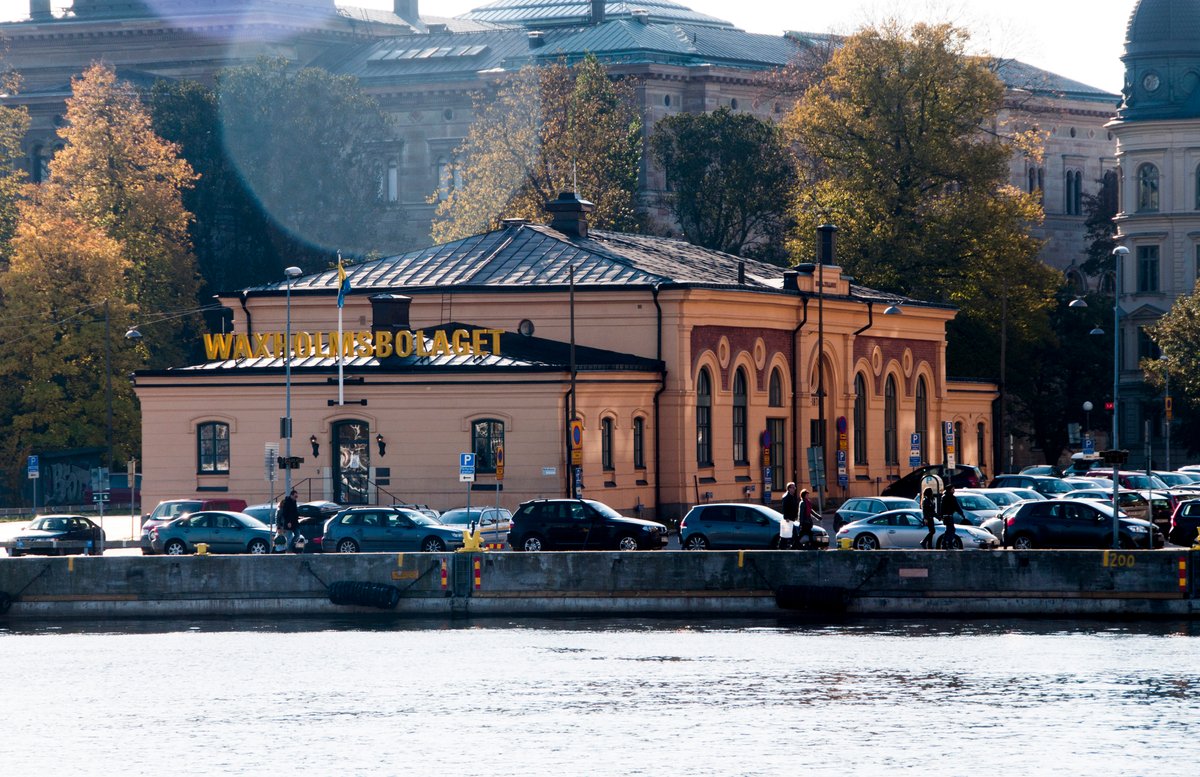

The Old Customs House stands on Blasieholmen as a testament to architectural purpose. Completed in 1876, it was designed by Axel Fredrik Nyström to manage the rapid flow of maritime cargo and passengers. Its Neo-Renaissance design features a prominent central section with two flanking wings. Large arched windows were originally intended to flood the interior with light, while heavy iron fixtures ensured protection against fire and theft throughout the night.
By the 20th century, the harbor had transformed into a global trading center. This specific structure served as a vital artery for commerce, processing nearly 80 percent of the capital's coffee imports alongside various industrial goods. As maritime vessels increased in size, the port eventually lacked sufficient space, leading to the closure of the customs office in 1942.
Stability was threatened in the 2010s when the proposed Nobel Center aimed to replace the building and two neighboring warehouses. However, the Stockholm City Museum identified the site as a high-value cultural-historical landmark. In 2018, a court intervention halted the demolition, recognizing that the structure was essential to the national cultural environment.
We are now looking forward to the building's next purpose. In 2025, the space was offered to the Swedish Museum of the Holocaust for its permanent location. Renovations are currently underway to adapt the site for the museum's specific requirements, with a goal to open the doors in 2029.
Sources: Wikipedia, OpenStreetMap, Wikidata, Wikimedia Commons



Written by Nik Frost
Discuss this with the author and others
No comments yet. Be the first to start the conversation.