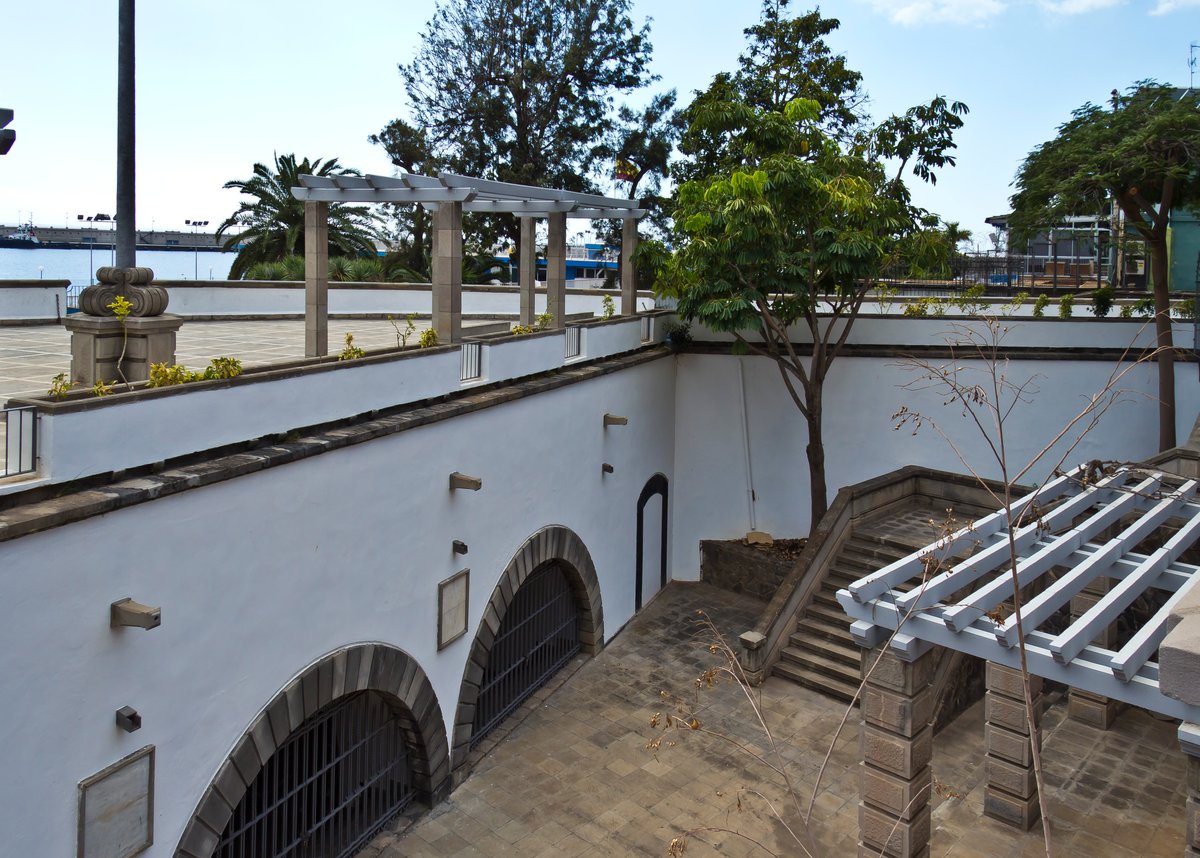

Resting atop a strategic vantage point in Santa Cruz de Tenerife, Canary Islands, Spain, lies Casa Paso Alto. Erected to oversee the sea for centuries, it played a vital role in the city's defense against foreign invaders. This fortress, featuring a semicircular layout and stretching across 1,428 square meters, can be found on the Santa Cruz de Tenerife Property Registry, under number 1, tome 2.421, book 885, folio 199, and property number 66.819.
It bears the Catastro reference number 8304042CS7550N0001EB, and is recognized as a Spanish castle. It was constructed in the 1600s under the guidance of Francisco de Andía, with further enhancements in 1641 due to the ongoing war with Portugal. The castle was heavily damaged by British naval commander Robert Blake in 1657, and faced demolition in 1683, but was saved by those in opposition. It was rebuilt in 1782. The castle's lower level once housed soldier barracks, prison cells, storage, stables, and more, while the upper level served the commanding officer and the kitchen.
In 1774, the castle was struck by a severe storm, causing considerable damages, only to be utilized once more in 1797 to repel the forces of Admiral Nelson. Throughout its history, the castle has served as a prison, housing notorious prisoners such as Tinerfeño Cabeza de Perro before his execution. During the Spanish Civil War, it was used as a nationalist prison, detaining the last republican mayor, José Carlos Schwartz, before his execution. A cannon battery was built alongside the castle in the late 19th century, and was eventually demolished in the 1960s to make way for the Club Deportivo Militar de Paso Alto.
The castle was registered in the Property Registry on July 16, 1900, before being ceded by the Ministry of the Army to the Ministry of Public Works in 1951, and transferred to the Ministry of Finance in 1957. Currently, the castle stands deserted, waiting for a new chapter to unfold. A captivating tale from the castle’s history revolves around a miraculous event. In 1797, during an attack by Admiral Nelson, a remarkable 41 cannonballs were launched at the castle, failing to strike its walls.
Only one cannonball fell in the chapel of the Santo Cristo de Paso Alto, yet it did not detonate. This extraordinary event and the safety of the worshippers were considered a miracle of the Cristo. A yearly pilgrimage began to the chapel after this supposed miracle, but its popularity slowly dwindled due to the castle’s deterioration. Over time, the Cristo de Paso Alto was relocated to various places within the city, before it settled in the Museo Histórico Militar in 1998. A reenactment of the pilgrimage to the Museo Histórico Militar de Canarias is currently held in September.
Sources: Wikipedia, OpenStreetMap, Wikidata, Wikimedia Commons
Written by Mutabor
Discuss this with the author and others
No comments yet. Be the first to start the conversation.