

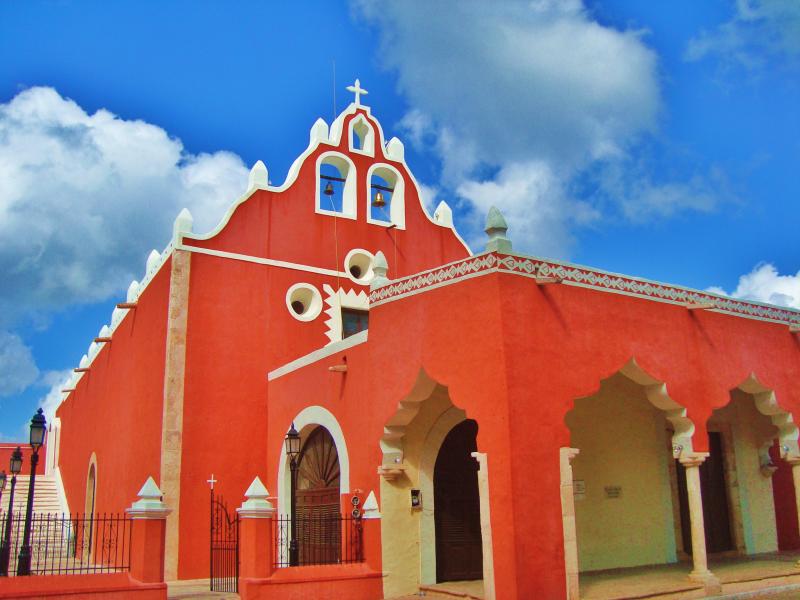
A special and very beautiful church and former monastery Santo Domingo is located in Uayma, a small town with a population of 3,800, 15 kilometers northwest of Valladolid. The church was built by the Franciscans in 1646 from stones of nearby Maya temples, including Chichen Itza. Like the vast majority of viceregal churches, it has a spacious inner courtyard as well as a small courtyard, since holding festive services and mass baptisms of Indians by monks required a place to gather a large number of people.
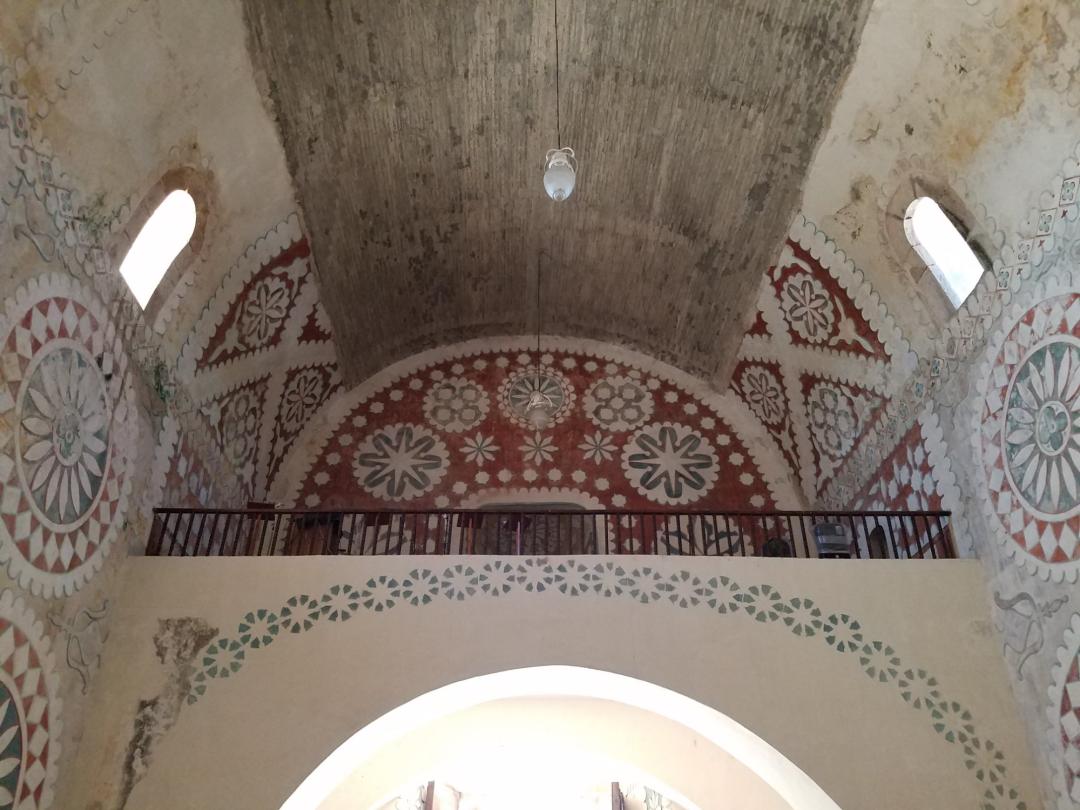
During the Caste War (1847-1901), the Maya in their uprising against Spanish rule captured Uayma and burned the church. In 1891 it was rebuilt. During this process, every effort was made not to leave traces of destruction. Spanish influence, therefore, the work was more complicated, and the full restoration was completed in 2005. During the restoration work, the original paintings applied to both the interior and exterior walls were restored, with large and colorful stars and rosettes that decorate the knowledge and attract guests. The colors used also have specific meanings: thus, red symbolizes the martyrdom and suffering of Jesus Christ; green, in turn, embodies the hope of the believers; the stars and roses relate to the veneration of the Virgin Mary.

The church has a single nave and two side doors in addition to the main one at the entrance; it is on the northern side that the monastery part is located with two porticoes, one in front with three arches and one on the side with eight. One of the sections was converted into a chapel where some masses are held.
The annual festival in honor of Santo Domingo takes place from July 28 to August 6 with the participation of shepherdesses, folk dances, bullfights, guilds, bouquets of flowers, and the traditional pig’s head.
A bit of history: The Caste War is one of the longest and bloodiest uprisings in Mexico. Upon arriving on this land, the Spaniards imposed cruel and unfair working conditions on the Maya. In addition, they deprived them of access to communal lands that the Maya used for agriculture, so it is no surprise that they rebelled.


Written by Jermaine
Discuss this with the author and others
No comments yet. Be the first to start the conversation.