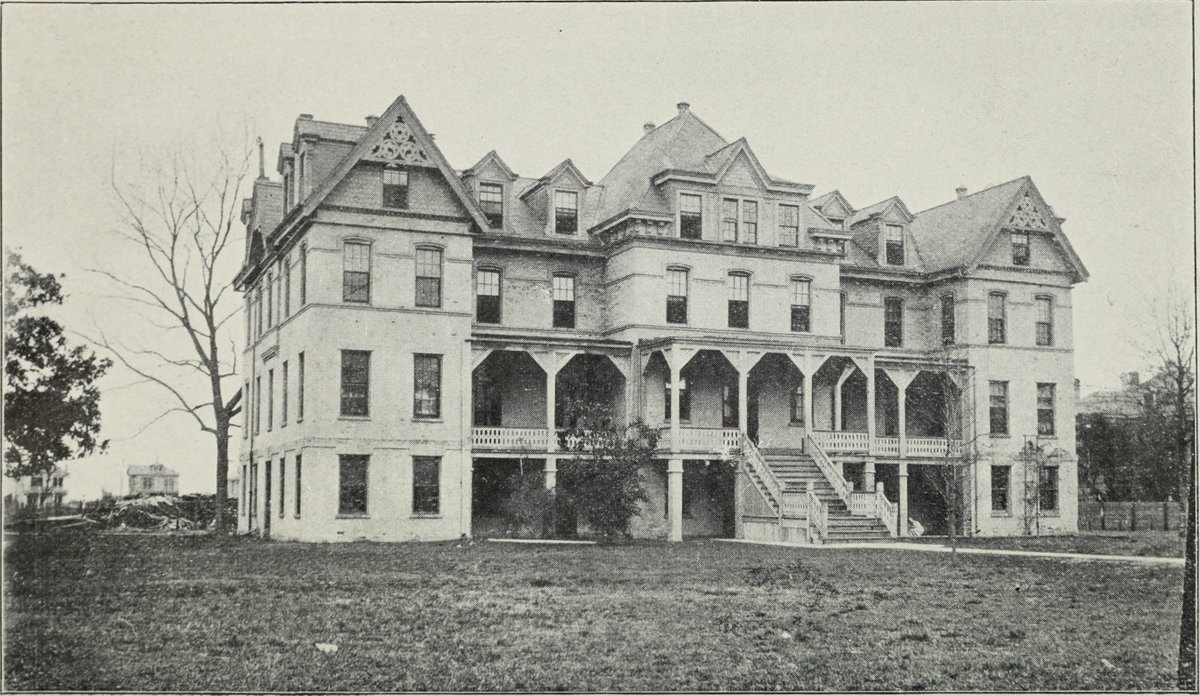
In 1870, Leland University opened its doors to the black community, welcoming students irrespective of race, color, or previous condition of servitude. The school was established by philanthropist Holbrook Chamberlain and was originally located on St. Charles Avenue in New Orleans, across from Audubon Park. It served the region for decades, growing from 100 students in 1882 to 1,000 by 1904.
During the time the schools were neighbors in New Orleans, alumni from Tulane University repainted poles adorned with Leland's school colors, "coal black," in the middle of the night. They used coal tar and included a skull and crossbones. Tulane president Albert Sidney Johnston, a former Confederate general, required an apology, and the sophomore class at Tulane took suspension as a punishment instead.
After a hurricane in 1915 heavily damaged University Hall, the board sold the New Orleans real estate and relocated the school to Baker, Louisiana, where it reopened in 1923 as Leland College. The college eventually closed in 1960 because of financial difficulties. Today, the 20.9-acre Baker campus is listed on the National Register of Historic Places, though many buildings have disappeared and only the ruins of two dormitories remain.
Notable individuals who attended the institution include Abraham Lincoln Davis, a minister and civil rights activist; William Hicks, a Baptist pastor and writer; Eddie Robinson, a former head football coach for Grambling State University; Christina Jenkins, creator of the hair weave; and Linda Thomas Greenfield.
Sources: Wikipedia, OpenStreetMap, Wikidata, Wikimedia Commons


Written by Leroy
Discuss this with the author and others
No comments yet. Be the first to start the conversation.