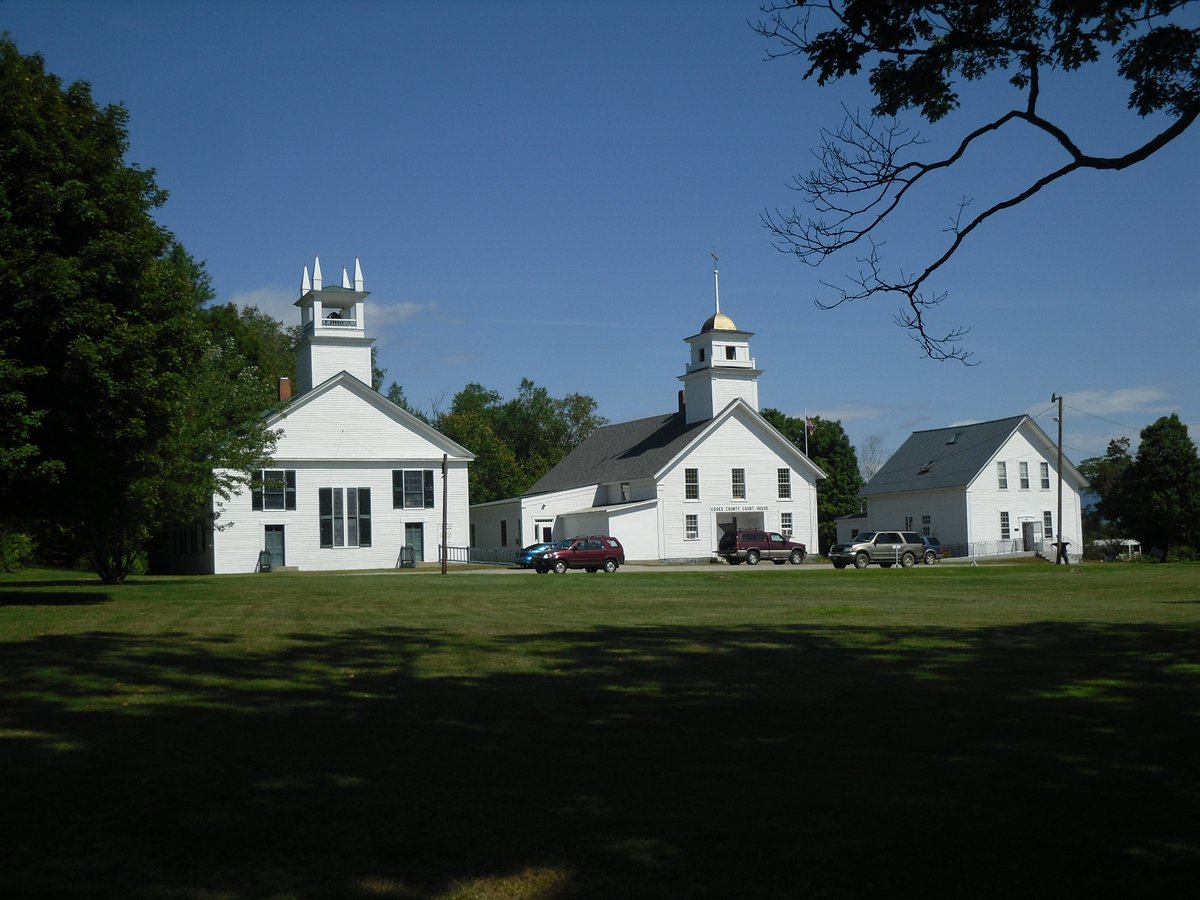

Guildhall was the first settlement in Vermont's Northeast Kingdom. In the 1780s, a dam was built across the Connecticut River, leading to the construction of saw- and gristmills. The village center developed as a commercial, civic, and industrial hub during the late 18th century.
In 1797, Eben Judd, the proprietor of the mills, donated land for a common to secure the town's role as the seat of the newly established Essex County. The town is named for the Guild Hall, part of which was built in 1792 and stands as the oldest commercial structure in the county. The first county courthouse was built in 1803, followed by other civic, commercial, religious, and residential buildings that now line the roughly square common.
The historic district is centered on the square common at the center of Guildhall village, formed by a bend in Vermont Route 102. The common is bounded on the north and west by Courthouse Drive, with the district extending along the road both north and west. It is bounded on the east and south by the river.
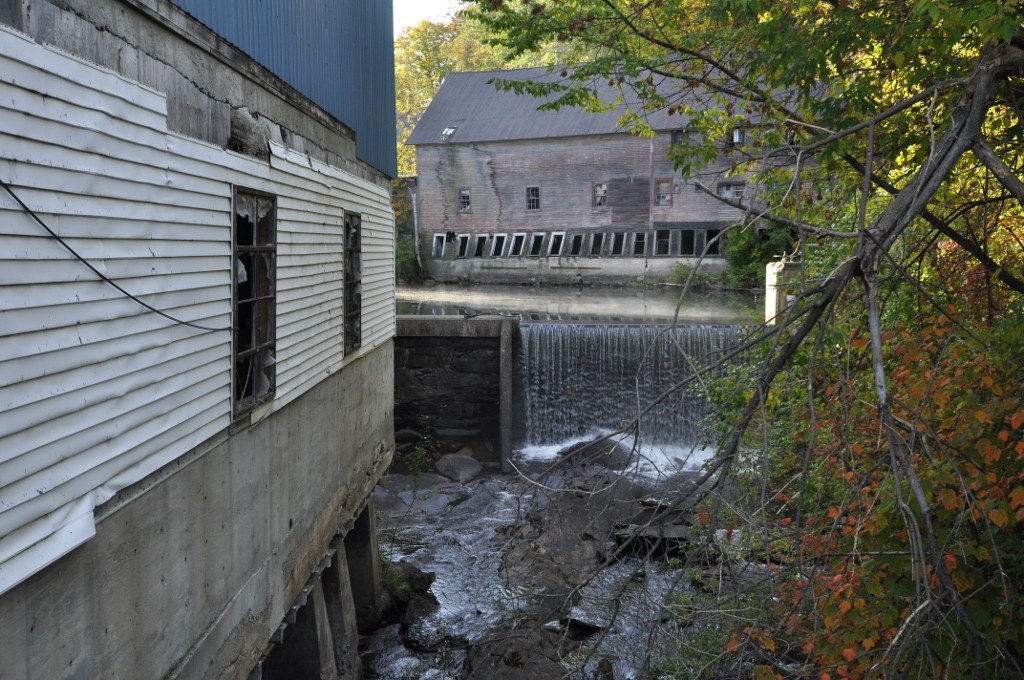
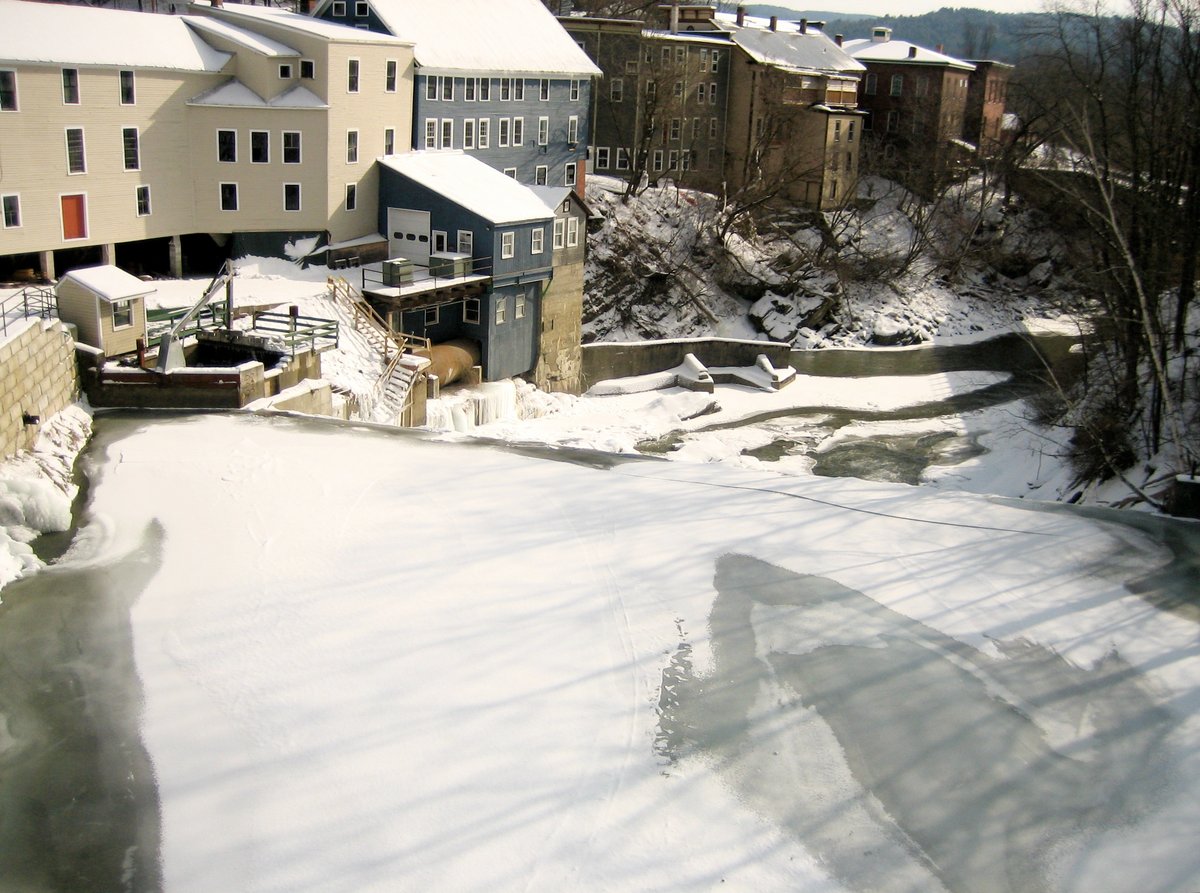
Prominent buildings in the district include the 1851 Greek Revival county courthouse, the 1844 Congregational church, and the former jail, jailer's house, and barn, all built c. 1880. The district also includes the remains of the 1787 Ward Bailey Gristmill and a former hydroelectric plant built in 1921 on the river bank. The district was listed on the National Register of Historic Places in 1980.
Sources: Wikipedia, OpenStreetMap, Wikidata, Wikimedia Commons
Written by Friendly Jane
Discuss this with the author and others
No comments yet. Be the first to start the conversation.