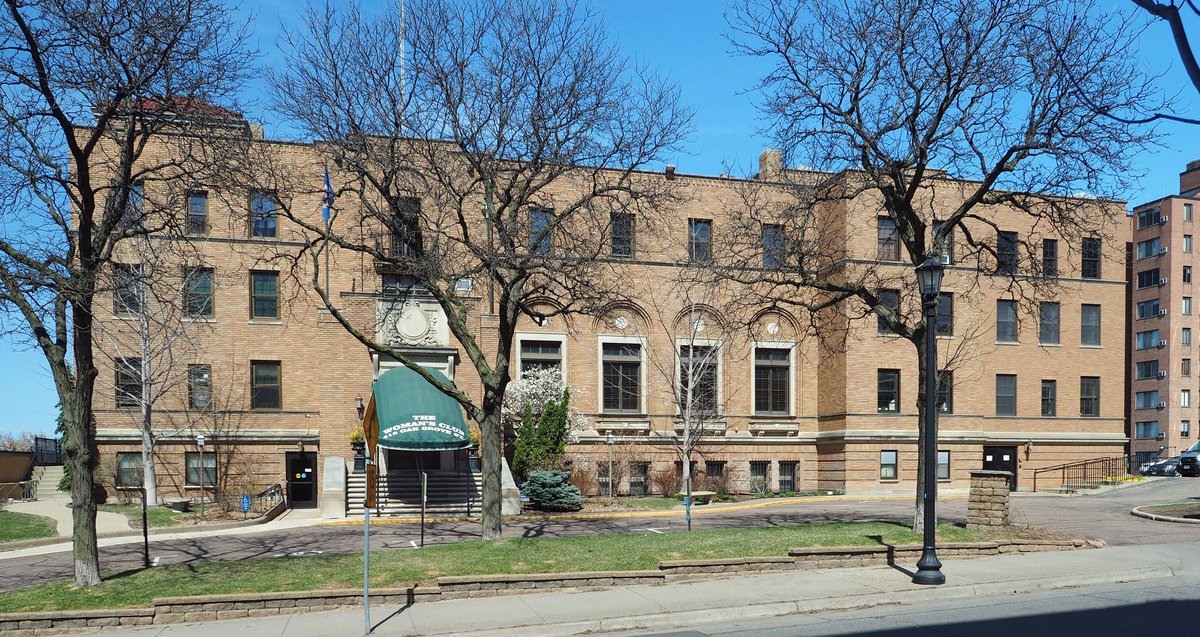
In 1907, a group of visionary women established the Woman’s Club of Minneapolis, forming a gathering place that would become an integral part of the local community. The seeds of the club were planted by Ruth Keyes and Jean Sherwood Rankin, who proposed the idea to Gratia Countryman, the Chief Librarian of the Minneapolis Public Library. Prominent early members included community activist Clara Ueland, suffragist Maud Conkey Stockwell, and politician Mabeth Hurd Paige. Alice Ames Winter, an author, was elected as the first president of the club.
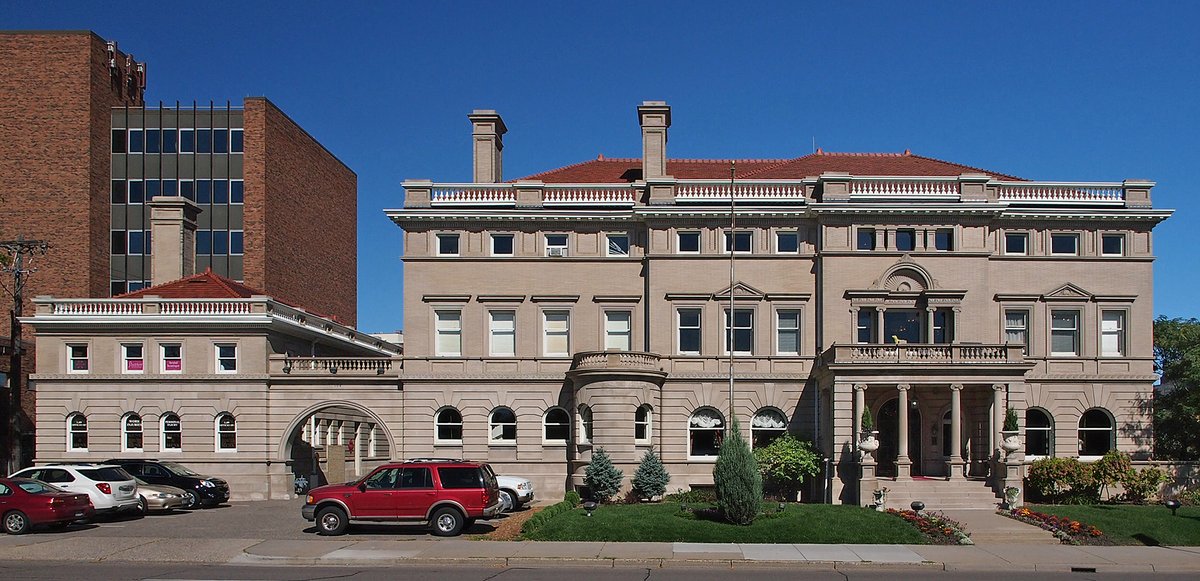
In 1928, architect Léon Eugène Arnal designed the club’s new Italian Renaissance Revival clubhouse. The building, which cost $300,000, is set into a hill with the front facing Oak Grove Street while the back faces the Loring Park Pond. The exterior of the building uses multiple shades of tan brick with stone belt courses and windowsills.
The main entrance consists of limestone stairs with a balustrade below a stone medallion with the club's name. Corbelled arches emphasize the four largest windows on the front facade. The back of the building has a ground-level arcaded loggia with stone columns.
From the opening in 1928 until 2025, the Woman's Club of Minneapolis engaged in many charitable works, such as setting up a free eye clinic, sewing masks during World War II, providing scholarship, and building playgrounds. The group also tackled social issues of the day, including working to prevent spoiled milk, serving school lunches below cost, teaching English language classes to immigrants, and providing fresh meals for unhoused people in Minneapolis. The club also hosted a variety of events, including educational lectures by notable figures such as Helen Keller, Winona LaDuke, Eve Ensler, and Frank Lloyd Wright. In 1990, membership became open to men for the first time.
By 2025, the club, which had peaked at 1,850 members in the 1950s, could no longer afford to operate the clubhouse and so the members voted to sell it, but planned to continue meeting elsewhere.
Sources: Wikipedia, OpenStreetMap, Wikidata, Wikimedia Commons

Written by No Other
Discuss this with the author and others
No comments yet. Be the first to start the conversation.