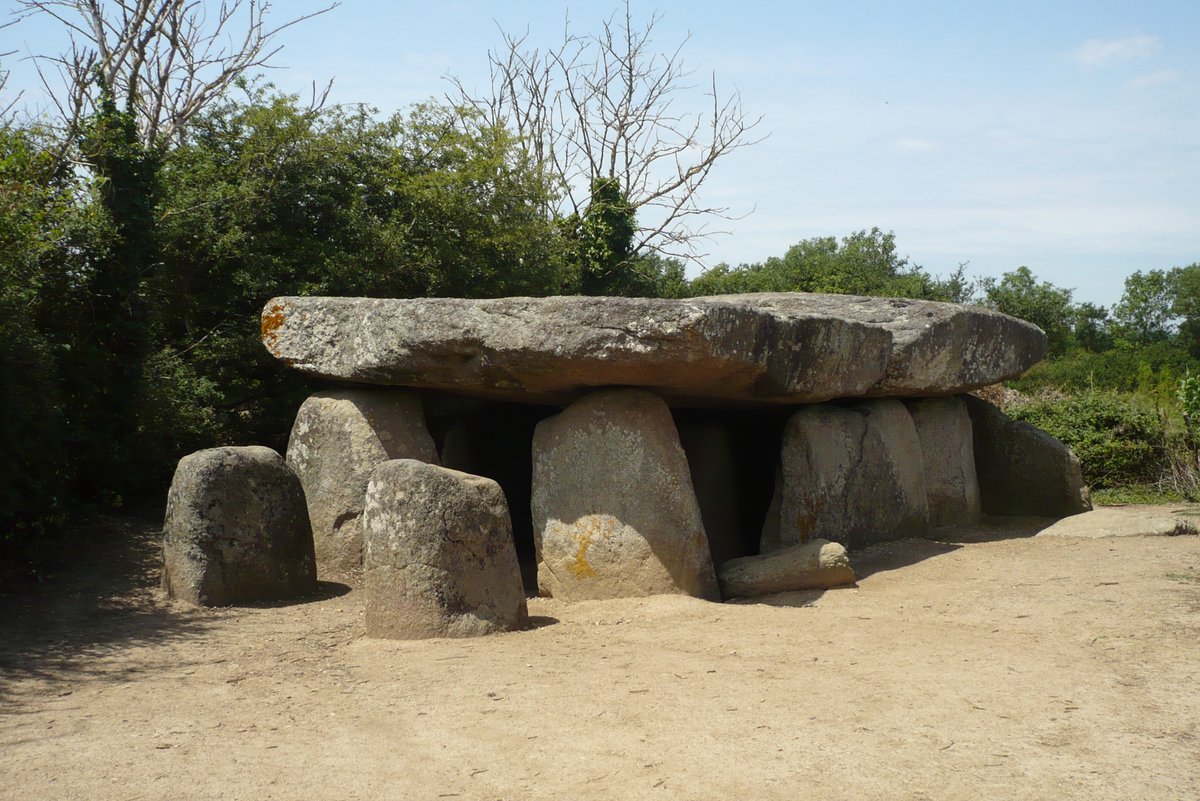

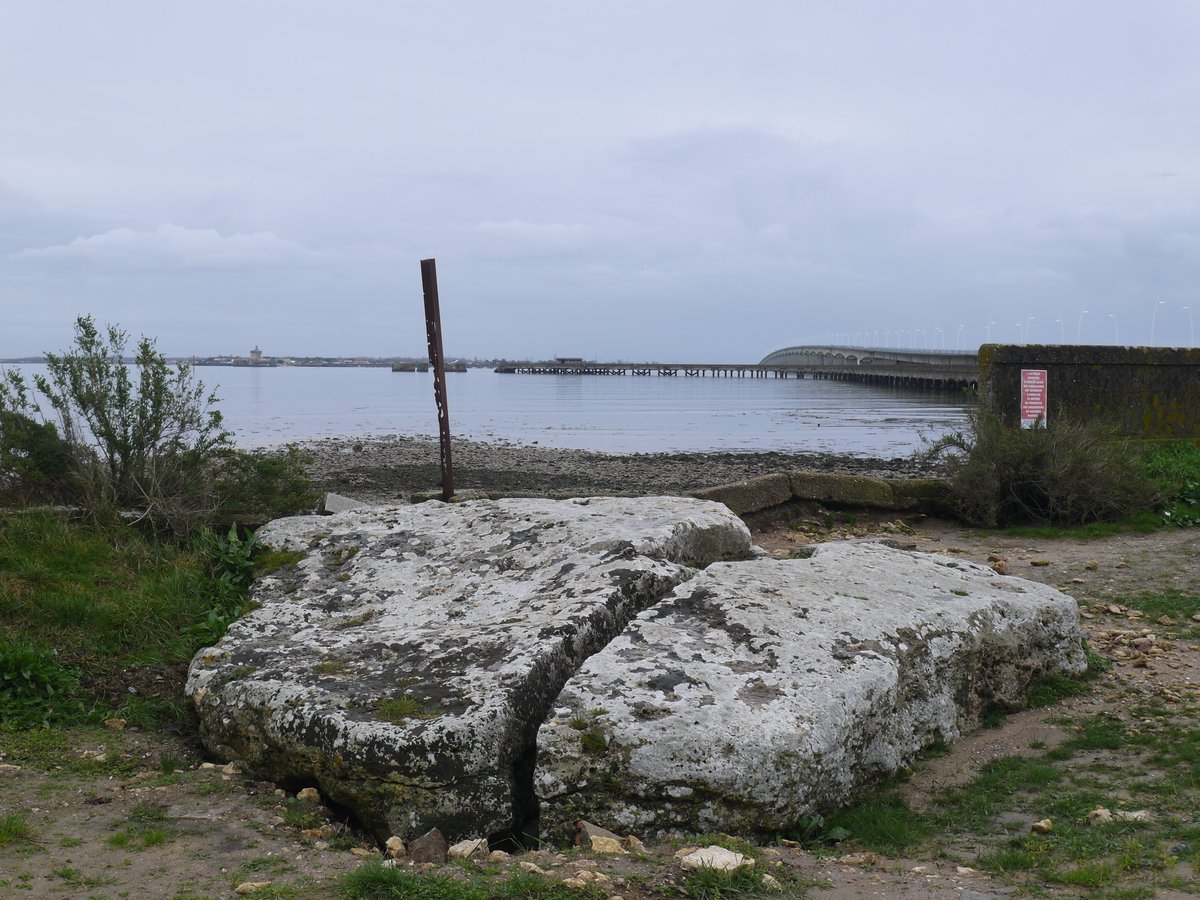
The Frébouchère Dolmen, also known as Pierre-Couverte, is a megalithic tomb situated at le Bernard in the Vendée department of France. Around 1833, a clandestine excavation by treasure hunters caused two of its pillars to tilt toward the inside of the chamber. The monument was later restored in 1887 and classified as a historical monument in 1889.
For centuries, tales have emerged from the locals speaking of secret celebrations and revelries within the Frébouchère Dolmen. According to a testimony dated from 1840, the dolmen served as a party hall on festive days, where young girls danced on the cover slab while wine was served to the elderly in the burial chamber. Folklore suggests that fairies and elves were responsible for the structure, and that the fracture in the cover slab might even represent a divine punishment.
Today, the remains of the tumulus, in a pear shape, are visible to the south of the monument, currently masked by a hedge. The menhirs of the Frébouchère, which are satellite menhirs of the dolmen, are located a few hundred meters to the north and north-east. Although no archaeological material has been found, some lithic objects, including a polished axe, were found nearby during surface surveys.
Sources: Wikipedia, OpenStreetMap, Wikidata, Wikimedia Commons


Written by Nicolo Ciampini
Discuss this with the author and others
No comments yet. Be the first to start the conversation.