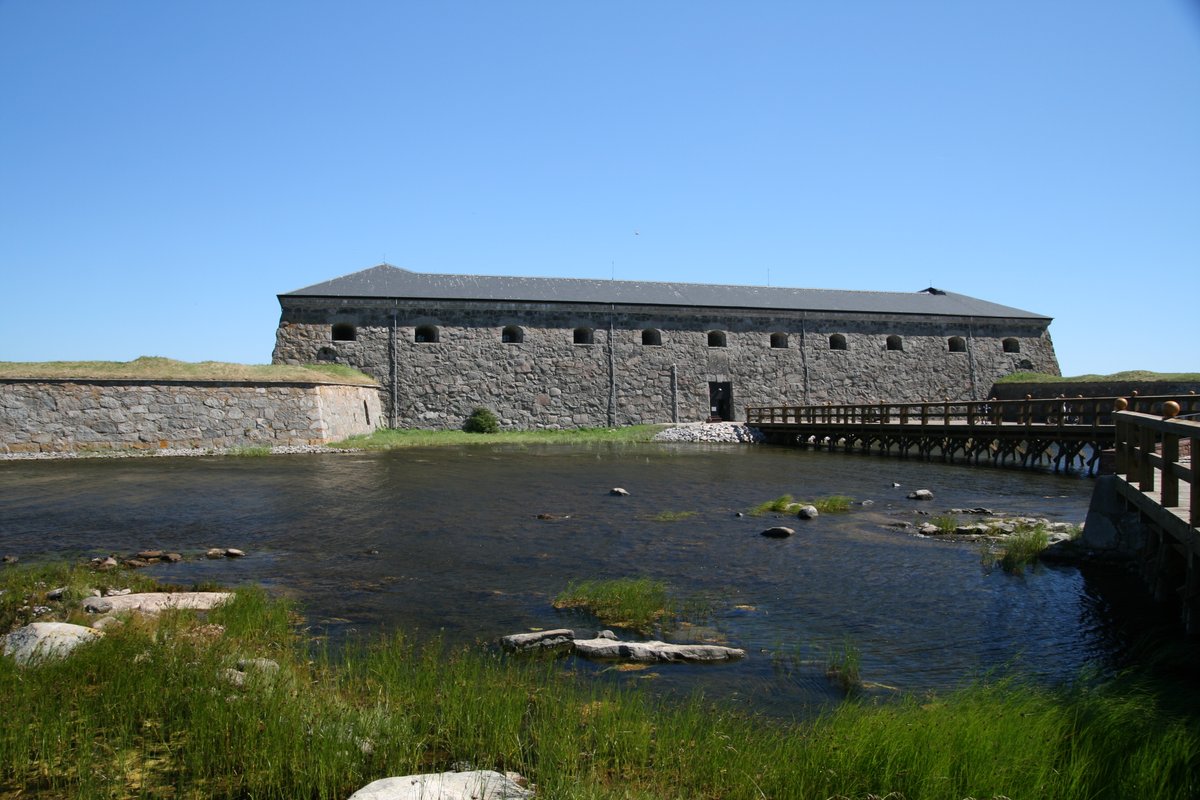

Drottningkär, located on the island of Aspö near Karlskrona, was a fortification built in the late 17th century. It was designed by Erik Dahlbergh, a military officer and architect, with the intent to be one of the most beautiful castles in Europe. The fort was used for covered placement of cannons and housing units. Four bastions surround Drottningkär, each named after Swedish queens: Kristina, Hedvig, Maria, and Ulrika (Ulrika spelled correctly). The donjon and the four bastions were linked by walls, known as curtains.
Additional defenses such as walls, trenches, and a ravelin on Aspö were built in the 1730s. Drottningkär had cannons that could be placed in three tiers, allowing 44 cannons to simultaneously fire at enemy ships. Despite two attempts to attack Karlskrona by the fleets of Catherine the Great of Russia in 1788–1790 and Lord Nelson of England in 1801, Drottningkär lived up to its name as the ‘gray louse’ that kept the enemy ships at bay or deterred them from approaching.
Ultimately, Drottningkär served as the main defense for the outer defense line of the Karlskrona area until the 1820s, but was disarmed and removed from the defense organization in 1895. Today, Drottningkär’s kastell is well-preserved and now serves as a museum. It is a state-protected building since January 25, 1935.
Sources: Wikipedia, OpenStreetMap, Wikidata, Wikimedia Commons
Written by Nik Frost
Discuss this with the author and others
No comments yet. Be the first to start the conversation.