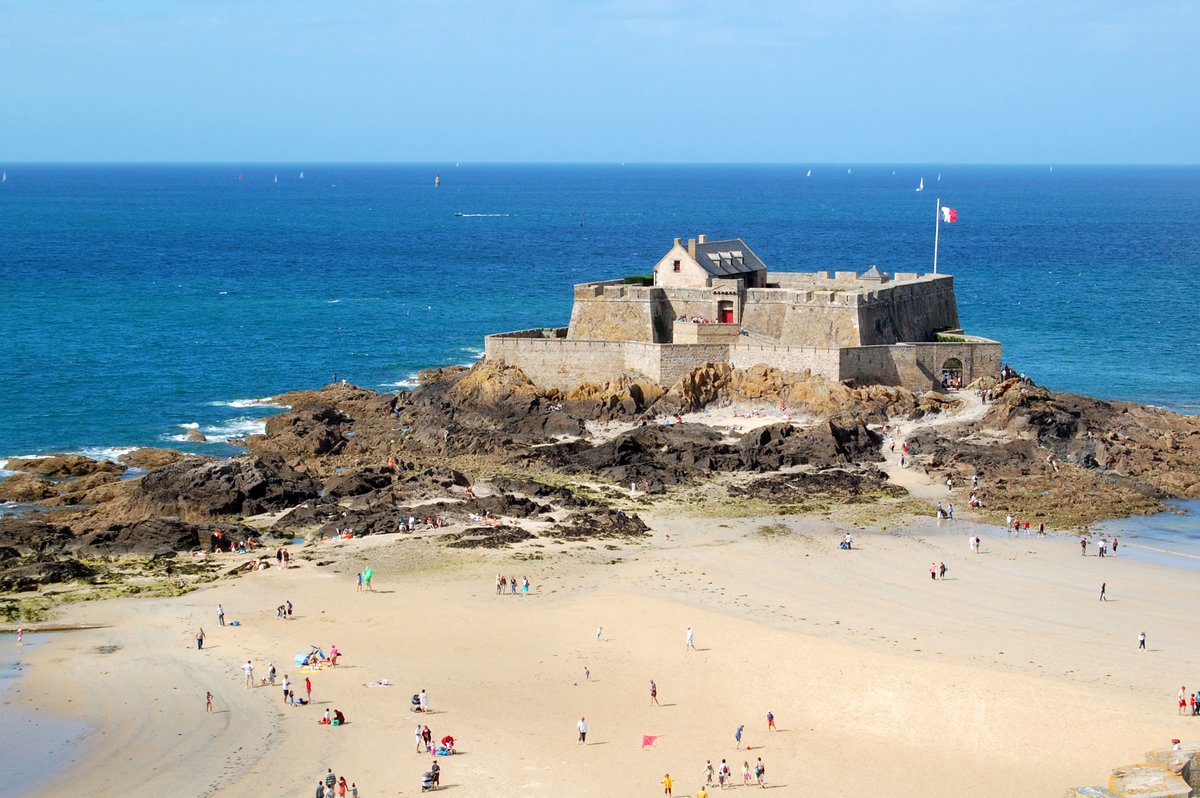

This rock once served as a beacon, but do you think that is all it did? The seigniory of Saint Malo used it as a grim stage for public executions to burn criminals. A gallows also occupied the site. These historical uses preceded the military arrival with heavy granite plans.
Did King Louis XIV want a proper defense for the port? He tasked the great architect Vauban with designing a fort here between 1689 and 1693. They constructed a granite rectangle featuring a dry moat and a drawbridge. It sat in a long coastal chain and contained a massive underground cistern for 50,000 liters of water. Why would a dry, rocky island need so much water?
Did things get messy in 1944? The German army seized control and turned the fort into a prison for a few days in August. They shoved 380 men inside as hostages. Food ran out on 11 August, and on 13 August, 150 old men and women joined the existing prisoners. It is a heavy chapter of history to keep trapped inside those walls.
Can you walk the grounds today? Only if the tide cooperates with your plans. Access is only possible at low tide during the period from 1 June to 30 September and on certain other days. You must check the website for the specific opening times to ensure you can make the crossing.
Sources: Wikipedia, OpenStreetMap, Wikidata, Wikimedia Commons
Written by Nicolo Ciampini
Discuss this with the author and others
No comments yet. Be the first to start the conversation.