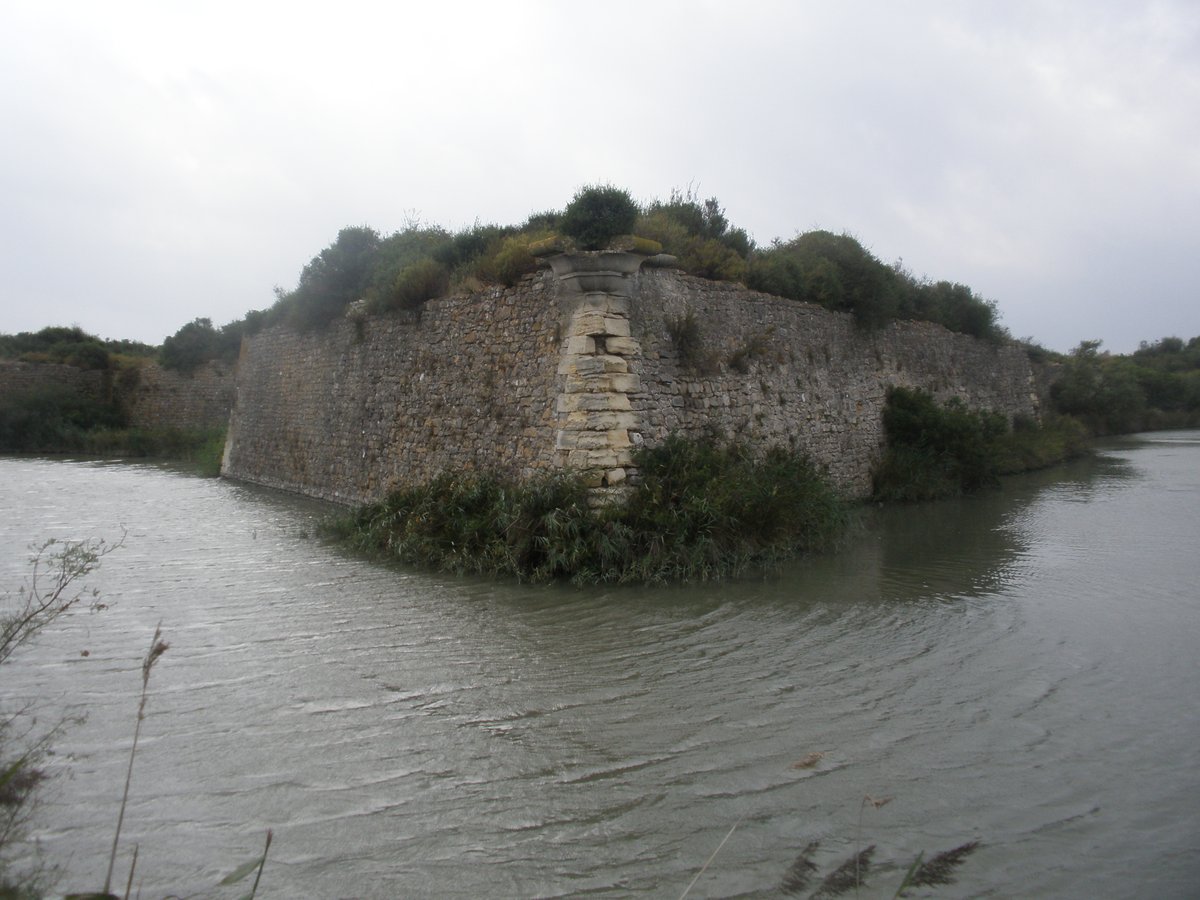

In the town of Saint-Laurent-d'Aigouze, Fort de Peccais serves as a historical military construction. While Saint-Louis purchased land in Peccais in 1248 to build the city of Aigues-Mortes, the fort itself was constructed in 1568. Its primary mission was to ensure permanent control over the nearby salt pans and the canals used for salt transport, protecting the precious commodity from pirates and smugglers.
Between 1568 and 1716, the fort was expanded to include various annexes, a chapel, cisterns, ice houses, storage facilities, and a bakery. The main barracks consisted of three two-story buildings arranged in a U-shape around a central courtyard, housing the governor, the lieutenant of the king, and the major. After the abolition of the gabelle in 1791, the fort lost its importance and fell into disrepair until it was decommissioned in 1820.
During the period of 1914-1918, the fort served as a prison. Later, between 1942 and 1944, concrete blockhouses were installed on the site to guard against potential landings. The ruins and the moat were classified as historical monuments in 1978. In December 2012, the site was transferred from the Compagnie des Salins du Midi to the Conservatoire du littoral.
Sources: Wikipedia, OpenStreetMap, Wikidata, Wikimedia Commons
Written by Nicolo Ciampini
Discuss this with the author and others
No comments yet. Be the first to start the conversation.