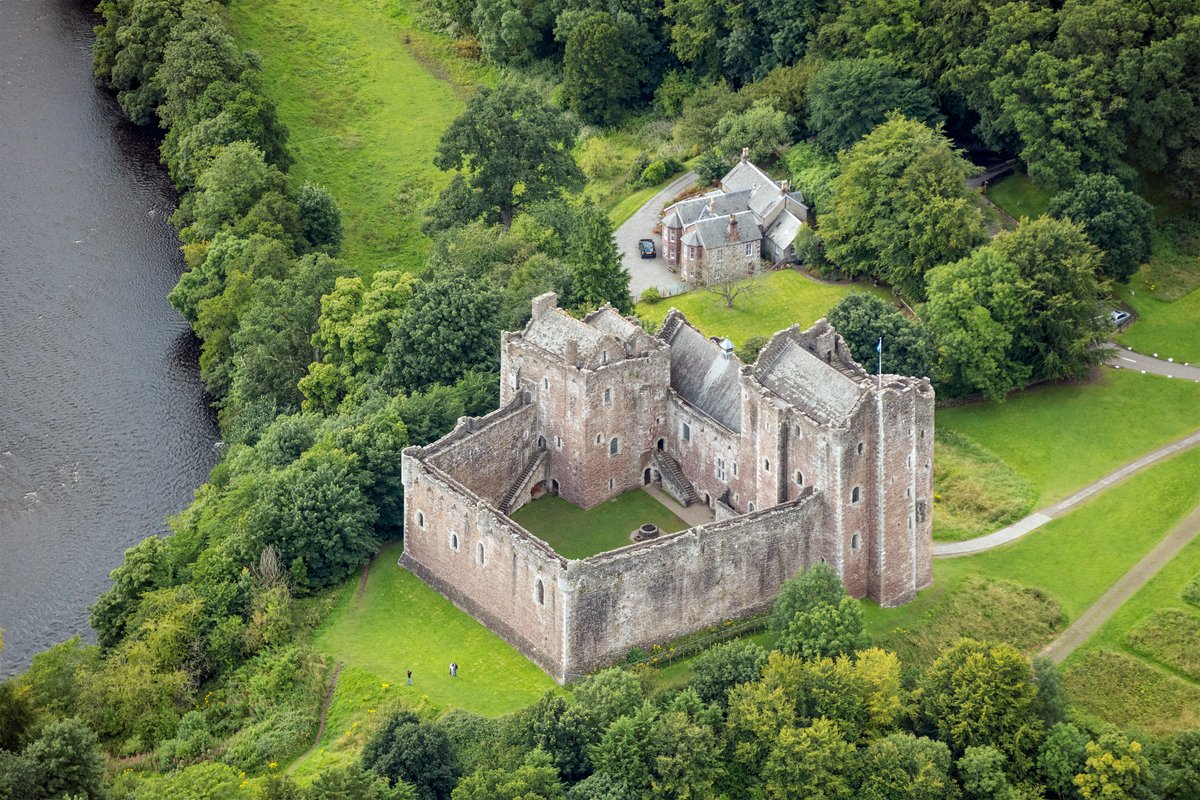

Doune Castle sits on a wooded bend where the Ardoch Burn meets the River Teith. Is it a masterclass in late 14th-century Scottish architecture? It certainly is. The sturdy courtyard plan and massive tower house show off exactly what a royal castle building should look like. Who was the builder? Someone wealthy enough to reflect the current ideas of the era.
But why does the history get so messy? The Duke's son, Murdoch, was executed for treason in 1425. Did the crown just scoop up the property? They did. It turned a private power base into a royal retreat for hunting and queen dowagers. Was it a peaceful retirement? Not exactly. It saw heavy action during the Jacobite risings and served as a site where a messenger was tortured for carrying letters to Mary, Queen of Scots.
How does it look today? It is managed by Historic Environment Scotland. You can still see the 1880s restoration work that replaced the old timber roofs and internal floors. Is the stonework original? Almost all of it dates from the late 14th century. Aside from minor repairs in the 1580s, the walls remain as they were. Isn't it lovely how much blood can be packed into old stones?
Sources: Wikipedia, OpenStreetMap, Wikidata, Wikimedia Commons
Written by Nicolo Ciampini
Discuss this with the author and others
No comments yet. Be the first to start the conversation.