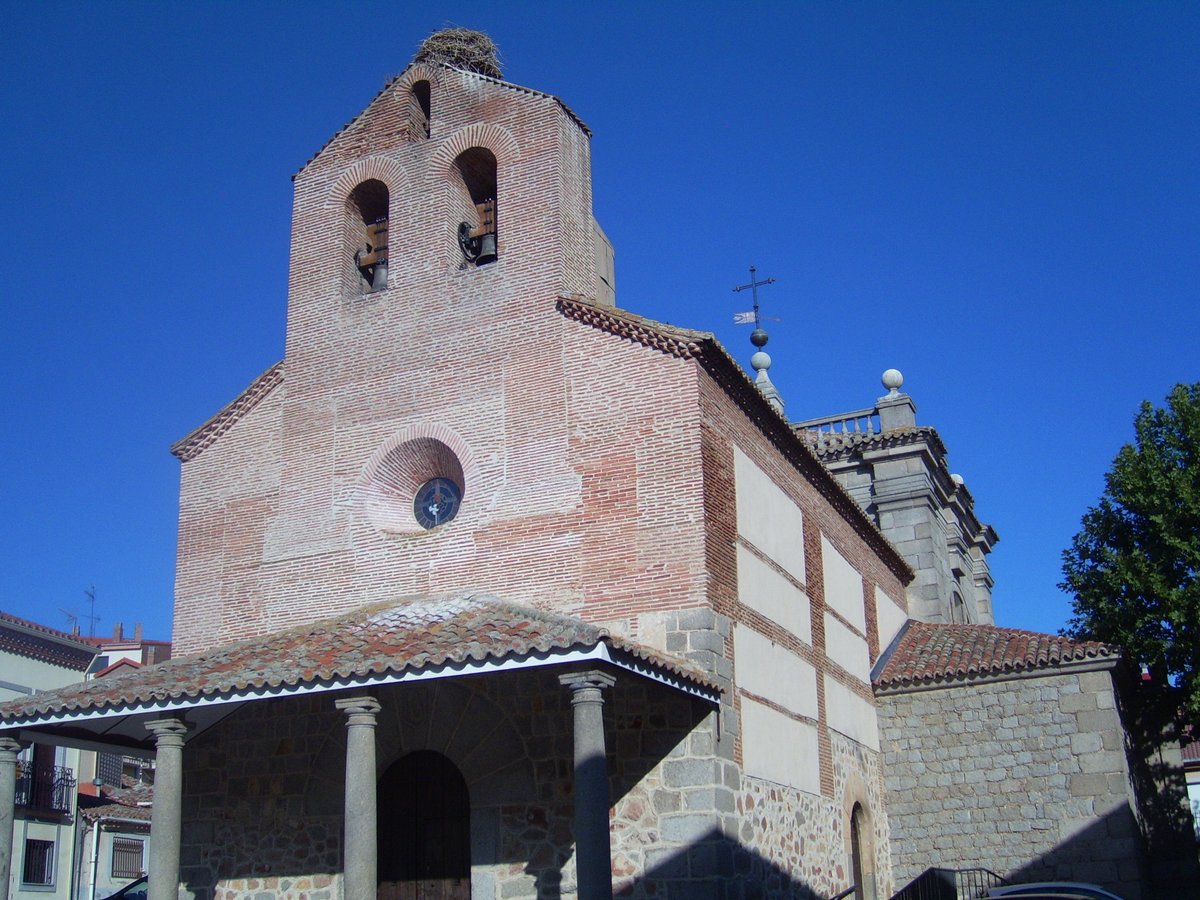

Tucked away in the Plaza de las Vacas, outside Ávila, Spain, lies a mysterious building known as the Hermitage of Nuestra Señora de las Vacas. Its history may stretch back to pre-Arab times, but the earliest documented evidence of its existence comes from the 13th century, when it was under the control of the Order of the Knights of St. John of Jerusalem. By the 15th century, the original edifice was in ruins, but it was rebuilt between 1460 and 1469 under the supervision of Juan Núñez Dávila.
Today, the Hermitage remains an architectural marvel, with its striking design characterized by symmetry, intricate details, and a balance between religious and secular themes. The exterior is crowned with a balustrade and typical Escurialense balls, a testament to its status as a cultural property of interest since 1992. The interior consists of a nave and a chapel major, both rebuilt by Juan Núñez Dávila, with the chapel major marked by its symmetry and details such as the dome and medallions adorned with reliefs of the four evangelists.
The Hermitage is home to the Illustrious Patronage of the Holy Trinity, the Holy Christ of Illusion, and Nuestra Señora de las Vacas, considered one of the oldest patronages still in existence.
Sources: Wikipedia, OpenStreetMap, Wikidata, Wikimedia Commons
Written by Nik Frost
Discuss this with the author and others
No comments yet. Be the first to start the conversation.