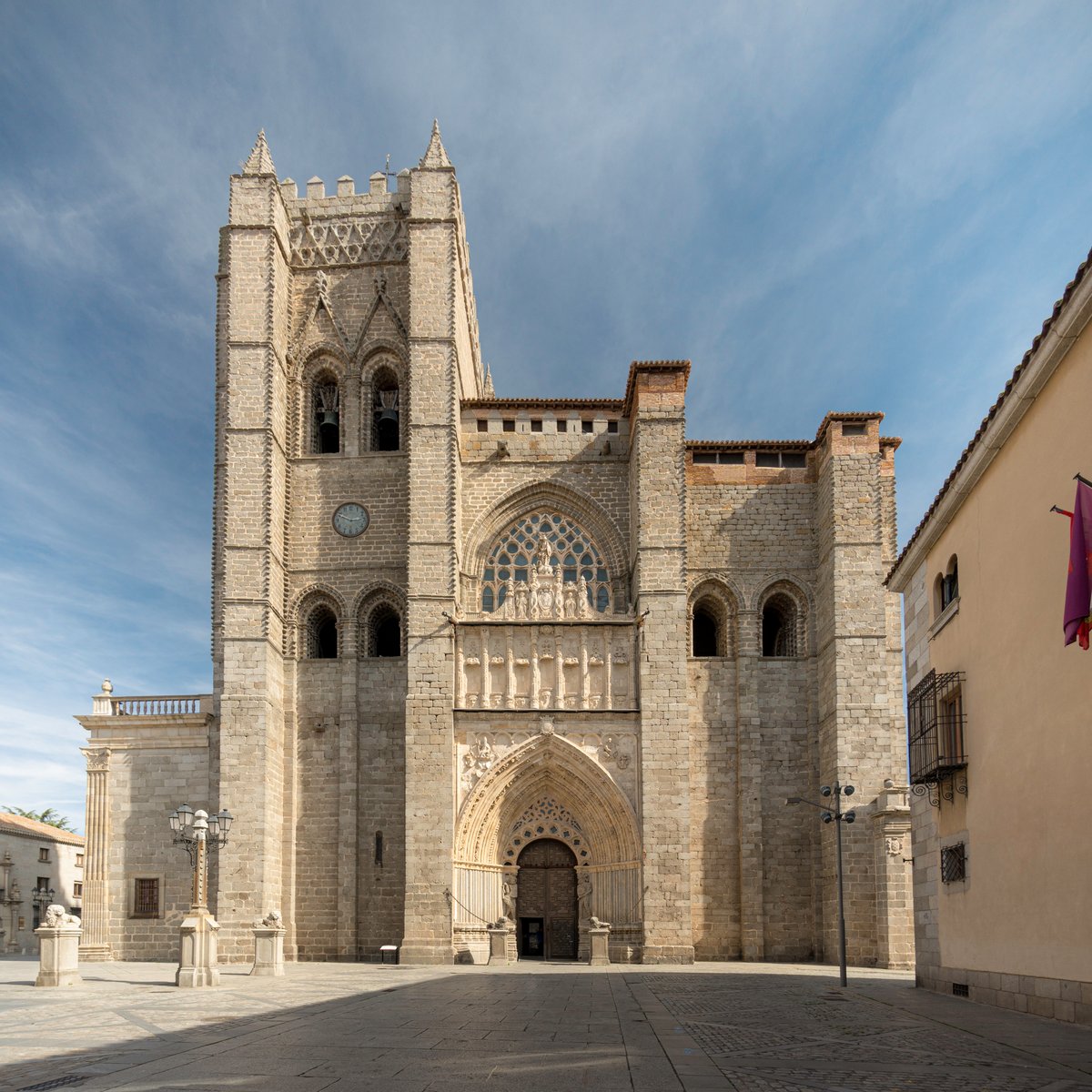

The Cathedral of the Saviour, known as the Cathedral of the Saviour, is a Catholic church built in the late Romanesque and Gothic architectural traditions. It was designed as a cathedral-fortress, with its apse forming one of the turrets of the city walls. The cathedral is surrounded by a number of houses or palaces, the most important being: the Palace of the Veladas, the Palace of the Infant King (Rey Niño), and the Palace of Valderrábanos.
The exact start of the cathedral's construction is unknown, with theories suggesting it began in 1091 or the 12th century. The cathedral, particularly its central nave, shows French influences and great resemblances to the Abbey Church of St. Denis. It consists of a central nave and two aisles with a wide transept. The central nave is notably higher and opens with large windows to the outside.
The alabaster baptismal font (1514–1516) is the work of Vasco de la Zarza. The thick wall of the ambulatory of the apse is embedded in the solid, fortified wall surrounding the city.
A retrochoir divides the central nave from the transept, the choir, and the apse. The plateresque retrochoir was intricately decorated with high-reliefs by Lucas Giraldo and Juan Rodríguez. They show in great detail and with naturalism five scenes from the childhood of Jesus. In the Epiphany, Balthasar is highlighted in black.
The walnut choir stalls (with a misericord), behind the retrochoir, are aligned with the side of the church. They date from the first half of the 16th century.
Sources: Wikipedia, OpenStreetMap, Wikidata, Wikimedia Commons
Written by Nik Frost
Discuss this with the author and others
No comments yet. Be the first to start the conversation.