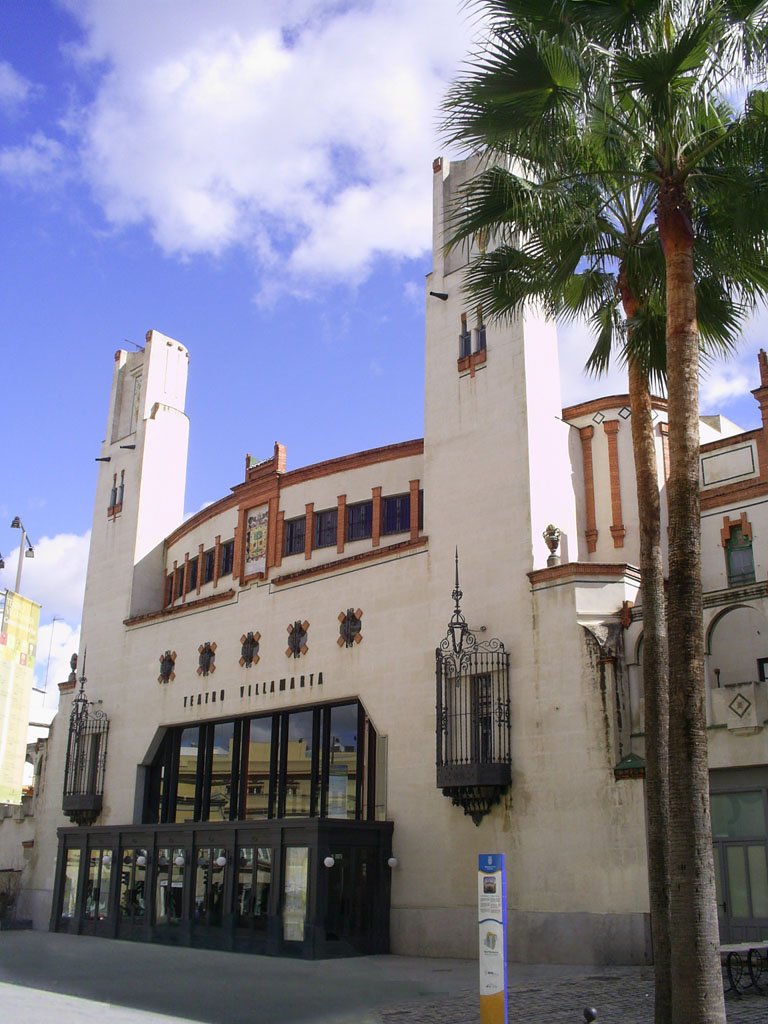

Teodoro Anasagasti envisioned the Teatro Villamarta as a significant regionalist landmark in Jerez. The facade displays a modernist perspective with cubist elements, highlighted by two large towers containing windows shaped like wine bottles. Although the aesthetic feels local, the building holds a pioneering place as one of the first structures in Spain to utilize concrete.
King Alfonso XIII commissioned this theater following a visit to the city and a performance at the Teatro Eslava. Construction commenced in 1927, and the venue opened in 1928 with a capacity of 2,000 seats. The Riba family oversaw the house for many years, where they introduced silent cinema and welcomed major stars to the stage.
Following its closure in 1986, the city acquired the building for renovation in the 1990s. These updates reduced the capacity to 1,226 seats to enhance the view of the auditorium. The interior features wood, red tones, and yellow borders, while the stage functions as a hydraulic machine to adjust for various productions. Today, the theater serves as a primary venue for the Festival de Jerez and the Centro Lírico del Sur.
Sources: Wikipedia, OpenStreetMap, Wikidata, Wikimedia Commons
Written by Nik Frost
Discuss this with the author and others
No comments yet. Be the first to start the conversation.