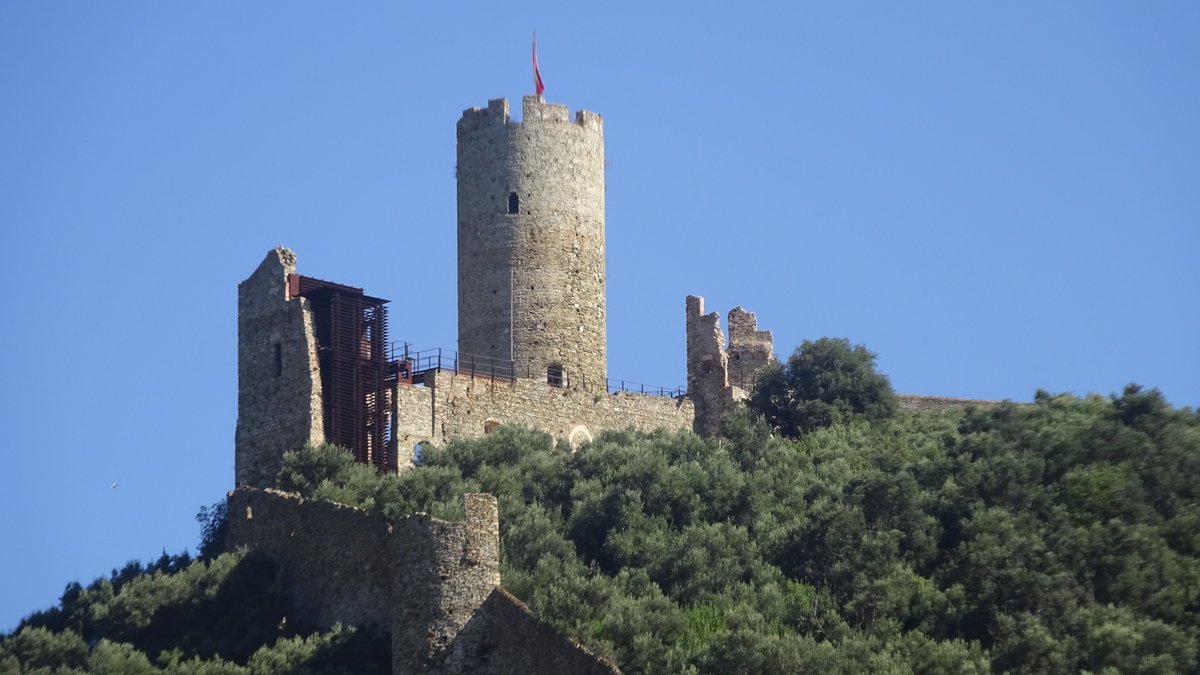

Noli was once a coastal settlement until a fire destroyed the original town around 900. The population moved to the hills of Monte Ursino because the coast was considered less healthy and the hill site was more easily defensible. By 1004, the new site was defined in documents as a fortified village. The current castle was built on the ruins of an older structure, with the Del Carretto family acting as the primary supporters of this medieval military structure.
By the 15th century, the fortification reached its current form, expanding to embrace the new village in the plain while the older settlement on the hill was gradually abandoned. The castle was positioned to control the sea, the coast, and the old Roman road passing through Voze. The surrounding walls stretch from the castle to encompass the entire village.
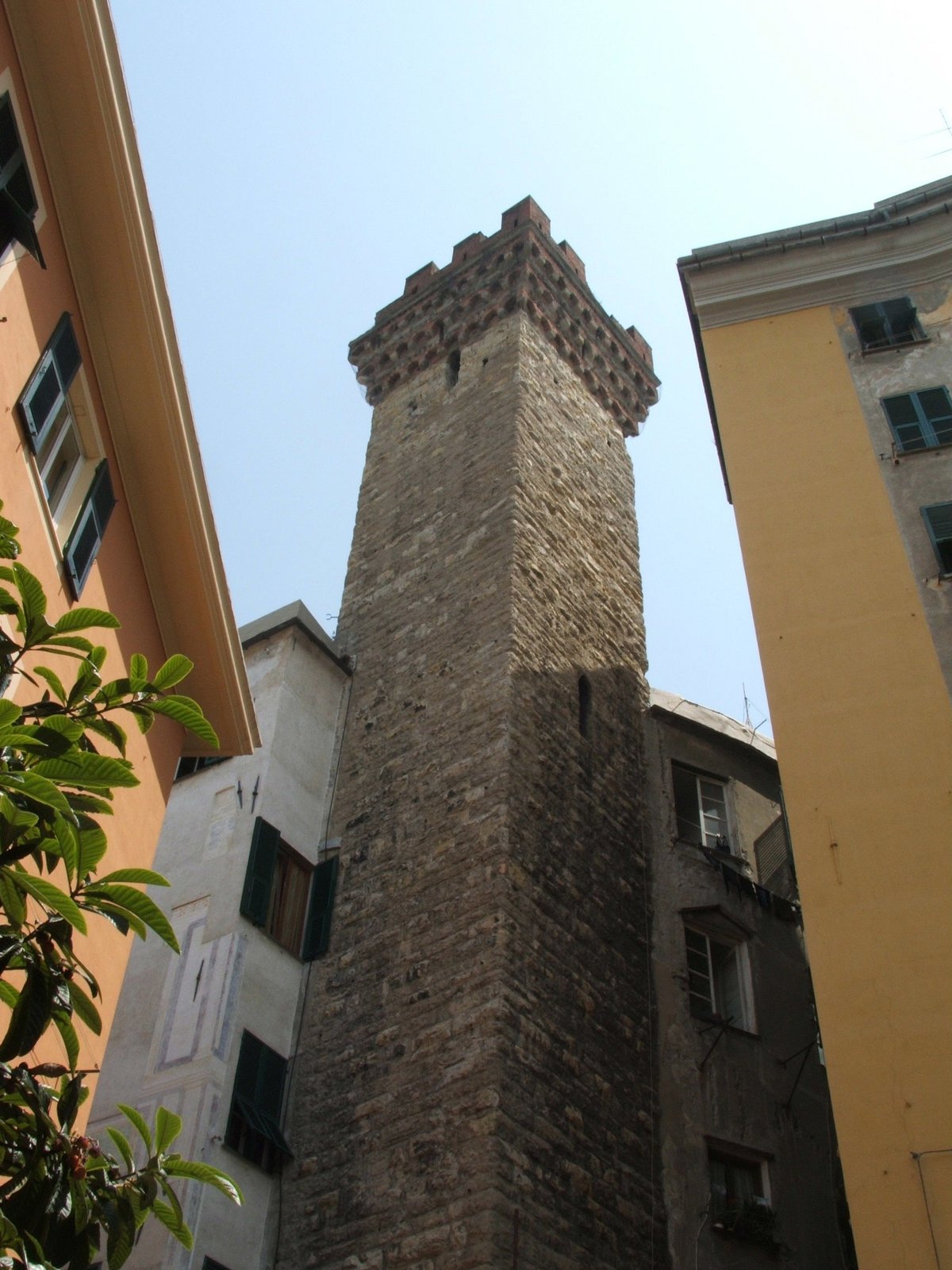
At the summit stands a high cylindrical tower surrounded by massive walls and troop quarters. From this core, two perimeters of walls descend, following the slopes of Monte Ursino and protecting the inhabited area below. The gates are protected by a unique system that remains partially preserved today: an external tower connected to the walls by a stone walkway. This allowed defenders to strike enemies from behind while they attempted to reach the entrance.
Today, the castle and the village walls remain among the best-preserved examples of medieval fortification in the Ligurian coast.
Sources: Wikipedia, OpenStreetMap, Wikidata, Wikimedia Commons


Written by Nicolo Ciampini
Discuss this with the author and others
No comments yet. Be the first to start the conversation.